

There is a reason that every serious safari traveller eventually comes to Tanzania's Northern Circuit.
It is not simply that the wildlife is extraordinary — though it is. The Serengeti supports the largest concentration of large predators on the planet. The Ngorongoro Crater contains one of the densest wildlife ecosystems in Africa. Tarangire holds elephant herds of a size that will make you stop counting. Lake Manyara frames everything beneath the Rift Valley wall, with flamingos and the tree-climbing lions that make it unlike anywhere else.
What makes the Northern Circuit singular is the combination. Within a circuit that can be navigated comfortably in two weeks, you move through four distinct ecosystems — each with its own character, its own wildlife, its own quality of light. From the open golden plains of the Serengeti to the forested walls of the Crater, from the riverine woodlands of Tarangire to the shimmering salt flats of Lake Manyara — the Northern Circuit does not repeat itself.
Don Kassim has been guiding guests through this circuit since 1978. What follows is his account of why it remains, after everything, the circuit he returns to most often and recommends most consistently.
As Featured In
Editorial recognition — earned through guest experience, not paid placement.
Three Northern Circuit journeys
How Don Shapes the Circuit
Every Northern Circuit itinerary begins with the same four parks. What changes is the duration, the pace, and the season. The three journeys below are starting points — each adjusted around your dates, your interests, and the camps Don judges right for the time you are travelling.
8 days · 7 nights
The Compact Circuit
Two nights at the Crater rim. Three nights across two Serengeti camps. One night at Tarangire. The efficient version of the Northern Circuit for travellers with a fixed window.
Crater · Serengeti · Tarangire
from $14,200 per person, based on double occupancy
Discuss The Compact Circuit with Don →11 days · 10 nights
The Signature Circuit
Three nights in the Serengeti across two regions — the central plains and the northern wood — for Great Migration river crossings. Two nights at the Crater rim. Two nights at Tarangire. One night at a Manyara forest camp. The depth most guests choose.
Crater · central + northern Serengeti · Tarangire · Manyara
from $18,500 per person, based on double occupancy
Discuss The Signature Circuit with Don →14 days · 13 nights
The Extended Circuit
Everything in The Signature, plus a second camp in the northern Serengeti closer to the Mara River, a walking safari from a fly-camp, and a rest day at Tarangire. For guests whose Africa trip is once-in-a-decade.
Crater · three Serengeti camps · Tarangire · fly-camp · Manyara
from $24,800 per person, based on double occupancy
Discuss The Extended Circuit with Don →Pricing reflects the high season (July–October). Shoulder months — November, March, late April — are typically 18 to 24 percent lower. Final pricing depends on camp selection and party size. Don prepares a written proposal on request.
Don Kassim's perspective
“The Northern Circuit is where Tanzania shows you what it is. Every other country in Africa has savanna. Every other country has elephants, lions, the great migration. What Tanzania has — and what the Northern Circuit delivers — is the combination of all of it, in a landscape that has been left largely to the animals. The Serengeti is not a managed experience. It is a living world, and the Northern Circuit is how you enter it.”
The Four Parks
Each park on the Northern Circuit has a distinct character. Together, they form a circuit that rewards every kind of traveller — the first-time visitor and the seasoned Africa hand alike.

01 — Serengeti National Park
The defining safari landscape of the world
The Serengeti is 14,750 square kilometres of open savanna, riverine forest, and granite outcrops — a landscape so intact that the annual migration of 1.5 million wildebeest still moves across it as it has for millennia. The name comes from the Maasai word siringet, meaning “the place where the land goes on forever.” That description remains accurate.
For the ultra-luxury traveller, the Serengeti is best experienced from one of the private concessions or specialist camps on the northern or eastern plains — areas where the vehicle density is a fraction of what you find in the central Serengeti, and where the wildlife is correspondingly more relaxed around vehicles.
02 — Ngorongoro Crater
The world's most intense wildlife enclosure
The Ngorongoro Crater is a collapsed volcano 19 kilometres wide, formed when a massive ancient volcano collapsed inward approximately two million years ago. The Crater floor — 264 square kilometres — is a self-contained ecosystem with one of the highest densities of wildlife in Africa. The walls of the Crater are impassable to the animals, which means the wildlife stays.
It is the only place in Tanzania where the Big Five — lion, leopard, elephant, buffalo, and black rhino — can be reliably seen in a single game drive. The black rhino population in the Crater is one of the most protected and genetically important in the world. The experience of descending into the Crater at dawn, with the walls rising around you and the mist rising from the floor, is unlike anything else available in Africa.

03 — Tarangire National Park
Tanzania's most elephant-dense park
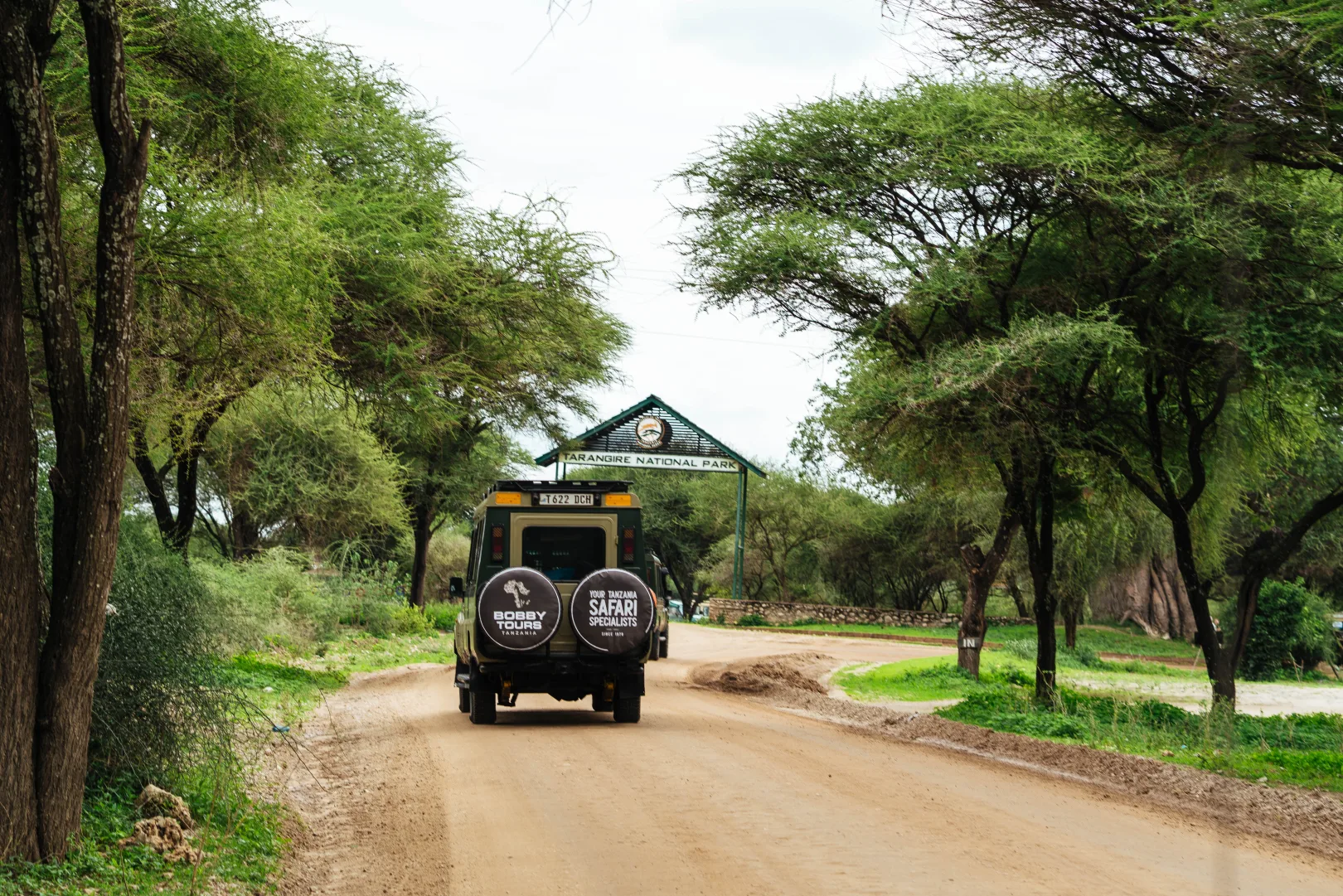
Tarangire is the sixth largest national park in Tanzania, covering 2,850 square kilometres of riverine habitat, acacia woodland, and vast open savanna. It is defined by the Tarangire River, which runs through it year-round and draws animals from across a wide area during the dry season. During these months — June to October — Tarangire holds some of the largest elephant herds in East Africa, with groups of 200 or more animals gathered along the river corridor.
The park is also distinguished by its extraordinary baobab trees — some of which are over 1,000 years old — and by the quality of its birdlife, with over 550 species recorded. For the luxury traveller who wants a quieter, less-visited experience than the Serengeti while still seeing exceptional wildlife, Tarangire is an ideal addition to the Northern Circuit.
04 — Lake Manyara National Park
The jewel of the Rift Valley floor
Lake Manyara National Park is one of the most varied and compact wildlife destinations in Tanzania — a 330 square kilometre park centred on a shallow alkaline lake that shimmers pink with thousands of flamingos at certain times of year. The park's groundwater forest, fed by the escarpment walls that rise sharply behind it, is home to troops of blue monkeys and baboons, and the lake hosts hippos, pelicans, and an extraordinary density of waterbirds.
Lake Manyara is famous for its tree-climbing lions — a behaviour seen in only a handful of locations in Africa — and the park is an ideal half-day addition to the Northern Circuit, particularly for travellers who have time for a leisurely departure from the circuit on their last day, or who want a lighter final game drive before heading to the airport.

How the Circuit Works
The Northern Circuit is typically entered from Arusha — Tanzania's safari capital and the gateway to the northern parks. From Arusha, the circuit moves west and north into the conservation area, then into the Serengeti. The return route can include the Crater, Tarangire, and Lake Manyara. Most guests complete the full circuit in 10 to 14 days.
Days 1–2
Arusha
Arrive at Kilimanjaro International Airport. Night in Arusha, meet your guide, finalise the itinerary. Short morning game drive in Arusha National Park — colobus monkeys, giraffes, and the slopes of Mount Meru — as a gentle introduction.
Days 3–5
Ngorongoro Crater
Drive west through the Rift Valley to the Crater rim. Descend into the Crater for a full day of game drives. The rim offers exceptional views and the Crater floor delivers some of the most reliable wildlife viewing in Africa. Overnight at a luxury lodge on the Crater rim.
Days 6–9
Serengeti
Continue into the Serengeti — either by road through the conservancy areas or by light aircraft to a landing strip within the park. Four nights across two camps gives you time to explore different regions of the park: the central plains, the western corridor, or the northern Serengeti near the Mara River.
Days 10–11
Tarangire
Return south through the park roads to Tarangire. The landscape changes dramatically — riverine forest, baobab country, open floodplains. Tarangire is quieter than the Serengeti and the elephants are extraordinary. Two nights here after the Serengeti is a different pace and a different wildlife experience.
Day 12
Lake Manyara
A final half-day game drive through Lake Manyara before departing — the flamingos, the tree-climbing lions if you are fortunate, and the forest road that feels like a different park entirely. Then transfer to JRO for your international departure.
When to Go
The Northern Circuit operates year-round, and each season offers a distinctly different experience. Your ideal timing depends on what you most want to see.
July–October
Peak Season — The Great Migration
The herds are in the northern Serengeti, crossing the Mara River. This is the most dramatic wildlife spectacle on earth, and the northern Serengeti camps are full years in advance. Weather is dry, skies are clear, and wildlife viewing is excellent across all four parks. This is the most popular time to do the Northern Circuit, and the most expensive.
November–December
Short Rains — Green Season Luxury
The short rains bring new grass to the Serengeti plains and the herds begin moving south. The landscape turns green, the light is extraordinary, and the birdlife is at its best. Fewer visitors, lower rates at the luxury camps, and the migration is still visible in the central and southern Serengeti. November is one of the most underrated months on the Northern Circuit.
January–February
Calving Season — The Most Extraordinary Month
The wildebeest calve in the southern Serengeti — approximately 8,000 calves born per day. This attracts large predators, and the hunting that follows the calving makes for extraordinary game viewing. Combined with dry season conditions and accessible park roads, this is Don Kassim’s personal favourite time on the circuit.
March–May
Long Rains — For the Discerning Traveller
The long rains make some park roads difficult, and the luxury camps typically offer reduced rates. The landscape is lush and green, the photography is beautiful, and the parks are at their quietest. This is not the time for a first safari or for anyone with mobility limitations. For the experienced Africa hand who wants the circuit largely to themselves, it is a compelling window.
Why Tanzania, Not Kenya?
The most common question Don Kassim is asked by first-time East Africa safari travellers is: Tanzania or Kenya? Both countries offer world-class wildlife experiences, and both have excellent operators. The honest answer is that for the traveller who wants the finest version of the classic East African safari — the one they have seen in documentaries, the one they have imagined — Tanzania is the clear choice.
The next question is usually tactical: where within Tanzania. The Northern Circuit — the four parks above — concentrates the strongest wildlife in the smallest area. The Southern Circuit — Selous, Ruaha, Nyerere — is wilder, more remote, and built around walking and boat safaris rather than migration drama. For the full breakdown of the Northern versus Southern decision, and which side of Tanzania actually fits the kind of safari you want, see our Northern Circuit versus Southern Circuit comparison.
The Serengeti is three times the size of the Masai Mara. The wildlife densities in Tanzania's northern parks are higher, and the landscape is less crowded, even at peak season. Tanzania introduced photographic tourism before Kenya did, and the national parks are managed with that longer history of conservation in mind. The northern circuit — from the Crater to the Serengeti — is more compact than any equivalent Kenyan circuit, and the quality of guiding is consistently exceptional.
Kenya is excellent. Tanzania is the Serengeti.
Frequently Asked Questions
Why is the Northern Circuit considered Tanzania's best safari route?
The Northern Circuit concentrates the best of Tanzania into the smallest possible area. In a four-hour drive from the Ngorongoro Crater to the central Serengeti, you move through landscapes that took millions of years to form. The wildlife density is extraordinary — lion, leopard, cheetah, and elephant across the plains; the densest predator populations in Africa in the Crater; and some of the largest elephant herds in East Africa in Tarangire. What distinguishes the Northern Circuit is not any single element but the combination: you can watch the great migration in the Serengeti in the morning and be at the Crater — with its guaranteed lion, rhino, and extraordinary encounter density — by afternoon. No other circuit in Africa offers this concentration of defining wildlife experiences.
How does the Northern Circuit differ from East Africa's other major safari destinations?
Compared to Kenya's Masai Mara, the Northern Circuit offers greater scale — the Serengeti is roughly three times the size of the Masai Mara — and correspondingly wilder, with fewer tourists and more expansive landscapes. Compared to Botswana's Okavango Delta, the Northern Circuit offers a very different landscape — vast open grasslands and acacia savanna rather than delta waterways — and a very different price point, with Tanzania offering excellent value at the ultra-luxury tier. Compared to South Africa's Kruger, Tanzania's Northern Circuit is wilder, more remote, and offers a completely different quality of experience — this is adventure in the traditional sense, not managed wildlife viewing.
What is the great migration, and when should I see it?
The great migration is the largest movement of land animals on earth — approximately 1.5 million wildebeest, plus hundreds of thousands of zebra and gazelle, moving in a continuous clockwise circuit through the Serengeti and Masai Mara in search of rain-fed grazing. The crossings at the Mara River, where the herds brave crocodile-filled waters, are considered one of the most dramatic wildlife spectacles on the planet. The best time to see the crossings is July to October, when the herds are in the northern Serengeti and crossing the Mara River into the Masai Mara. The calving season, when approximately 8,000 calves are born per day in the southern Serengeti, runs from January to March.
How many days should I allow for the Northern Circuit?
We recommend a minimum of seven days for the Northern Circuit at the luxury tier — allowing two to three nights at two different camps in the Serengeti, plus one night at the Crater. Ten days is better — it allows time for three distinct camps, a rest day, and the flexibility to respond to wildlife as it happens rather than following a rigid schedule. Fourteen days allows you to go deeper: two camps in the Serengeti (one on the plains, one in the north near the Mara River), a camp at the Crater rim, and a night at Lake Manyara or Tarangire before departure. The longer you stay, the more the circuit reveals itself.
What makes the Ngorongoro Crater different from the Serengeti?
The Ngorongoro Crater is a caldera — a volcanic crater 19 kilometres wide and 600 metres deep — that contains one of the highest densities of wildlife in Africa. The walls of the Crater create a natural enclosure, and the floor — a self-contained ecosystem — hosts lion, leopard, elephant, buffalo, black rhino, and large herds of wildebeest and zebra year-round. It is the only place in Tanzania where you are virtually guaranteed to see the Big Five in a single game drive. The experience of being inside the Crater is unlike anything else in Africa: the walls rise around you, the landscape feels complete and ancient, and the quality of wildlife encounters — particularly with lion and rhino — is unmatched.
Is the Northern Circuit suitable for first-time safari-goers?
The Northern Circuit is the ideal introduction to African safaris for first-time visitors. The wildlife is abundant, the logistics are straightforward, and the quality of guiding and accommodation at the luxury tier is exceptional. A first-time safari-goer on the Northern Circuit will typically see more wildlife, in more varied landscapes, than at any other destination in Africa. The pacing can be adjusted to suit your energy — early morning game drives followed by leisurely camp lunches and afternoon drives, or a more active programme if you prefer. Don Kassim designs every itinerary to the specific pace and interests of the people travelling.
Begin a Conversation
Don Kassim designs every Northern Circuit itinerary personally. He will talk you through the circuit, answer every question, and put together a proposal that reflects exactly what you want from the experience — not a package, but a journey.
Speak with Don