

The wildebeest migration is commonly described as the greatest wildlife spectacle on Earth — but the version most travellers see is the river crossing. The Mara River crossing, at its peak in August and September, is dramatic, violent, and genuinely memorable. It is also what everyone goes to see. Which means that February at Ndutu — when 400,000 wildebeest calves are born within three weeks on the short-grass plains of the southern Serengeti — remains one of Africa's best-kept safari secrets.
If you have not yet witnessed the calving season, this is the piece of safari planning that should move to the top of your list. And February is the month.
The Scale Is Hard to Comprehend
Two million wildebeest move through the Serengeti-Mara ecosystem in a continuous clockwise cycle, following the rains and the grass that grows in their wake. Of those two million, approximately 400,000 are born on the Ndutu plains in a three-week window each February and early March.
That is roughly 8,000 calves born every day. Each one on its feet within minutes. Each one running within hours. The predators who have been following the herds — the lions, hyenas, leopards, and cheetahs — know this is their moment. The density of predator action around the calving is extraordinary: not a dramatic river crossing that happens once and is over, but a sustained, day-after-day spectacle of birth, survival, and predation that plays out across the golden grass plains.
To stand on the Ndutu plains in late February and watch a cheetah mother with her cubs positioned on a slight rise, scanning the herds for vulnerable calves, while the horizon fills with thousands of newborn wildebeest — this is not an exaggeration when we call it one of the greatest wildlife displays on Earth. It simply is.
“400,000 calves. 8,000 a day. Each one on its feet within minutes. The Ndutu plains do not do things by halves.”
The Predator Density Is Unmatched
The reason the calving spectacle is not just about the wildebeest — though the wildebeest are remarkable enough — is that the predators arrive in force. The cat population on the Ndutu plains in February is the highest recorded density of large predators anywhere in Africa.
Lions move in multiple prides along the southern plains, targeting the newborn calves. Hyena clans — some of the largest in Tanzania — position themselves at the edges of the herds. Leopards use the acacia trees that dot the landscape as vantage points and storage locations for their own kills. And cheetahs — often overlooked on standard safari circuits — are present in remarkable numbers, using the open short grass to their advantage in ways they cannot in the longer grass of the central Serengeti.
A game drive on the Ndutu plains in late February might include lions hunting wildebeest, a cheetah sprinting across the plain in pursuit of a calf, hyenas circling a kill, and a leopard with a fresh kill stored in the fork of an acacia — all within a few kilometres of each other. This is not unusual. This is a typical afternoon.
The golden short-grass plains of Ndutu at dawn — February, when the wildebeest herds are at their most concentrated
Why February Is the Best-Kept Safari Secret
The Tanzania safari high season — July through October — exists for good reason. The dry season concentrates wildlife around water sources. The river crossings are dramatic. The weather is reliable. But February is a different proposition entirely, and for the traveller willing to plan around it, it offers advantages that the high season cannot.
Green season pricing. February falls in Tanzania's green season — the months between the long rains and the dry season. Accommodation prices are typically 30-50% below peak-season rates at the same lodges. The Ndutu region, which can feel crowded at the height of the calving season in July when it attracts the safari world, is at its quietest in February.
Landscapes at their most beautiful. The short-grass plains of Ndutu, which are parched and dusty by August, are green in February — carpeted in new grass after the November-December rains. The light is different too: softer, more golden, the kind of light that photographers travel the world to find.
Birding at its peak. The Palaearctic migrants — birds that have travelled from Europe and Asia to spend the northern winter in Tanzania — are still present in February. The resident birdlife is also at its most active, and Lake Ndutu itself attracts thousands of flamingos at this time of year. For birding enthusiasts, February at Ndutu is exceptional.
Fewer vehicles. In August, the Ndutu plains can have dozens of vehicles at a single cheetah sighting. In February, you may be one of three. The quality of the experience — unhurried, private, with a guide who can follow an interesting thread of behaviour rather than moving on to the next checklist item — is different in kind rather than degree.
How to Include Ndutu in Your Safari
Ndutu sits in the overlap between the southern Serengeti and the Ngorongoro Conservation Area. A safari that includes Ndutu in February typically runs 7-10 days — allowing time for the Ndutu plains themselves (2-3 nights minimum) and at least one circuit of the wider northern Tanzania landscape.
The most effective approach is to base yourself at Ndutu for three nights, with full-day game drives on the plains each day. The behaviour changes daily — herds move, predators shift their hunting grounds, the dynamic between the wildebeest and the predator population evolves hour by hour. Three days at Ndutu in February is enough to witness the full range of what the calving season offers.
From Ndutu, it is a short drive into the Ngorongoro Conservation Area — which, in February, offers exceptional lion and leopard sightings on the crater floor. The shorter grass makes wildlife easier to spot, and the reduced vehicle numbers (compared to the July-August peak) mean the crater experience is more intimate. Some of our guests combine Ndutu with a private conservancy adjacent to the national park, where the same wildlife density is available with the additional experiences that conservancies allow.
A lioness on the Ndutu plains at dawn — predator density here is the highest recorded anywhere in Africa
The calving season at Ndutu is not a secret to those who have been. It is one of the most written-about, discussed, and anticipated events in the East African safari calendar. But it remains relatively unknown to the broader travelling public — who have been told, correctly, that the river crossings are the highlight. The river crossings are extraordinary. The calving at Ndutu in February is more extraordinary, and considerably less crowded.
If February falls within your travel window, it is worth restructuring your entire Tanzania safari around it. The Kassim family has guided guests to the Ndutu calving for decades. We would be glad to design an itinerary around what is, in our experience, the finest wildlife display that Africa has to offer.
Questions
About Ndutu in February
What makes Ndutu in February special?
Ndutu, in the southern Serengeti and northern Ngorongoro conservation area, is where approximately 400,000 wildebeest are born within a three-week window each February. This is the calving season of the Great Migration — and it attracts predators in extraordinary numbers. Lions, hyenas, leopards, and cheetahs follow the herds, meaning the density of predator action around calving is unmatched anywhere in Africa.
Is February a good time for a Tanzania safari?
February is one of the best-kept secrets in Tanzania safari planning. It falls in the green season — meaning lower accommodation prices, fewer vehicles, lusher landscapes, and birding at its peak. The calving spectacle at Ndutu alone makes it worthwhile, and the southern Serengeti and Ngorongoro are at their quietest and most beautiful.
How do I get to Ndutu from the Serengeti?
Ndutu is accessible via a scenic drive from the central Serengeti (approximately 3-4 hours) or via a short fixed-wing flight from Seronera airstrip to Ndutu airstrip. Bobby Safari typically recommends the flight for guests with limited time, as the drive crosses through some of the most beautiful landscape in the ecosystem.
What other wildlife can I see at Ndutu in February?
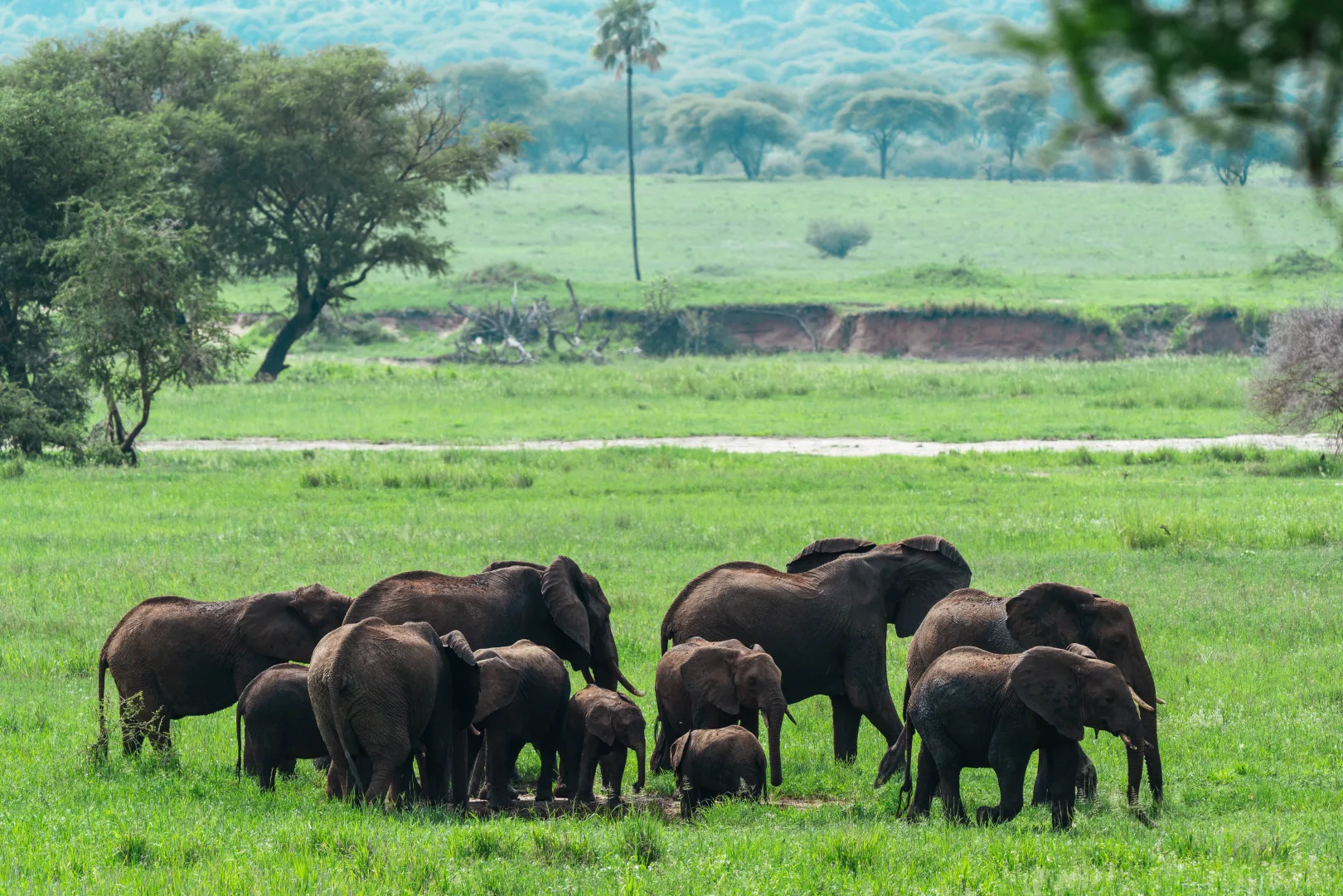
Beyond the wildebeest calving, February at Ndutu offers exceptional predator action — the highest density of lions and hyenas anywhere in the Serengeti ecosystem, following the herds. Flamingos on Lake Ndutu, elephant herds moving through the acacia woodlands, and over 200 species of birds including migrants from Europe and Asia. It is also one of the best times to see cheetahs, as they position themselves on slight rises to watch for predators approaching the wildebeest herds.
Is Ndutu part of the Serengeti or Ngorongoro?
Ndutu sits in the overlap between the Serengeti ecosystem and the Ngorongoro Conservation Area. The calving grounds are primarily on the short-grass plains of the Ngorongoro Conservation Area, while the wildlife also moves through the southern Serengeti. A safari to Ndutu in February typically includes both landscapes.
