The travel magazine describes it as the experience of a lifetime. The website shows award badges and press mentions. The booking platform makes it all look remarkably straightforward. And then you arrive in Arusha and discover that the company you booked through has never actually operated a safari in Tanzania.The True Cost of Ultra-Luxury Tanzania Safari 2026 is worth exploring alongside this destination.
This is not an uncommon experience. The ultra-luxury safari market has attracted significant corporate investment over the past two decades. International holding companies have acquired established operators, rebranded them, and scaled their distribution through global travel agencies. The experience you see marketed is often not the experience delivered — and by the time you discover the difference, you are already in the field.
This is not an argument against large operators. It is an argument for knowing what you are booking — and understanding why the distinction matters.
What the Safari Industry Looks Like in 2026–2027
The Tanzania safari market today includes operators ranging from one-vehicle family companies running a handful of guests per year to multinational operators managing thousands of departures annually. In between are various models: international companies with local ground handlers, franchise operations using established brand names, and booking platforms that aggregate multiple operators without operating anything themselves.
The corporate safari model works well for many travellers. Scale brings consistency: standardised itineraries, reliable booking systems, multiple departure dates, and the comfort of a known brand name. If your priority is a well-managed, predictable safari experience, large operators deliver this reliably.
But scale introduces limitations that are not always visible in the marketing materials. And for travellers seeking something beyond predictable — something that feels genuinely Tanzanian, genuinely personal, and genuinely irreplaceable — the distinctions become important.
The Five Distinctions That Actually Matter
1. Who Answers Your WhatsApp
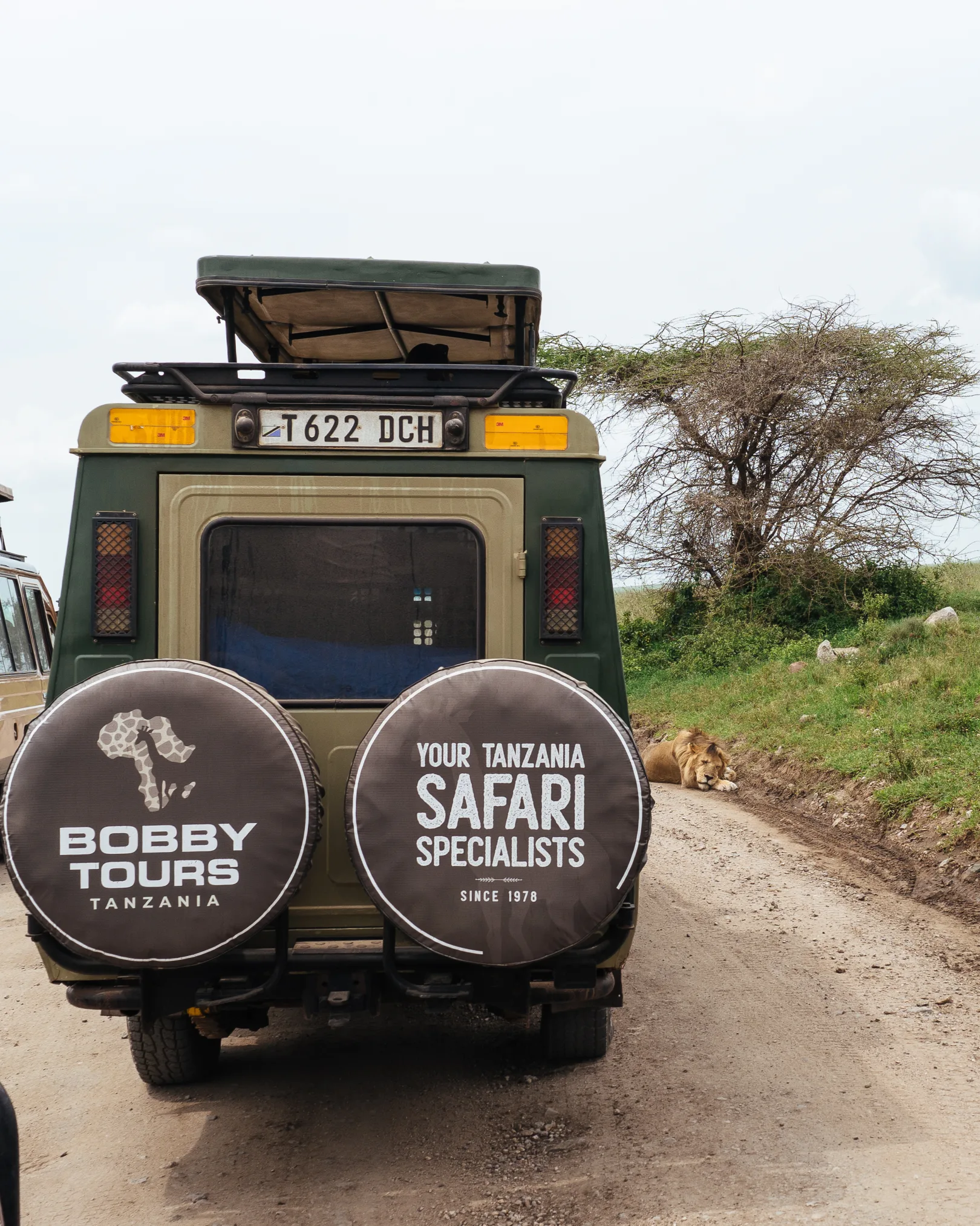
When you message a family operator before your trip, you speak with the person who will be responsible for your experience. At Bobby Safaris, you message Don Kassim directly. He designed your itinerary. He knows your guide. He will be the person you reach if anything requires adjustment in the field.
With a corporate operator, your enquiry routes through a reservations team. Your booking is processed by one department. Your safari is managed by another. Your guide is hired from a pool. The person who sold you the trip and the person who delivers it may never have spoken.
2. Guide Tenure and Accumulated Knowledge
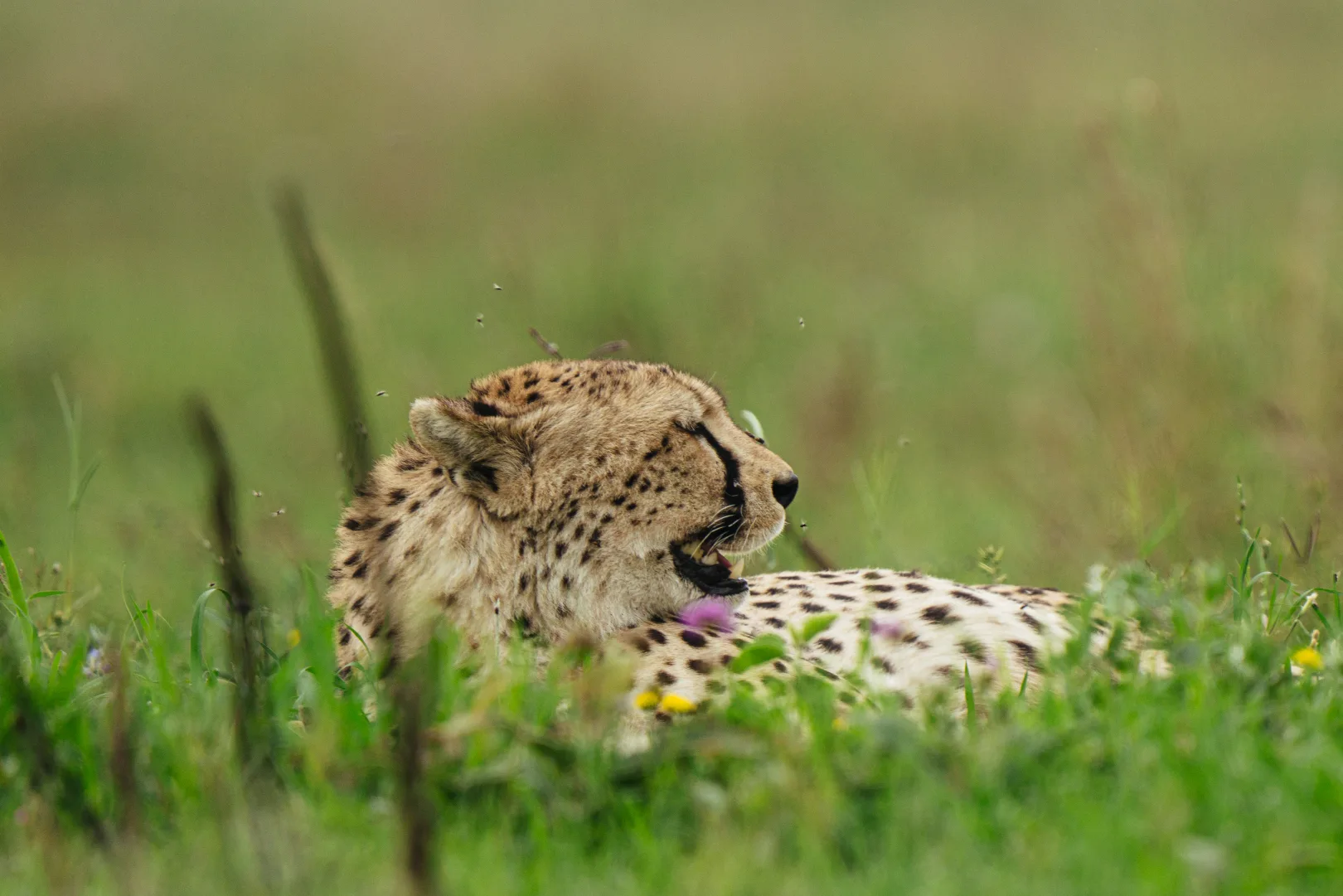
Our senior guide Juma has been with the Kassim family for 28 years. He knows where the leopards den in every season. He knows which manager at which camp prepares the best meals. He knows which valley in the Serengeti holds the best cheetah viewing in July. This is not a skill that can be trained in a season — it is accumulated field knowledge that compounds over decades.
Corporate operators hire guides from a pool for individual departures. A guide may work for the company for one season and then move on. There is no continuity of relationship between guide and operator, or between guide and guest.
3. Operational Base and Geographic Focus
Bobby Safaris is based in Arusha, Tanzania. Every member of our operational team lives and works in Tanzania. Our expertise, relationships, and accumulated knowledge are concentrated in one country.
Many large operators manage operations across multiple African countries simultaneously — Kenya, Botswana, South Africa, Namibia, Zimbabwe, Rwanda, Uganda. Their Tanzania expertise is one of several regional specialisations, distributed rather than concentrated.
4. How Problems Are Handled
If your vehicle has a mechanical problem in the Serengeti, who do you call? With a family operator, you call the family directly. The person who answers knows the vehicle, knows the region, and has relationships with every camp in the area. Problems are handled as personal responsibilities.
With a large operator, you navigate a process: the field coordinator, the operations manager, the insurance claim, the escalation chain. Your experience becomes an incident number in a system.
5. Long-Term Reputation Versus Marketing
Bobby Safaris has operated continuously since 1978. Our reputation is built one guest at a time, over four generations of the Kassim family. Every referral matters. Every guest who returns matters. Our incentive to deliver an extraordinary experience is absolute — because our business depends on it in a way that a multinational company with diverse revenue streams does not.
Corporate reputation is primarily a marketing product — built through awards, press coverage, and brand visibility, not exclusively through guest experience. A satisfied corporate guest is one transaction among thousands. A satisfied family operator guest is the business.
A note from the field
“We have turned down more bookings than we have accepted. Not because we lack capacity — because we lack certainty that we can deliver what the guest deserves. If the season is wrong, or the camp is not available, or we do not have the right guide free, we say so. This is not a sales strategy. It is an operating philosophy that explains why the guests who travel with us tend to come back.”
— Don Kassim, Bobby Safaris
What to Ask Before You Book
Before committing to any safari operator, ask these questions — and pay attention to how they are answered.
Where is the company registered and based?
A company based in London, New York, or Amsterdam that sells Tanzania safaris is not a Tanzanian operator, regardless of how it describes itself. Ask specifically: is the company Tanzanian-registered? Is the operational team based in Tanzania?
How long has the company operated in Tanzania?
Forty-eight years of continuous operation in Tanzania is not the same as a company that opened a Tanzania desk three years ago. Longevity indicates stability, local relationships, and accumulated knowledge.
Who will I speak with before and during my safari?
If you cannot speak directly with the person designing your itinerary before you book, ask why. The inability to connect with operations before booking often indicates a sales-reservations-operations divide that will persist throughout your trip.
How long have your senior guides been with the company?
Guide tenure is a proxy for operational quality. A company that has invested in long-term guide employment has invested in operational excellence. High guide turnover indicates otherwise.
What happens if something goes wrong in the field?
A direct, specific answer — naming the person you would call, describing the process — indicates operational competence. Vague answers about ‘support teams’ and ‘protocols’ indicate a process-first culture rather than a guest-first one.
The Honest Assessment
Not every traveller needs a family-owned operator. If you want predictable itineraries, multiple departure dates, and the comfort of a known international brand, large operators deliver this reliably. There is a market for this, and it serves it well.
But if you want something that feels genuinely Tanzanian — designed by someone who has spent their life in the bush, guided by someone who knows the land intimately, hosted by a family that has been doing this since before your parents were born — then the distinction matters. And it is a distinction that no amount of corporate funding can replicate.
We have operated safaris in Tanzania since 1978. We have never advertised on television. We have never been acquired. We have never franchised. Every guest who travels with us is a direct referral, or finds us through the work we have published online for nearly two decades. Our business model depends on doing this well, every time, for every guest.
Frequently Asked Questions
What is the difference between a family-owned safari operator and a corporate safari company?
A family-owned operator is based in Tanzania, often in Arusha or directly in the safari regions, and run by a family that has accumulated decades of operational knowledge. A corporate safari company is typically owned by an international holding group, with headquarters in Europe, North America, or elsewhere, and manages operations across multiple African countries simultaneously. The difference manifests in everything from the quality of local knowledge to how problems are handled when they arise.
Does a family-owned operator have better guides than a large company?
Guide quality varies across all operators regardless of size. But family-owned operators who have operated in one country for decades tend to have guides who have been with them for 15-30 years. This accumulated field knowledge — knowing specific animals, seasonal patterns, camp managers, and terrain — cannot be purchased or replicated by a company that hires contract guides. The guide you speak with on your first morning in Tanzania may have been guiding with the same family for longer than you have been travelling.
Is a family-owned safari more expensive than booking with a large operator?
Not necessarily. At the ultra-luxury level, camps and lodges set their own rates — the same properties are used by operators of all sizes. What varies is what you pay for the operator's service: the planning, the guiding, the in-field logistics. A family operator with decades of local relationships often delivers more for the same price because they negotiate differently, know which camps deliver, and have no international overhead to recover.
How do I verify that an operator is genuinely family-owned?
Ask direct questions: Where is the company registered? Where is it based? Who answers your WhatsApp? How long has the family operated in Tanzania? A genuine operator will answer these questions readily. Look for operational history rather than marketing claims — 40+ years of continuous operation in Tanzania is not something a recently-formed company can claim, regardless of how they describe themselves.
What happens if something goes wrong during my safari with a family operator?
With a family operator, you call the family directly. Don Kassim answers his own WhatsApp at Bobby Safaris — the person who designed your itinerary is the person you reach at 11pm in the Serengeti if a vehicle has a problem. With a corporate operator, you navigate a call centre, a ticketing system, and a chain of escalation. The incentive structure is entirely different: a family's reputation is built over generations, and every guest is a personal referral.
Speak with Don Kassim
The Conversation Starts Here
Every Bobby Safari begins with a direct conversation. Tell us who you are travelling with, what you want to experience, and when you want to go. Don will design your itinerary personally.
Continue Reading