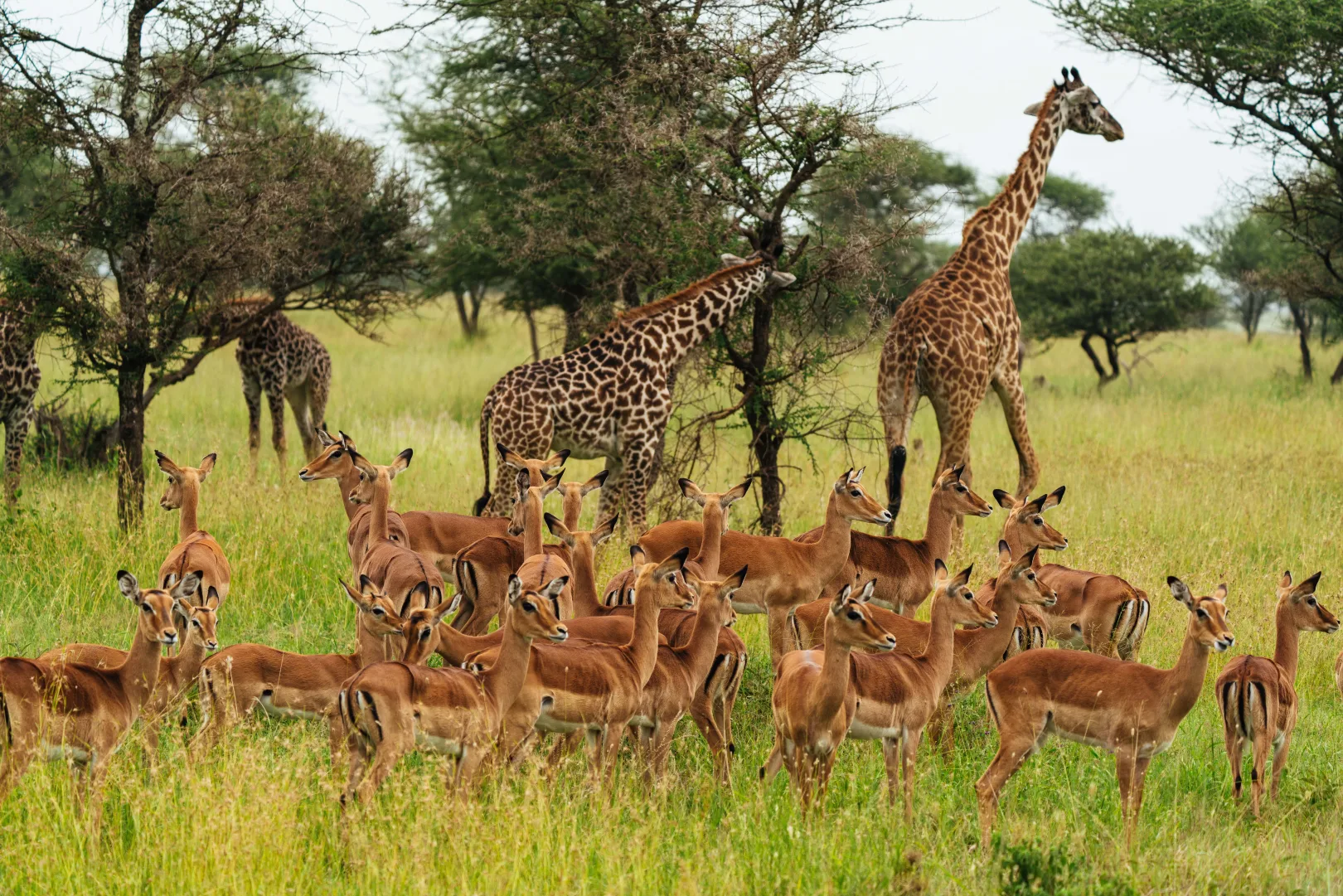
The wildlife spectacle is largely the same whether you are inside the national park or on a private conservancy bordering it. The wildebeest cross the same rivers. The lions hunt on the same plains. The leopards track impala through the same acacia groves. What is profoundly different is the experience of it.
A discerning traveller chooses a conservancy even when the national park contains identical wildlife because the rules are different, the crowd density is different, and the quality of encounter is categorically different. This guide is for the serious buyer — someone who already understands that conservancies offer a better experience and wants to understand the specifics: which conservancies, what the access rules actually are, and whether the premium is justified for their particular situation.
The Legal Distinction
A private conservancy is land leased from private landowners, communities, or tribal authorities — sitting outside the boundaries of Tanzania's national park system. The Serengeti ecosystem contains the largest concentration of these conservancies, buffering the national park on its northern, western, and eastern flanks. The main ones are Lamai, Mara North, Olakira, Grumeti, and IMPACT — each a distinct area with its own management approach and camp roster.
The lease model is what makes conservancies work financially. Each is held under a long-term agreement by one or more safari camp operators, who pay a yearly rental to the landowners. This creates a direct financial incentive for those landowners to maintain the land as wildlife habitat rather than convert it to agriculture or livestock. It is a model that has become one of Tanzania's most effective conservation tools — and choosing a conservancy camp is, indirectly, a conservation contribution.
Because the land is not national park, Tanzania National Parks Authority regulations do not apply. The conservancy operator sets the rules, within the terms of their lease and any wildlife management guidelines they operate under.
What You Can Do in a Conservancy That You Cannot Do in the Park
Night game drives
The national park closes at 6pm. The conservancy night begins. Lions become active. Leopards start to move. Hyenas work the plains. A night drive in a conservancy is one of the most spellbinding wildlife experiences in Africa — and it is entirely unavailable inside the national park.
Walking safaris with armed rangers
The only way to experience wildlife at the pace it deserves — on foot, reading spoor, understanding the smaller ecology that a vehicle obscures. An armed ranger accompanies you. The sounds and smells of the bush become the experience itself.
Off-road driving
Your guide follows the wildlife wherever it goes. If a leopard walks fifty metres off the track, you follow. If a cheetah mother with cubs is hunting in a direction that requires leaving the road, you go there. In a national park, this is not permitted. In a conservancy, it is the point.
Vehicle density limits
In a national park, the number of vehicles at a sighting is uncapped. During peak season, ten or more vehicles may be gathered around a single leopard in a tree. In a conservancy, strict limits apply — typically no more than two vehicles, often just yours. You experience the sighting privately, on your guide's terms, for as long as it is interesting.
Guide-to-guest ratio
At the finest conservancy camps, the ratio is 1:2 or even 1:1. Your guide is working for you, specifically, for the duration of your stay. They know what you are interested in. They can adapt the programme in real time. The national park safari vehicle ratio is closer to 1:6 — which means the guide's attention is distributed accordingly.
The Cost Differential, Explained
Conservancy camps are 30 to 60 percent more expensive than a national park camp at a comparable comfort level. The premium is not for a nicer tent. It is for three things that have nothing to do with infrastructure: access to the wildlife when and where it is actually present, legal permission for activities that produce categorically different sightings, and a guarantee of privacy that the national park cannot offer at any price.
The cost structure breaks down this way: the land lease fee that the conservancy operator pays is substantially higher than the park fees charged by TANAPA for equivalent wildlife access. Guest capacity is deliberately lower — conservancy camps typically accommodate 8 to 16 guests against 24 to 40 at comparable national park lodges. Specialist guiding costs more. The economics of exclusivity are straightforward.
Who should pay the premium? Guests who want to see specific wildlife behaviours — a lion kill, a leopard tracking prey, a wild dog den — that require flexibility of access. Repeat safari travellers who have done the national park and want the fuller version. Photographers who need vehicle positioning that park rules prohibit. Anyone for whom the privacy of the experience matters.
Who should not? First-time safari travellers for whom the national park would already be a transformative experience. Travellers on a fixed budget for whom the premium represents genuine sacrifice. The conservancy is not objectively better — it is better for specific purposes. If those purposes do not describe you, the national park is the right choice.
Choosing the Right Conservancy
| Conservancy | Best For | Best Season |
|---|---|---|
| Lamai Wedge | Private Mara River crossings, fly camping | July – October |
| Mara North | Lions, leopards, serious photography | Year-round |
| Grumeti Reserve | Western crossings, maximum seclusion | May – October |
| Selous / Ruaha | Remote wilderness, almost no other vehicles | June – October |
Bobby Safaris matches travellers to conservancies based on their specific priorities — not the other way around. The right conservancy is the one that delivers what you actually want from the experience, which is why the conversation with us starts with your goals, not a brochure.
Conservancy camps book 12 to 18 months in advance for peak season. Bobby Safaris has direct relationships with camp management at every major conservancy — not third-party booking channels.