

The assumption that a safari is better with two people is understandable and, in most cases, correct. But it is not universally true, and the exception is worth understanding clearly before you dismiss it.
A solo ultra-luxury safari in Tanzania is not a solo safari as you might understand the category from other destinations. It is not a group tour with a single supplement. It is not a budget camping trip where you share a vehicle with strangers. It is a private vehicle, a private guide, a private relationship with the landscape — and the only variable is that there is one of you in the seat.
For a particular kind of traveller, this is not a compromise. It is the version of safari that was always latent in the idea, waiting for the budget and the operator sophisticated enough to offer it properly.
“The best safari I ever did, I did alone. Not because I wanted solitude — because I wanted the guide's full attention, and the vehicle to stop whenever I wanted to look at something, and no one else's opinion about what we should have seen.”
— A guest, after a nine-night private conservancy safari, 2024
Who the Solo Ultra-Luxury Safari Is For
The solo ultra-luxury safari in Tanzania attracts a specific traveller. Typically someone who travels frequently, often alone, and has learned which categories of trip reward private arrangements and which do not. A solo beach holiday in the Maldives requires a private villa — the shared spaces are fine but the private ones are transformative. The same logic applies to the Serengeti. The difference is that the wildlife does not wait, and the moments that matter — the leopard on the kill at seven in the morning, the wildebeest crossing at dusk — do not repeat.
The travellers who choose this option tend to share certain characteristics: they are comfortable eating alone in fine restaurants, they have experienced the particular loneliness of shared transport where the conversation is not interesting, and they understand that the best travel experiences are often the ones where your attention is entirely undivided. They also tend to be people who have reached a point in their lives where their time is genuinely valuable, and they are not willing to spend it in a vehicle arguing about whether to stop for the thing they just saw.
This is not a young person's safari. It is not a backpacking safari. It is the safari you take when you have the means to travel exactly as you want, and you have decided that this particular trip deserves that standard.
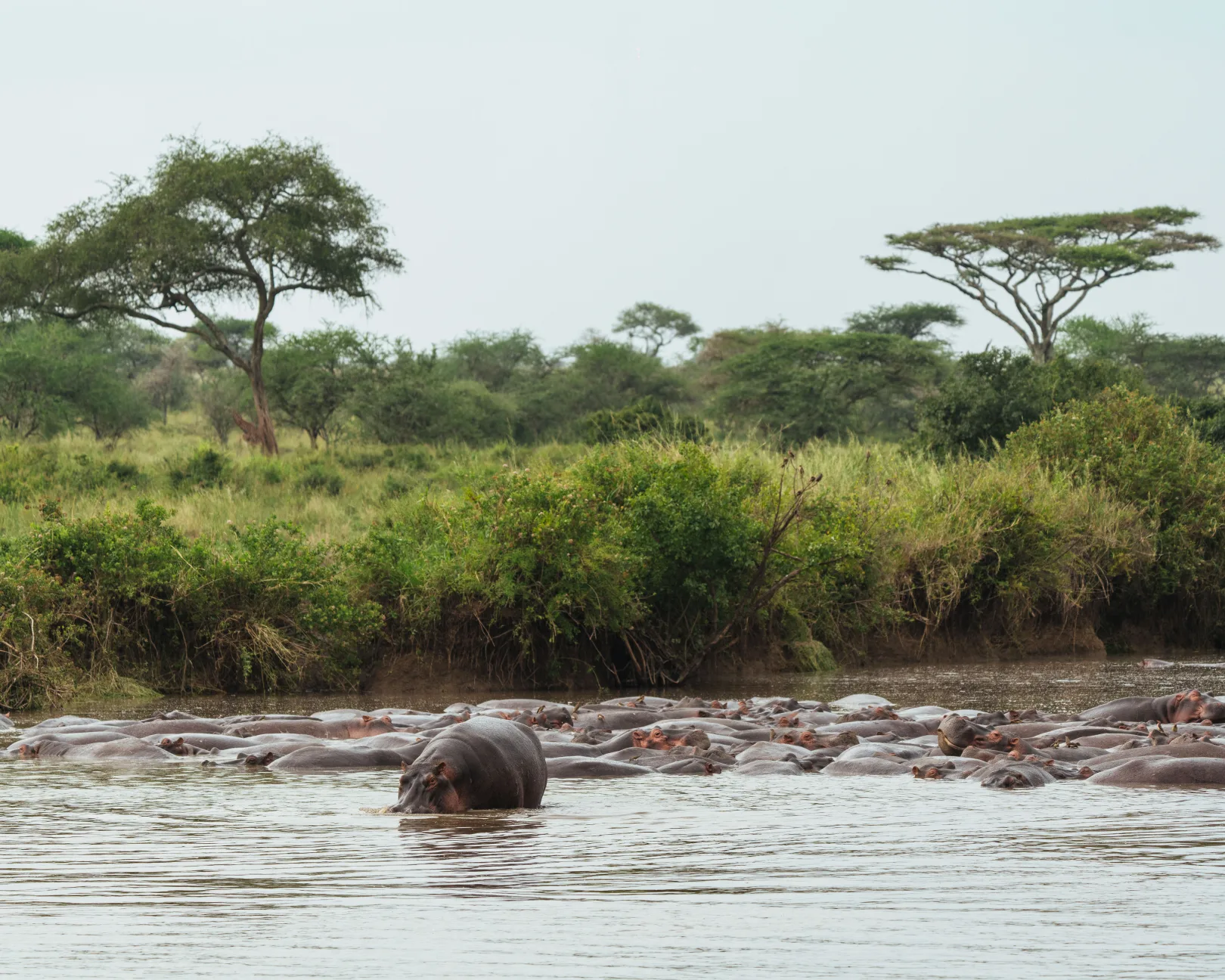
A private vehicle in the Serengeti — the guide stops when you want, follows the wildlife you choose, and devotes the full morning to what interests you
What You Get with a Private Safari That You Do Not Get Any Other Way
The practical difference between a private ultra-luxury safari and a shared one is primarily the vehicle and the guide's time. In a shared vehicle, the guide is managing six to eight people's competing interests: the photographers want to stay longer at each stop, the birders want to detour, the families want shorter drives and more frequent stops. The guide mediates this, and does it well — but the mediation takes time and attention away from any individual guest.
In a private vehicle, the guide's entire professional skill is directed at you. They have read the morning's tracks, they know where the lions left their kill, they have a hypothesis about where the leopard den is based on yesterday's female's movement pattern. When they get the radio call that something is happening, they can respond immediately — and if you want to stay at the kill for three hours and watch what happens next, you do.
This sounds like a luxury amenity. In practice it is the difference between safari as tourism and safari as genuine wildlife observation. The animals do not operate on a schedule, and the experience of being present at something extraordinary — a lioness teaching her cubs to hunt, a cheetah running down a gazelle at forty miles an hour — is qualitatively different when you are not being rushed to the next stop.
Leopard sightings in the Serengeti require patience and a guide who knows where to wait — a private safari gives you both
The Guide Relationship: Why It Matters More When You Are Alone
On a shared safari, the guide develops a generalised relationship with the group — they are warm, professional, knowledgeable, and divide their attention evenly. On a private safari of a week or more, the guide begins to develop a specific relationship with you. They learn what you are interested in, what you have already seen, what you respond to emotionally. They calibrate their explanations to your level of knowledge. Over several days, something happens that guests consistently describe as the highlight of their safari: the guide begins to show you things they would not bother explaining to a group of strangers.
This is not about VIP treatment or special access — the wildlife is the same for everyone. It is about the guide's professional pride. When they have an engaged, attentive, knowledgeable guest who is genuinely interested, they bring more to each drive. They share the things they know that are too detailed or too speculative for a group setting: the personality of a particular lioness, the way the herd elephant matriarch makes decisions, the theory about where the spotted hyena clan den is based on three years of observation.
For solo travellers, this guide relationship is amplified. There is no one else to share the guide's attention with. The knowledge transfer is more direct, more personal, and often more revealing. Several guests who have done extended private safaris alone describe the guide as the person they learned more from about wildlife, ecology, and the conservancy model than they had expected to learn from anything.
The Camp Social Dimension: How It Complements Solo Travel
The common concern about solo luxury safari is social isolation — eating dinner alone every night, returning to an empty tent after a day of wildlife viewing. At the ultra-luxury level, this concern is largely unfounded, for a specific reason: the camps are small. An ultra-luxury conservancy camp typically has four to eight tents. At any given time, there are rarely more than twelve to sixteen guests in camp. The social geometry of a camp this size is completely different from a fifty-room lodge.
Guests at ultra-luxury conservancy camps tend to eat together by natural inclination rather than by formal arrangement. The communal dinner table — or the bush dinner under the stars, or the afternoon spent by the pool watching elephants pass — creates natural social contact without forcing it. If you want to talk, there are interesting people to talk to. If you want to eat alone on your veranda, the camp manager will arrange it without comment.
The solo traveller who wants social contact finds it easily. The solo traveller who wants solitude finds it equally easily. The camp adapts. The guide is yours for the drives. The camp community is there when you want it.
Ultra-luxury conservancy camps at dusk — the social atmosphere is intimate and optional, not obligatory
The Economics of Solo Ultra-Luxury
There is no getting around the fact that solo ultra-luxury travel is expensive. A private vehicle in the Serengeti for a seven-night safari — six nights in camp, one night fly camping — with a professional guide who has fifteen years of experience costs what it costs because the costs are real: the vehicle, the fuel, the guide's salary, the camp's operational cost for a single guest in a suite designed for two.
At the ultra-luxury tier, the single supplement is typically 25 to 50 percent above the double-occupancy rate. This is not a premium that operators invented — it reflects the genuine cost structure of a room that sleeps one person but costs the same to heat, staff, and service as a room for two. At $3,000 to $6,000 per person per night, a 30 percent single supplement on a seven-night safari adds a meaningful sum.
The question is not whether this is expensive. It is. The question is what you are buying. You are buying the guide's accumulated knowledge directed entirely at your experience. You are buying the vehicle that stops when you want to look at something. You are buying the camp that adapts to your schedule rather than requiring you to fit into a group programme. And you are buying the thing that no other travel product can offer: the undivided attention of one of Africa's finest wildlife habitats.
The Best Destinations for Solo Ultra-Luxury in Tanzania
The Lamai Wedge in the far north of the Serengeti is, for many solo ultra-luxury travellers, the destination that justifies the cost. The wildlife density in the Lamai during the dry season — July through October — is as high as anywhere in Africa. A private guide based in Lamai for four or five nights will give you access to Mara River crossings, predator interactions, and landscape moments that the larger national park camps cannot reach.
Mara North Conservancy offers a slightly different solo safari experience. The wildlife is exceptional, the camp density is extremely low, and the walking safaris available from the Mara North camps add a dimension that the vehicle-based Lamai experience does not. For the solo traveller with a specific interest in predator behaviour or large mammal ecology, Mara North is worth the cost.
The Grumeti Reservein the western corridor offers the most private of the major Serengeti conservancy experiences. Grumeti's guest density is the lowest of the major conservancies, which means that on any given day in Grumeti, you are likely to see other vehicles less frequently than anywhere else in the northern circuit. For the solo traveller who chose this trip specifically to avoid crowds, Grumeti is the answer.
The Serengeti at dawn — vast enough that a private safari feels genuinely private, even when the continent's most-visited national park is thirty kilometres away
Ready to Plan Your Solo Ultra-Luxury Safari?
Tell the Kassim family what you are looking for — when you want to travel, what you are most interested in seeing, and whether you prefer a completely private experience or a combination of private drives and camp social time. They will tell you exactly what is possible.