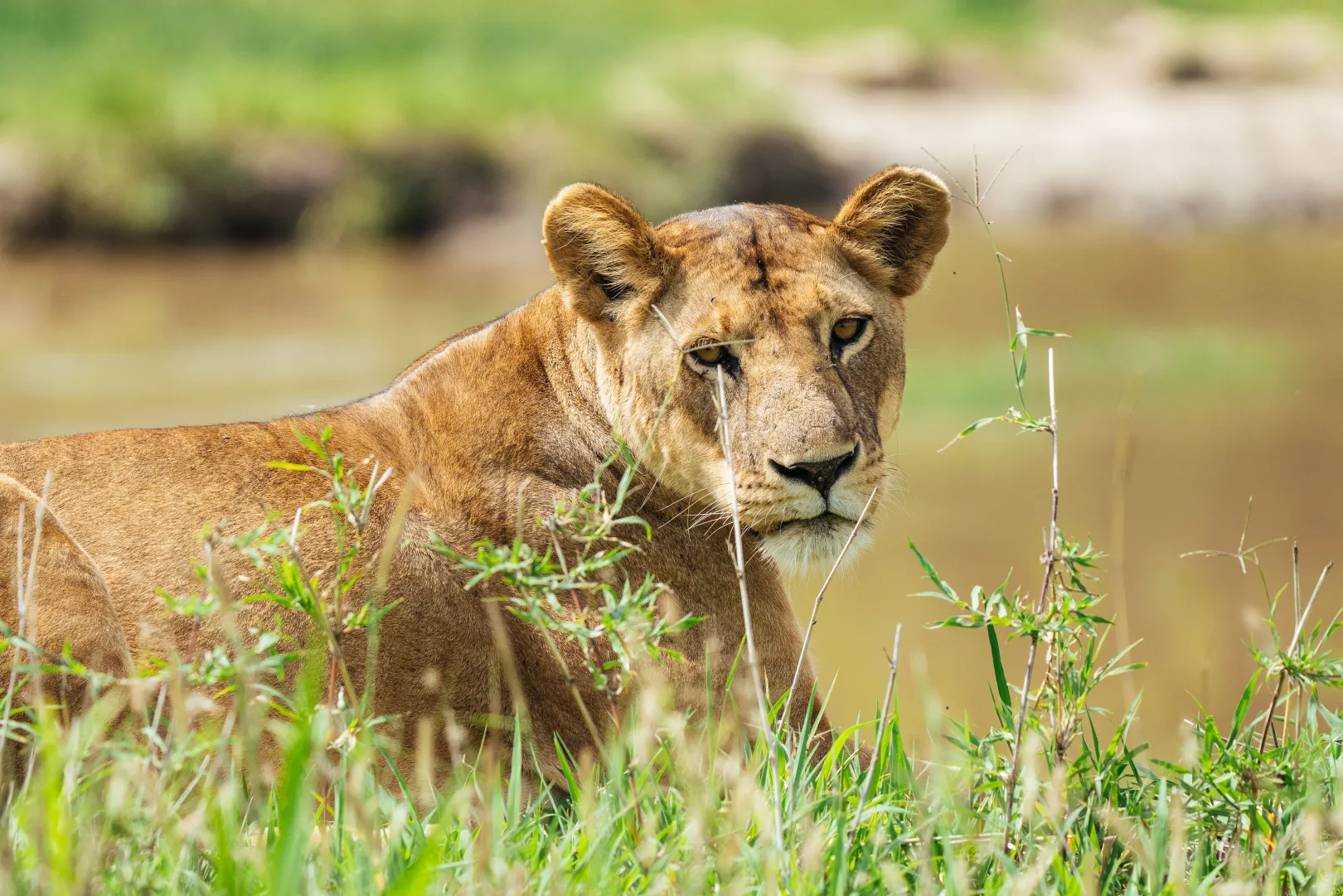
You have spent months researching Tanzania. You have read the wildlife accounts and studied the migration calendars. You have spoken with the Kassim family about the best timing for predator action. And now, inevitably, the question arrives: what do I actually bring?
The answer is simpler than most gear guides suggest. The difference between photographs that capture the feeling of Tanzania and photographs that merely document it is not made in a camera shop. It is made in the field — in the positioning of the vehicle, the anticipation of the guide, the patience of the photographer, and the quality of the light. Gear matters, but it matters in the way a good pen matters to a writer: it removes friction, it does not create prose.
That said, the wrong gear creates friction. A camera without reliable autofocus will miss the shot. A lens that cannot reach will leave you frustrated. And Tanzania's conditions — dust, humidity, the demands of six to ten hours in a vehicle per day — will test every piece of equipment you bring. This guide covers what actually works.
“The best camera is the one you know how to use. The second-best camera is the one with the longest lens. The third-best is the one with a backup battery.”
Camera Bodies: What You Actually Need
The camera body matters less than most photographers fear. What matters is autofocus reliability, high ISO performance, and weather sealing. Everything else is secondary.
Full-frame cameras — Canon R series, Nikon Z series, Sony A7 series — handle Tanzania's high-contrast light more gracefully in the golden hours. The larger sensor captures more dynamic range, which means you can recover detail in the shadows of a backlit elephant without the noise that smaller sensors produce. In the vehicle at 6am or 6pm, this matters.
APS-C cameras — Fujifilm X series, Canon R7/R10, Nikon Z50/Zfc — offer a significant effective reach advantage with telephoto lenses. A 400mm lens on an APS-C body gives the equivalent reach of a 600mm on full-frame, at a fraction of the weight and cost. This is not a small advantage when photographing distant cheetahs on the Serengeti plains.
Bring a backup body. Tanzania dust is not metaphorically described — it is literally present, in the air, on every surface, in every moment you open a lens mount or change a card. A second body means you never miss a shot while cleaning your primary camera. It also means you can keep two lenses pre-mounted and switch instantly when a lion hunt develops while you are shooting with the 400mm.

Two camera bodies with pre-mounted lenses — the configuration that eliminates missed moments from lens changes in dusty conditions
The Lens Strategy That Actually Works
The question of lenses divides photographers into two camps: those who bring zooms and those who bring primes. For a Tanzania safari, the practical case for zooms is overwhelming. You cannot change prime lenses quickly when the subject moves. Dust enters the camera every time you change. And the animal behaviour you are photographing — a leopard dropping from a tree, a lion pride beginning a coordinated hunt — does not pause while you switch from 400mm to 200mm.
The essential lens: A telephoto zoom of 100-400mm or 200-600mm. This is 80% of what you will use. For the Serengeti and Ngorongoro Crater, this focal range covers every situation from mid-range wildlife portraits to distant predator action. The Nikon 100-400mm, Canon 100-500mm, Sony 200-600mm, and Fujifilm 50-140mm with teleconverter are all proven performers in East African conditions.
The flexible second lens: A 70-200mm covers mid-range wildlife, environmental portraits, and the lion at ten metres that the 400mm is too tight for. Combined with your primary telephoto, this covers 95% of what you will encounter.
The wide-angle: A 24-70mm or equivalent covers landscapes, camp interiors, portraits of your companions, and the baobab trees of Tarangire that no telephoto can frame properly. Do not skip this. Some of the most memorable photographs from Tanzania are not wildlife at all — they are the landscape through which the wildlife moves.
Teleconverters: A 1.4x teleconverter extends your 400mm to 560mm on the days when subjects are consistently distant — theMigration river crossings, the open plains of the southern Serengeti. They cost nothing to carry and nothing to attach. The image quality loss is minimal in good light and more than acceptable in any light.

The guide who knows where to position the vehicle matters more than any lens — but the right lens ensures the photograph matches what you witnessed
Vehicle-Based Shooting: Support and Stability
You will spend six to ten hours per day in a safari vehicle. The vehicle is your shooting platform. Getting the camera stable and accessible from a vehicle window is a problem that has two reliable solutions.
Window mount or clamp: A simple window-mount tripod head — the Arca-Swiss style mount that clamps to the vehicle door frame or window edge — provides rock-solid stability for stationary subjects. A lion at fifteen metres, a leopard in a tree, an elephant herd crossing at dusk. When the vehicle stops and you have time, this mount is the difference between a sharp image at 1/60s and a blurred one.
Beanbag: The classic East African safari tool. A bag filled with rice or beads that drapes over the vehicle door, providing a cushioned rest for the camera lens. Less stable than a window mount but more flexible — you can reposition instantly as the subject moves. Most importantly, it is silent. A window mount requires careful clamping that makes noise when the subject is in sensitive mode.
Gimbal head: For photographers bringing large telephoto primes — 500mm or 600mm — a gimbal head designed for vehicle use provides smooth tracking of moving subjects. The Gitzo Systematic gimbal and similar designs attach to a window mount or vehicle roof rail and transform a 600mm lens from a handheld impossibility into a smooth tracking tool.
Do not bring a tripod. Standard tripods are impractical in a safari vehicle and prohibited in most national parks, where the vehicle roof is considered the maximum height. If you want tripod stability, bring a window mount. If you want landscape capability, a travel tripod — folded small enough to use in camp or at a viewpoint — covers the rare situations where a vehicle-based platform is unavailable.
Storage, Power, and the Logistics of Full Days
A Tanzania safari day runs from 5:30am to 6:30pm or later. In those thirteen hours, you will take more photographs than in a typical month of weekend shooting. Storage and power logistics matter as much as any piece of glass.
Memory cards: Carry at least 8 cards of 64GB or larger. Tanzania dust and heat are hostile to all electronics, and a card that fails in the field is not recoverable. Format cards in-camera at the start of each day. Do not fill any card beyond 90% capacity. If you shoot RAW, budget for 2-3GB per session. If you shoot JPEG, 1GB covers approximately 400 high-quality images.
Batteries: Carry four batteries minimum. The cold of the pre-dawn and the heat of midday both degrade battery performance significantly. Batteries that are reliable at home can fail in Tanzania conditions. Carry them in an inside pocket, close to body heat, during the cold morning hours. The battery in your camera will drain fastest — it works harder during autofocus operations in low light.
Battery charger: Most camps have reliable power, but carry a charger that works from a vehicle 12V socket. Some days, particularly on fly-camping extensions or remote conservancy stays, mains power may be limited. The ability to charge from the vehicle during the long drive between locations means you never run out of power on a long day.
Laptop or hard drive: For photographers on extended trips, a rugged portable hard drive for nightly backup is essential. Cards can fail, but two copies of every day, stored separately, is a workflow that has saved many photographers' work. A laptop also allows you to review the day with your guide and plan the next morning's shoot based on what you learned.
Weather, Dust, and the Tanzania Environment
Tanzania's environment is not camera-friendly. The dry season brings red dust that finds every seal and every gap. The wet season brings equatorial downpours that arrive without much warning. The humidity around Lake Victoria and in the Western Corridor is high. Your equipment will be tested.
Rain covers: Carry a rain cover for your camera and a rain cover or shelter for your bag. The equatorial rains of the green season — particularly in April and November — can arrive suddenly and intensely. A rain cover that packs into a pocket is a small investment that prevents expensive damage.
Lens cleaning: Carry a rocket blower, a microfibre cloth, sensor wipes, and lens cleaning solution. In Tanzania, you will use these every day. The rocket blower alone may be sufficient for most dust situations — sensor wipes are for when something has actually reached the sensor. Open your camera as little as possible in the field. If dust appears on your images, the rocket blower typically solves it.
Silica gel: A small packet of silica gel in your camera bag, replaced each night, reduces humidity damage to your equipment. This is particularly relevant in the humid Western Corridor and in camps near water sources. It costs nothing and protects everything.
Padded camera insert: Do not bring your camera in its box or a hard case through the vehicle. A padded insert — Think Tank, Peak Design, or similar — that fits inside your daypack keeps your camera accessible and protected simultaneously. Most importantly, it allows you to carry the camera into camp at night without exposing it to the vehicle's dust while still packed.
What Not to Bring
The gear that will not serve you in Tanzania is as important to understand as the gear that will.
Drones: Drones are prohibited in all Tanzanian national parks and most private conservancies without specific TAWIRI permits. Even where permitted, the noise and intrusion fundamentally disrupts the wildlife behaviour you have travelled to photograph authentically. Leave the drone at home. It will not return with images that justify its presence.
Flash units: Flash photography of wildlife is illegal in Tanzanian national parks — and impractical in any case. The distances are too great, the subjects too sensitive to disturbance. The single flash you might use for portrait work at camp is the only flash worth bringing, and even then, the camps' ambient lighting is usually sufficient.
Large prime telephotos without vehicle support: A 600mm f/4 is magnificent in a hide or with a gimbal head in a dedicated photography vehicle. In the standard safari vehicle, it is impractical. If you are not bringing a dedicated photography vehicle with window mount and gimbal head, a telephoto zoom will serve you better than a heavy prime.
More than three lenses: Every lens you bring is a lens you might need to change. Every lens change is a dust event. The photography safari is not a landscape expedition where you walk to different locations with different lenses. You are in a vehicle, with limited time at each sighting, photographing subjects that appear without warning. Three lenses — the telephoto zoom, the mid-range zoom, and the wide-angle — cover everything. More than that is weight and risk without meaningful return.
The Kassim family has guided photographers in Tanzania since 1978. They have seen every combination of equipment come through — the photographer who brought a 400mm and produced images that stopped the presses, and the photographer who brought a container of gear and spent more time changing lenses than photographing. The conversation about gear matters less than the conversation about what you want to capture. Begin that conversation, and they will help you figure out what to put in the bag.
Questions
About Safari Camera Gear
What camera body is best for a Tanzania photography safari?
Any modern full-frame or APS-C camera with reliable autofocus performs well in Tanzania. The critical factor is not brand or megapixel count — it is autofocus speed and low-light performance at ISO 1600-3200. Full-frame cameras handle the high-contrast golden hour light better, but APS-C bodies with telephoto lenses give effective reach that full-frame cannot match without similar-sized lenses.
What lens do I need for wildlife photography in Tanzania?
A telephoto zoom of 100-400mm or 200-600mm is the single most important piece of equipment for a Tanzania safari. Supplement with a 70-200mm for mid-range wildlife and a 24-70mm for landscapes, camp interiors, and portraits. A 1.4x teleconverter extends reach on days when subjects are particularly distant.
Should I bring a backup camera body to Tanzania?
Yes — a backup body is essential for a serious photography safari. Dust in Tanzania is pervasive and can disable a camera. Having a second body means you never miss a shot while cleaning or repairing your primary camera. It also means you can keep two lenses ready simultaneously without changing in dusty conditions.
Can I use a smartphone for safari photography in Tanzania?
Modern smartphones with 3x optical zoom or greater can produce remarkable safari images in good light — particularly in the golden hours. However, they cannot match the reach of a telephoto lens for distant wildlife, struggle in low light, and offer no ability to freeze fast action. For a serious photography safari, a dedicated camera is essential.
What accessories are most important for a Tanzania photography safari?
A window mount or beanbag for vehicle-based shooting, multiple 128GB+ memory cards, spare batteries (at least four), lens cleaning supplies including sensor wipes, a rain cover for sudden equatorial downpours, and a padded camera insert that fits inside your daypack. These items matter more than any single piece of glass.