
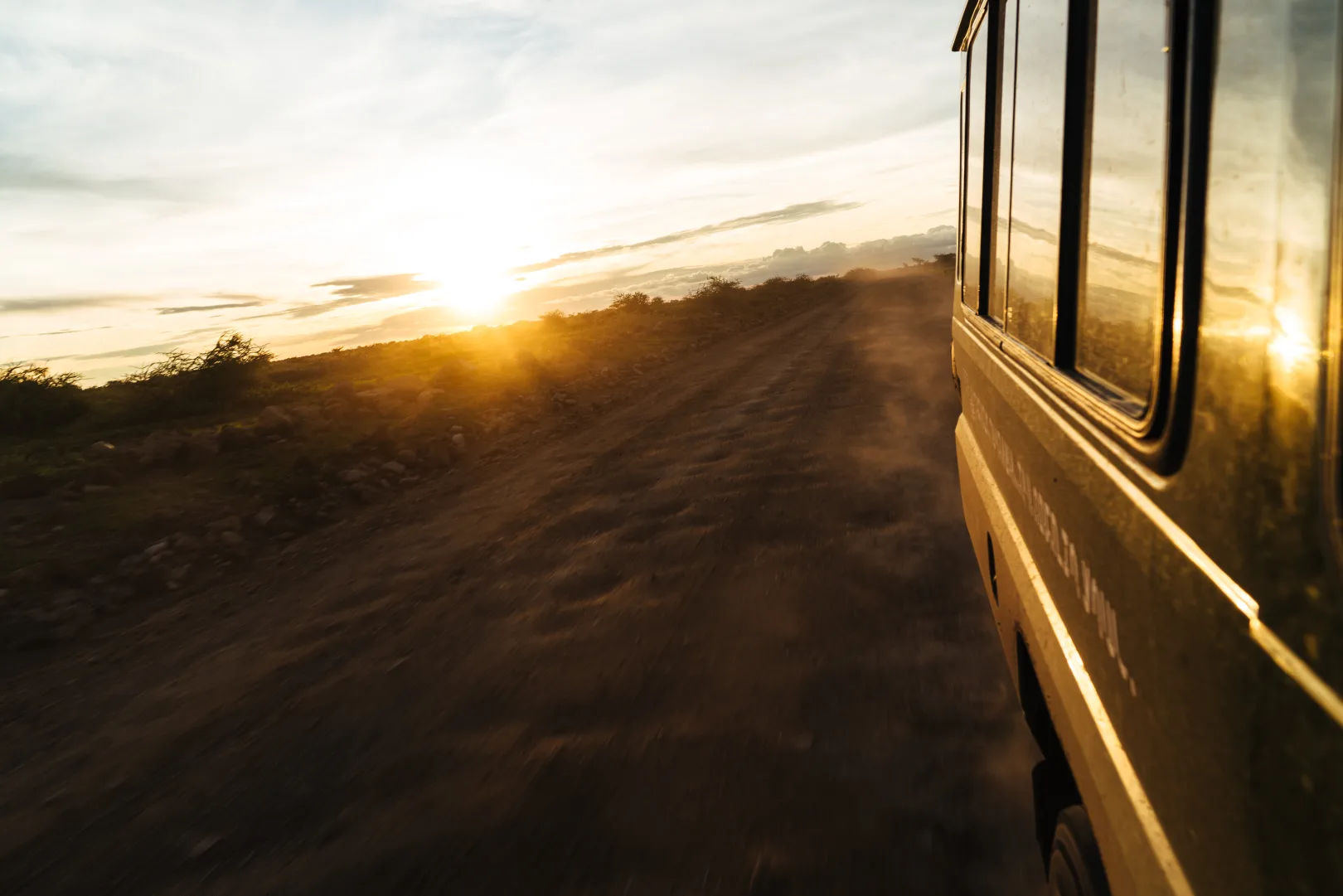
A client receives two quotes for a ten-day Tanzania safari. One is forty percent higher. When asked what the difference is, the response is a single word: exclusivity. That answer is both accurate and incomplete. This post explains what the price delta actually buys — and when it is genuinely worth paying for.
What Exclusive-Use Actually Means
The Difference Is Not the Vehicle. It Is the Entire Operating Model.
Shared game drive: Your group is placed in a vehicle with other families. The guide rotates between groups. The route follows a fixed circuit. Wildlife sightings may involve fifteen other vehicles.
Exclusive-use vehicle:Your group — and only your group — in a dedicated 4x4. Your guide, your schedule, your route. No rotation, no other families, no itinerary that was designed for someone else's interests.
At the camp level, the distinction deepens. An exclusive-use property or camp buyout means the entire operation — staff, kitchen, guiding team — runs for your group alone. The staffing ratios at premium exclusive-use camps typically sit at or near 1:1. At shared-use properties, that same number of staff supports multiple groups simultaneously.
The route is where the difference becomes most tangible. On an exclusive-use safari, your guide reads the morning wildlife reports and positions the day around where the animals actually are. On a shared circuit, the route is set before the trip begins and rarely deviates regardless of what the landscape is doing.
The Hidden Cost Drivers
Four Factors That Compound the Price Delta
The forty percent gap is not padding. It is the sum of real operational differences that are difficult to see on a price comparison spreadsheet. The exclusive-use premium pays for the pace and the privacy of ground-level game drives — and for guests who want a different vantage entirely, a hot-air balloon flight over the Serengeti at dawn sits alongside, rather than against, the exclusive-use vehicle. The balloon safari vs game drive comparison unpacks what each view actually reveals.
Guide continuity
The same guide for eight days builds a working understanding of your group's interests, pace, and photographic preferences that no briefing document can replicate. A rotation guide starting on day four has no context for what you've already seen, what you're hoping to find, or how you like to spend time at a sighting. Guide continuity is priced into exclusive-use because it requires paying one guide to stay with one trip rather than rotating them across multiple groups.
Fuel and repositioning logistics
Reaching private concessions and off-circuit wildlife areas — the Grumeti Reserve, Lamai, the Mara North Conservancy — requires driving distances and terrain that a fixed circuit through the national parks does not. The fuel cost is real. The time cost, absorbed into the daily rate, is also real.
Conservation fee structures at premium concessions
Private conservancies charge concession fees that fund anti-poaching units, community benefit agreements, and habitat management. These fees are substantially higher than national park fees and are non-negotiable — they are set by the conservancy, not by the operator. The premium is not profit. Much of it flows directly back into the ecosystem and surrounding communities.
Peak-season supply constraint
The most sought-after exclusive-use camps and private concessions hold limited inventory. During the Great Migration season — July through October — that inventory is contested. Operators who hold space in these camps pay a premium to do so, and that premium is reflected in the daily rate. There is no off-season discount at the top-tier exclusive-use properties.
When It Is Worth Every Dollar
Four Scenarios Where the Premium Pays Off
Family groups of six or more
When the group is large enough, the per-person cost of exclusive-use narrows significantly against shared alternatives. The question shifts from "can we afford this?" to "can we afford not to?" — because the logistics of coordinating a large family across shared vehicles, rotating guides, and competing interests creates more friction than the price delta justifies.
Anniversary and milestone trips
A tenth anniversary safari is not the trip to negotiate on price. When the occasion carries real weight, clients who chose exclusive-use consistently report that the guide continuity and schedule flexibility were the difference between a good trip and the defining memory of their decade. The premium is real. So is what it buys.
Photographers and serious wildlife observers
Golden hour at a leopard sighting in a private conservancy — where you can stay as long as the light is right, and leave when it isn't — is a categorically different experience from a shared circuit where the guide needs to keep to the schedule and share the sighting with fifteen other vehicles. For photographers who have traveled specifically for this, schedule flexibility is not a luxury. It is the point.
Multi-generational travel
Consider two couples traveling with adult children: the logistical complexity of shared vehicles — different paces, different interests, different tolerances for how long to spend at a sighting — generates more coordination cost than the exclusive-use price delta. One vehicle, one guide, one schedule that can flex organically between the group's preferences eliminates a category of friction that compounds across eight days.
How Bobby Safaris Structures This
Transparent Line-Item Pricing, No Obligation
We publish transparent pricing because we believe the question "what am I actually paying for?" deserves a real answer. Our pricing page breaks down the components: vehicle type, guide arrangement, camp selection, park fees, and the logistical surcharges that apply when an itinerary moves through private concessions.
Our recommendation logic is straightforward: we do not upsell exclusive-use unless the itinerary genuinely benefits from it. If a fixed circuit through national parks serves the experience as well as a private concession approach, we say so. If the itinerary genuinely calls for flexibility and private access, we explain why — and what it costs.
Before signing with any operator, ask: "Am I paying for exclusivity, or for the operational complexity of this specific itinerary?" If the answer is the former and your group fits one of the four scenarios above, the premium is likely worth paying. If the answer is the latter, understanding the line items helps you evaluate whether the complexity itself is justified by the experience.
Ready to compare your options with full cost transparency? WhatsApp our Arusha team and ask for a line-item breakdown.
Questions
Frequently Asked Questions
What exactly does exclusive-use mean on a Tanzania safari?
Exclusive-use means the vehicle, guide, and schedule belong entirely to your group — not rotated with other families, not shared at wildlife sightings with strangers, and not constrained by a fixed circuit. Your guide reads the morning wildlife reports and decides where to go based on where the animals actually are, not where the itinerary says to go. When multiple families travel together, exclusive-use typically means the vehicle never splits your group across others.
Why does exclusive-use cost so much more than shared game drives?
The price delta is driven by four compounding factors: guide continuity (the same face for the entire trip builds reading competence that rotations can't match), repositioning logistics (getting to off-circuit concessions and private areas costs fuel and time that fixed-route drives don't), staffing ratios at exclusive-use camps (typically 1:1 or close to it), and conservation fee structures at premium private conservancies. The final layer is supply constraint — the best private camps and concessions hold limited availability, and peak-season rates are non-negotiable.
When is exclusive-use genuinely worth the cost?
Four scenarios tip the balance decisively toward yes. First: family groups of six or more, where per-person pricing narrows the gap significantly. Second: milestone trips — anniversaries, birthdays, a once-in-a-generation gathering — where the experience has to be right. Third: photographers, where schedule flexibility to wait for golden hour or follow an interesting sighting is non-negotiable. Fourth: multi-generational groups, where coordinating shared vehicles across three generations creates more friction than the price delta justifies.
How do I know if exclusive-use is right for my trip?
The honest question to ask any operator before signing is: 'Am I paying for exclusivity, or for the operational complexity of this specific itinerary?' If your itinerary moves through multiple private concessions, uses exclusive-use camps, or involves repositioning during the trip, the cost delta is largely structural. If you're comparing two similar fixed-itinerary options, the exclusive-use premium is buying you flexibility and guide continuity — and you should weigh whether that flexibility is something you'll actually use.
“The question is not whether exclusive-use is worth the cost. The question is whether your trip is the one that needs it.”