The buffalo receives the least attention of the Big Five, which is a mistake. Not because buffalo are rare — they are not — but because their appeal is not immediately obvious. They are large, dark, and move in herds that can number in the hundreds. They do not offer the drama of a lion hunt or the elegance of a leopard in a tree. What they offer is subtler and, in its own way, more remarkable: the experience of watching hundreds of animals moving as a single organism, each one aware of the others, each one contributing to a collective attention that is genuinely impressive to witness.
"A herd of buffalo moving across the plains is not a group of animals. It is a single thing with hundreds of minds — and if one buffalo is watching you, the whole herd is watching you."
Buffalo Society — Complex, Collective, Underrated
Cape buffalo are highly social animals whose herds display complex organization. Herds are typically composed of related females and their offspring, with bachelor males forming separate groups until the breeding season. Within the herd, there is a hierarchy — dominant bulls who hold the prime resting spots, younger animals who defer, mothers with young calves in the protected centre of the group.
What makes buffalo remarkable is the herd's collective attention. If one buffalo is watching your vehicle, the entire herd is watching your vehicle. This is not an illusion created by the sheer number of eyes — it is a documented feature of buffalo herd behavior, where individuals signal threat to others through specific postures and movements, and the entire herd responds as a coordinated unit.
Buffalo are also among the most dangerous of the Big Five. Wounded bulls are widely considered the most dangerous animals in Africa — unpredictable, intelligent, and with a documented ability to ambush pursuers. A herd will circle back to recover injured members, behavior that has earned them a reputation for loyalty that resonates even in safari folklore.

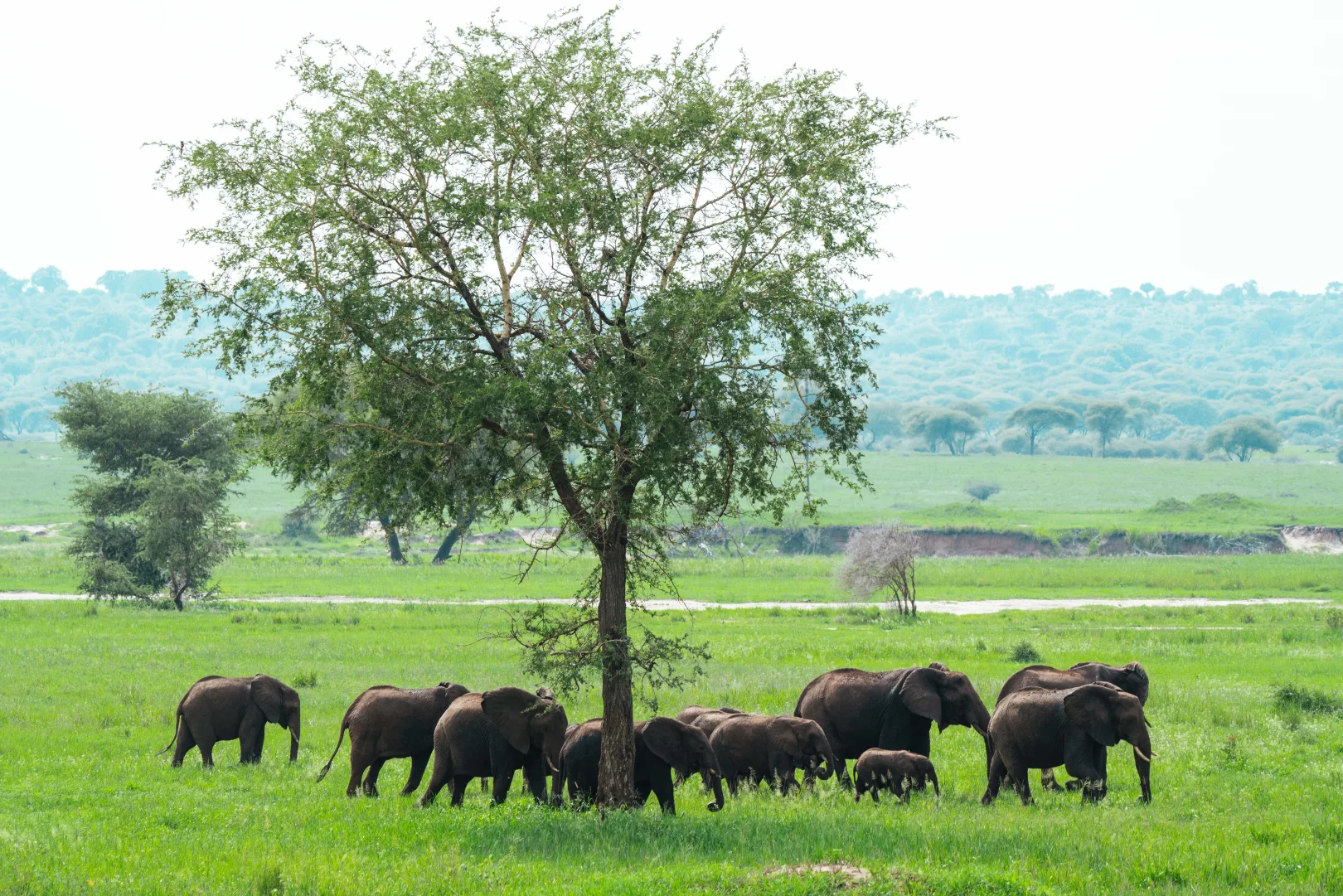
A buffalo herd in Tanzania — if one buffalo is watching you, the whole herd is watching you
Where to Find Buffalo in Tanzania
Tarangire National Park — The most reliable buffalo viewing in Tanzania. Herds of 200+ are common along the Tarangire River during dry season. The concentration is extraordinary.
Ngorongoro Crater — The crater floor holds impressive buffalo populations with particularly large, dark-bodied individuals with horn spans that can exceed one metre. The sight of a large bull buffalo moving across the crater floor, with the wall of the caldera in the background, is one of the iconic images of a Tanzania safari.
Serengeti National Park — Herds of several hundred are common in the western corridor and southern plains, often found in association with lion prides who follow them as a food source.
The Encounter — What to Watch For
Spend time with a buffalo herd and the indifference that most visitors feel dissolves into something else. Watch the hierarchy in action — which bull holds the best resting spot, how younger males defer, how the herd reorganizes when a new individual arrives. Watch the collective attention — the moment when one animal's alertness spreads to the entire group. Watch a herd move: hundreds of animals, coordinated without a word spoken.
The buffalo is the most underrated of the Big Five because it rewards patience in a way that the more glamorous members of the five do not. It asks you to pay attention. When you do, it delivers.
Frequently asked questions
Where is the best place to see buffalo in Tanzania?
Tarangire National Park offers the most reliable buffalo viewing — herds of 200 or more are common along the Tarangire River during dry season. The Ngorongoro Crater floor holds impressive populations with particularly large specimens. The Serengeti's western corridor and southern plains also host herds of several hundred.
Why is the buffalo called the underrated fifth of the Big Five?
The buffalo's appeal is not immediately obvious. It does not offer the drama of a lion hunt or the elegance of a leopard in a tree. What it offers is subtler: the experience of watching hundreds of animals moving as a single organism, each one aware of the others, each one contributing to a collective attention that is genuinely impressive to witness.
Are Cape buffalo dangerous?
Yes — buffalo are among the most dangerous of the Big Five. Wounded bulls are widely considered the most dangerous animals in Africa. However, a healthy buffalo herd in the wild is not aggressive toward vehicles or humans — the danger comes from wounded or isolated individuals.
What should you look for when watching a buffalo herd?
Watch the hierarchy in action — which bull holds the best resting spot, how younger males defer, how the herd reorganizes when a new individual arrives. Watch the collective attention — the moment when one animal's alertness spreads to the entire group. Watch a herd move: hundreds of animals, coordinated without a word spoken.
How many buffalo are in Tanzania?
Tanzania holds significant buffalo populations across its national parks and protected areas. The Serengeti alone is estimated to hold tens of thousands of buffalo, with large herds commonly sighted in the western corridor and southern plains.
Begin a Conversation
See buffalo with Don
Don has been running safaris in Tanzania since 1978. He will tell you which parks offer the best buffalo viewing at any given time of year.
Begin a Conversation on WhatsAppContinue reading