Tanzania's safari reputation rests primarily on the northern circuit — the Serengeti, Ngorongoro, Tarangire. These are extraordinary parks, and we send many clients there. But for travellers who want to go further, who want to reach the places that most visitors to Tanzania never see, there are Katavi and Mahale Mountains.
Katavi National Park, in the far west of Tanzania, receives fewer than a thousand visitors per year. Its hippo populations are among the largest in Africa. Its elephants move through landscapes of palm savanna and floodplain in herds of a size that will stop you. Its wild dogs den on the plains in ways that make for sightings of extraordinary intimacy. Mahale Mountains National Park, on the shores of Lake Tanganyika, is home to one of Africa's most habituated chimpanzee families, reachable only by boat across the lake or by light aircraft to a beach airstrip. Getting there is part of the experience.
“These are not parks you visit. They are places you are fortunate enough to reach.”

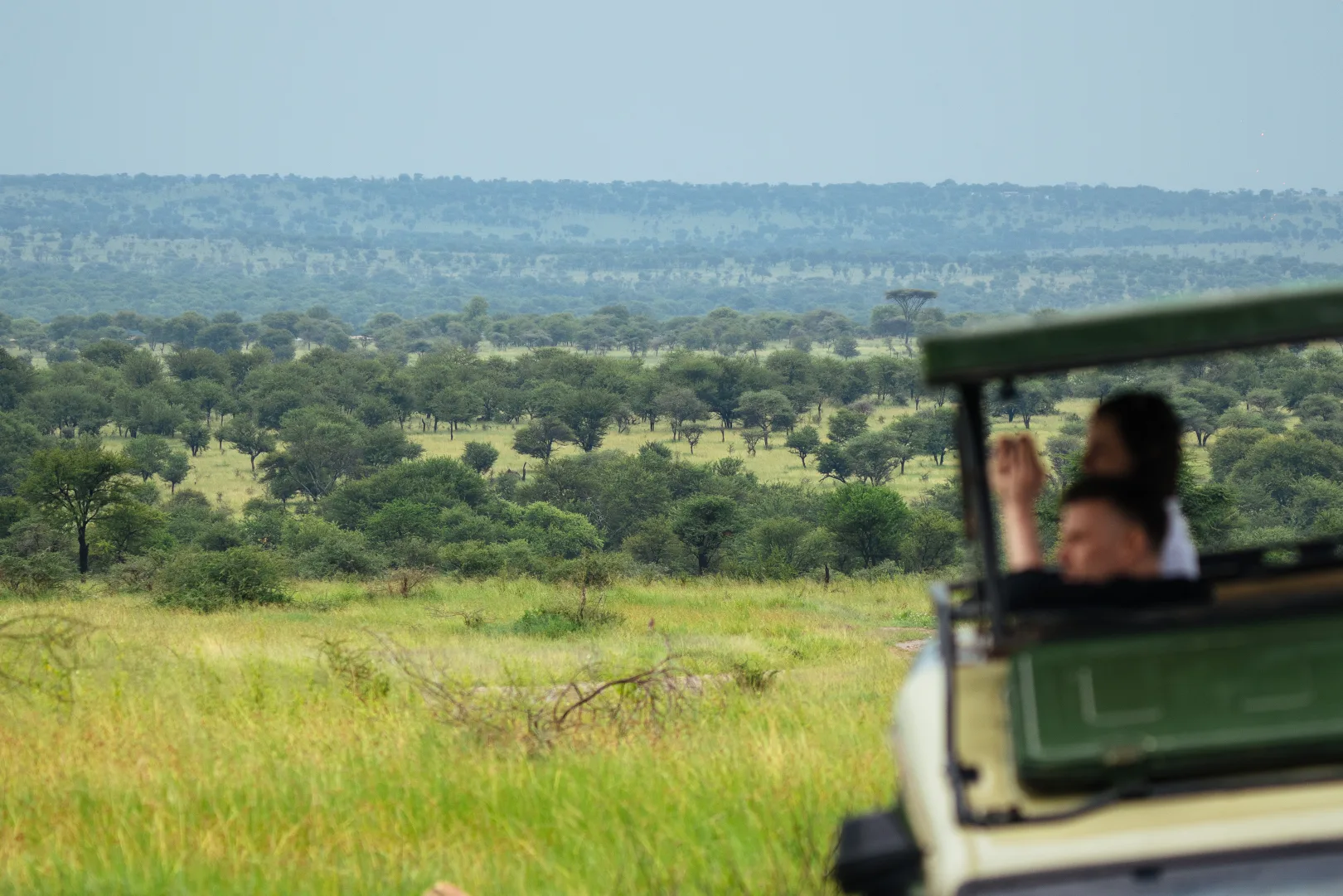
Katavi National Park — fewer than a thousand visitors per year, and wildlife concentrations that rival anywhere in Africa
Katavi National Park
Katavi is Tanzania's best-kept secret. At 4,471 square kilometres, it is the third largest national park in Tanzania, yet it receives fewer visitors per year than many private conservancies in the Serengeti. The reason is simple: access requires commitment. There are no major tourist facilities, no large lodges, no tour-bus circuits. What there is, is wildlife on a scale that will take your breath away.
The Katuma River is the lifeblood of Katavi during the dry season. As water becomes scarce across the floodplain, hippos concentrate in the river in pods of three and four hundred individuals, crammed together in water that has become the last reliable refuge for hundreds of metres in every direction. The sight of four hundred hippos in a single pool — bellowing, jostling, defecating in the only water left — is one of Africa's most extraordinary wildlife spectacles, and one that most people who have spent time in Tanzania's more famous parks have never witnessed.
The elephant herds that move through Katavi's palm savanna are similarly remarkable. They are not the nervous, crowd-sensitive elephants of parks where vehicles are constant presences. They are elephants that have learned to share space with people who arrive rarely, and the difference in their behaviour is perceptible. You can watch a herd of a hundred elephants cross the floodplain with a patience and deliberateness that feels ancient.
Katavi's lions have learned to hunt the abundant buffalo and hippo calves that the concentration of animals creates. Wild dogs den in the park's interior, and the hunting sequences you can witness in Katavi — wild dogs working cooperatively against prey that has nowhere else to go — are among the finest in Africa.
Mahale Mountains National Park
Mahale Mountains National Park is unlike any other wildlife experience in Tanzania. It sits on the eastern shores of Lake Tanganyika — the lake that is both the deepest and one of the oldest freshwater bodies on Earth — and behind it rise forested mountains that climb to over two thousand metres. The combination of lake, mountain, and ancient forest is unlike anything else in East Africa.
The park is home to one of Africa's most studied chimpanzee populations. The M groups family has been habituated over decades by researchers at the Mahale Mountains Research Project, and while they are not as fully habituated as Rwanda's, the experience of tracking them through the forest — hearing them before you see them, following the calls through dense vegetation, then suddenly coming upon a hundred chimps feeding or playing or grooming — is one of the most profoundly moving wildlife encounters you can have.
What makes Mahale different from Rwanda is the combination of the chimpanzee experience and the environment. You reach the park by boat across Lake Tanganyika — a journey of one to two hours along a shoreline of extraordinary beauty. You stay at small, intimate camps that have no road access — everything comes by boat or by air. The whole experience has a quality of remove that no other chimpanzee destination can match.
Lake Tanganyika itself is worth the trip. The water is clear, warm, and home to over two hundred species of cichlid fish found nowhere else on earth. Snorkelling in the shallows near camp, watching the fish move through the underwater architecture of the rocky lake floor, is a perfect complement to the intensity of a morning tracking chimpanzees.

Lake Tanganyika — the approach to Mahale Mountains is by boat across one of the world's most beautiful lakes
Combining Katavi and Mahale
The two parks complement each other in ways that make a combined itinerary genuinely extraordinary. Katavi delivers big, dramatic wildlife theatre — hippos and elephants and predator action. Mahale delivers intimacy and landscape — chimpanzee encounters in ancient forest, lake water of impossible clarity, mountains rising from the shore behind you.
The logistics of combining both require planning. Both are remote, both require light aircraft access, and the camps in both parks are small and limited in availability. The optimal route is a flight from Arusha to Katavi (approximately two hours), a night or two in Katavi, then a light aircraft transfer south to Mahale (approximately one hour), with a boat crossing to your camp on arrival.
Alternatively, you can fly from Arusha directly to Mahale's beach airstrip, spend several nights there, then take a charter flight north to Katavi. Or connect from the Serengeti or Ngorongoro via Arusha or Dar es Salaam. We have arranged every combination of these routes and know the logistics intimately.
What we consistently tell clients who ask about combining the two: the travel between them is significant, and the minimum time we would recommend for both is six nights — three in Katavi, three in Mahale. Anything less and you are rushing through the two parks that most reward unhurried time.
When to Go
June to October (Dry Season) — The optimal time for both parks. In Katavi, the concentration of wildlife around shrinking water sources creates extraordinary viewing conditions. Hippo pods are at their largest, elephants most visible, and predator action most frequent. In Mahale, the dry season means easier forest tracking — the chimpanzees stay at lower elevations where the fruit is more concentrated, making encounters more predictable. This is peak season for both parks and camps book twelve months in advance.
November to May (Wet Season) — Green, lush, and virtually empty. The parks receive very few visitors during the wet season, and the landscapes are extraordinarily beautiful. Birding is exceptional — both parks have species lists that will excite serious ornithologists. Access can be more difficult, and some camps close during the heaviest rain months. For the traveller who wants genuine remoteness and is flexible on logistics, the wet season offers an almost private experience.
Katavi and Mahale are not parks you fit into a standard Tanzania itinerary. They require intention, planning, and the willingness to invest time and resources in reaching the places that reward those who make the effort. For the right travellers — those who have already experienced the northern circuit and want to go further — they are among the most extraordinary destinations in Africa.
We have sent clients to both parks, and the clients who come back most transformed are the ones who went with the right expectations: unhurried, aware that the journey is part of the experience, and ready to be present in parks where the wildlife outnumbers the visitors by a considerable margin.
Questions
About Katavi and Mahale Mountains
How do you get to Katavi and Mahale Mountains?
Both parks are accessed exclusively by light aircraft from Dar es Salaam or Arusha. There are no road connections to either park. The flight into Mahale lands on a beach airstrip on the shores of Lake Tanganyika — you step off the aircraft into a world that feels entirely separate from anywhere else in Africa. Katavi is similarly remote, its access requiring the kind of operational logistics that only a dedicated private operator can arrange properly.
What is the difference between Katavi and Mahale?
Katavi is a wildlife-dominated park — enormous hippo pods in the Katuma River, elephant herds of exceptional size, and a predator population that includes lions, leopards, and wild dogs. Mahale Mountains is defined by its forested mountain slopes rising from Lake Tanganyika and its population of wild chimpanzees. The two parks complement each other extraordinarily well: Katavi delivers big game at a concentration that rivals anywhere in Africa; Mahale delivers the most intimate wildlife encounter in Tanzania — tracking chimpanzees through ancient forest.
Is Mahale or Rwanda better for chimpanzee trekking?
Rwanda's Volcanoes National Park and Tanzania's Mahale Mountains National Park offer fundamentally different chimpanzee experiences. Rwanda is more accessible and has a more developed infrastructure for trekking. Mahale is more remote, more wild, and the landscape — forested mountains rising directly from one of the world's largest freshwater lakes — is dramatically more beautiful. The chimpanzees at Mahale are less habituated than Rwanda's, which means the encounter is more wild and less predictable. For travellers who have done both, Mahale consistently ranks as the more memorable experience.
What is the best time to visit Katavi?
The dry season from June to October is optimal for wildlife viewing in Katavi. As water sources shrink, animals concentrate around the remaining pools — the Katuma River and Lake Katavi become stages for extraordinary wildlife drama. Hippo pods that number in the hundreds huddled together in shrinking pools, crocodiles wait at river crossings, and elephants move through the landscape in long lines. The wet season from November to May makes access more difficult, though the park's birdlife at this time is exceptional.
How many days do you need for Katavi and Mahale?
We recommend a minimum of four nights split between the two parks — two nights in Katavi and two nights in Mahale. For a genuine immersion in what both parks offer, six to eight nights is ideal. The remoteness of these parks means that the travel itself is part of the experience — rushing through either one would be to miss the point entirely.