

The figure $5,000 per person per night appears regularly in safari marketing and it means very little on its own. What you are paying for at that price point varies enormously between camps — and understanding that variance is the difference between a trip that feels overpriced and one that feels, in retrospect, like the finest travel experience you will ever have.
This article is about the latter category. Not every camp that charges $5,000 or more per night belongs here — but the ones that earn the price do so for reasons that have nothing to do with thread count or champagne lists.
“The best safari camps do not feel like accommodation. They feel like being quietly admitted to a private wild sanctuary — for a limited time, and on very specific terms.”

The Serengeti at dawn — private concession land, accessible only to guests of exclusive camps
The Difference Is Not What You Think
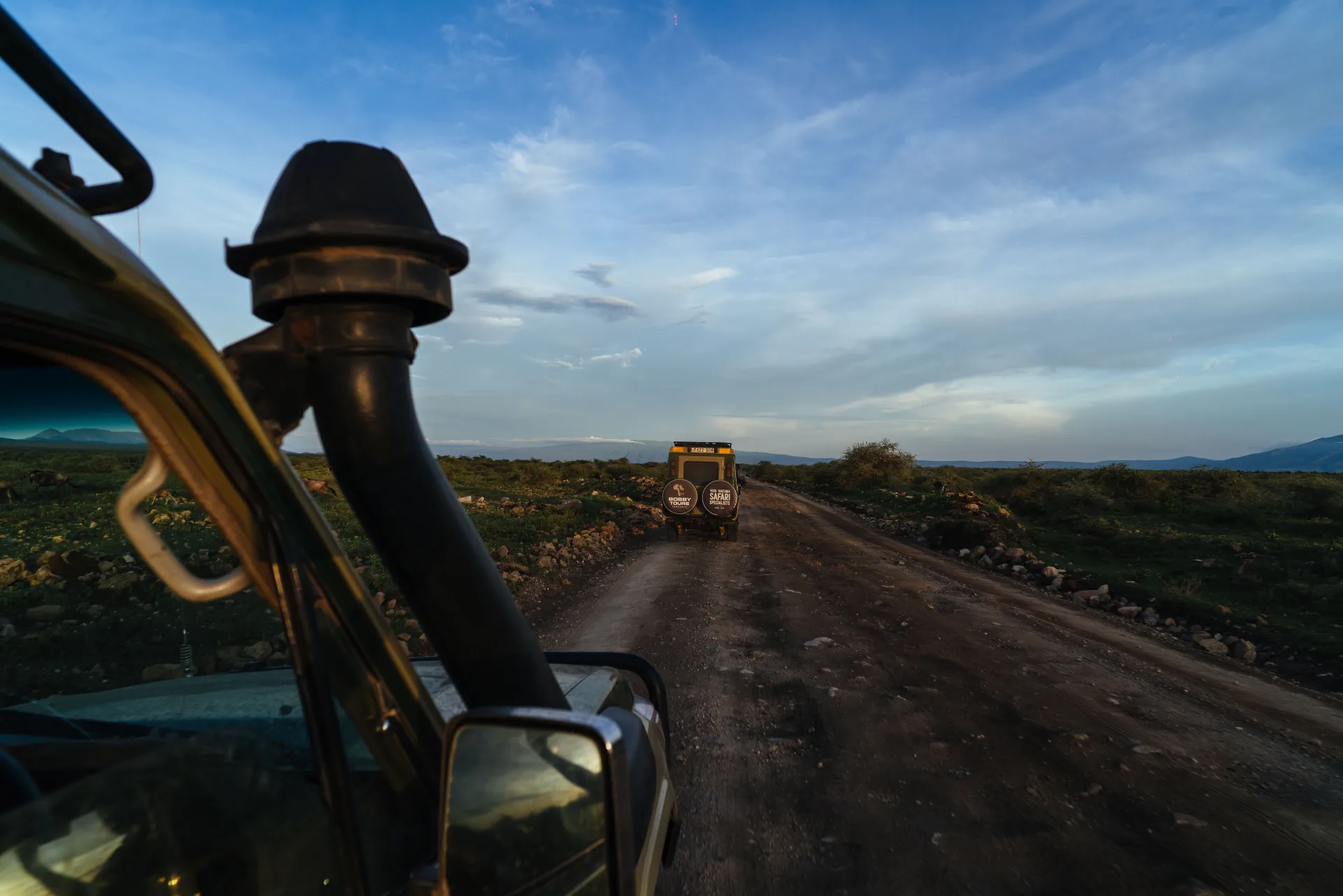
Step off a light aircraft at a remote Serengeti airstrip and into a camp vehicle, and the first thing you notice is silence. Not the absence of noise — the absence of other vehicles. On the plains of a private conservancy, the only machines moving through the landscape are yours and, occasionally, one other camp vehicle from a neighbouring concession. This is not incidental. It is the product.
At a standard luxury camp inside a national park, your wildlife encounters are shared. The same leopard that drew your vehicle drew four others. The lion kill that you observed from fifty metres was observed simultaneously by a convoy of eight vehicles arranged in a semicircle. This is not a complaint about national parks — they are extraordinary resources, and the wildlife concentration is remarkable. But it is a fundamentally different experience from being alone in a landscape.
At the camps in this category, you are almost always alone. Not because the wildlife is less abundant, but because the land is held exclusively for camp guests. There are no public roads, no day-trippers, no other lodge vehicles. When you find a cheetah mother with cubs on a termite mound, you watch her for as long as she permits. There is no-one waiting behind you.
Privacy as the Primary Product
The camps in this tier hold exclusive-use concessions — private land, leased long-term from Maasai communities or held in private conservation trust, that is simply not accessible to anyone who has not booked through a recognised operator. The concession fee is substantial, and it is reflected in the nightly rate. It is also the reason the experience is what it is.
Guest capacity at these camps runs between 6 and 16 guests at most. Some have four tents. At this scale, the camp operates entirely around the guests present — not around a schedule designed for a larger group. Meal times are flexible. Game drive routes are designed for the individuals in the vehicle. The guide-to-guest ratio is typically 1:2 or better. This is not marketing language about luxury. It is operational reality.
The privacy extends beyond wildlife viewing. Your camp vehicle may drive for forty minutes without encountering another human-made structure. The sounds at night are the actual sounds of the African wilderness — lion calls, hippos moving in a nearby waterhole, the particular silence of the bush when something large is moving slowly through tall grass thirty metres from your tent. You are not hearing a performance of the wild. You are inside it.
An ultra-luxury camp at dusk — four to sixteen guests, a private landscape, no schedule imposed by other visitors
Activities That Are Not Available at Standard Camps
Conservancy status is not merely about privacy. It is also the legal framework that permits activities that Tanzania's national park regulations restrict or prohibit entirely.
Night game drives are the most sought-after. After dark, the Serengeti reveals a cast of characters that daylight hours never show — aardwolf emerging from a termite mound, genet cats crossing the vehicle path with amber eyes reflecting the spotlight, lions on the prowl in formations that suggest coordinated hunting. Aardvark, among the most difficult animals to observe in Africa, are seen regularly on night drives in private conservancies. This is not possible inside national parks.
Off-road tracking means that when your guide receives word of a hunting cheetah family or a leopard with a fresh kill, the vehicle can leave the road and follow — at the guide's discretion, and within strict ethical parameters. The ethical framework is set by the camp and the conservancy trust. The guide's call on when to deploy it is where the quality of the operation becomes apparent.
Walking safaris are the most fundamental experience of all. With a rifle or, in some camps, without one, guided by a professional with decades of field experience, you move through the bush on foot. The scale of the landscape changes entirely when you are inside it rather than viewing it through a window. Spines on acacia branches. The smell of marula fruit. The sound of something large breathing nearby, out of sight. This is not an adrenaline experience. It is an attunement.
Fly-camping — sleeping under a canvas simplex on a raised platform in the bush, under the stars, with a guide keeping watch — is available at several of the camps in this category and is the most extraordinary experience that the Serengeti offers. It requires no equipment and no particular fitness. It requires trust in your guide and willingness to be, for one night, genuinely in the landscape rather than beside it.
The Guide Is the Experience
At a standard luxury camp, your guide may be excellent. At a camp at this level, the guide is almost certainly the reason the camp has the reputation it does. The best guides in the Serengeti private conservancies have spent twenty to thirty years in the same landscape. They read the land the way you read a familiar room. They know which drainage lines the leopards use in August, where the lion pride denned three seasons ago and might return, and when the wildebeest columns will arrive from the southern plains.
This knowledge is not decorative. It means that when the wildlife does something unexpected — which it does, regularly — your guide is already positioned to follow it. The best wildlife encounters are rarely planned. They are recognised and then capitalised on, and that recognition requires accumulated time in one place that cannot be replicated by any amount of formal training.
At the ultra-luxury tier, guides are not employees in the conventional sense. Many are shareholders in their camps or long-term partners with the ownership families. They have chosen to remain in one landscape rather than build a career across many. That continuity is the asset you are paying for.

A guide who has spent thirty years in the same landscape reads it the way you read a familiar neighbourhood
See leopards in the wild. Of all the wildlife encounters that justify the ultra-luxury rate, a leopard sighting with no other vehicle in sight is the one guests describe when they return home. A private conservancy camp in the central Seronera valley — with a senior custodian guide who has tracked the same resident leopards for twenty years — is where this is most likely to happen. Our dedicated leopard safari guide explains how we plan the timing and the route; the private safari experience is the format that delivers it.
What the Price Actually Covers
The all-inclusive rate at camps in this category typically covers: all accommodation, all meals and snacks, all drinks including premium wines, spirits and champagne, twice-daily game drives in a private vehicle with a professional guide, park fees and concession fees, laundry, and most camp activities including walking safaris, night drives, bush dinners, and fly-camping where available.
It does not cover international flights, travel insurance, tips, personal purchases, or extensions to other regions. The rate reflects the genuine operational cost of running a small, remote camp with an exceptional guide team, a high food-and-beverage standard, and a concession fee that is not trivial.
When priced against a standard luxury safari, the differential is real and significant. Whether it is worth it depends on what you most want from the experience. If you want to see the Serengeti and its wildlife, a standard luxury camp will deliver that. If you want to be inside the Serengeti, alone in the landscape, moving at the pace the wildlife sets — then the premium is not an indulgence. It is the cost of the actual thing.
Frequently Asked Questions
What exactly does $5,000 per night at a Serengeti camp include?
At camps in this category, the rate is typically all-inclusive: all meals, all drinks including premium wines and spirits, twice-daily game drives in a private vehicle, park fees, laundry, and most activities available at the camp — walking safaris, night drives, bush dinners. It does not include international flights, travel insurance, tips, or personal purchases. The rate reflects the operational cost of running a camp at this scale in a remote location with a very high guide-to-guest ratio.
Is the $5K+ price point justified over a standard luxury camp?
For certain travellers, yes — categorically. The distinction is not comfort (standard luxury camps are already very comfortable) but access. At a private conservancy camp, you are the only vehicle in the landscape for many square kilometres. The wildlife encounters are the same Serengeti wildlife — but the experience of them is fundamentally different. There is no convoy at the leopard tree. There is no queue at the hippo pool. If that difference matters to you, the price differential is justified. If it does not, a standard luxury camp will still deliver an exceptional safari.
How far in advance do I need to book an ultra-luxury camp?
For travel during peak season — July through October, when the migration is in the Northern Serengeti — the most exclusive camps require booking 10 to 14 months in advance. Some have booking windows that open to returning guests before the general public. Shoulder seasons (April, May, November) offer better availability and shorter lead times. If you are planning travel more than a year out, you have the luxury of choice. If you are planning within six months, some excellent options may already be closed.
What makes a guide worth paying a premium for?
A guide who has spent 20 years in the same landscape reads it the way you read a familiar neighbourhood. They know which kopje the lions prefer in the dry season, where the leopards bring their cubs when the Ngorongoro rainfall shifts, and when to take a circuitous route back to camp because the elephant herd is moving through the obvious path. This is not a skill that can be taught in training — it is accumulated time in one place. At the best ultra-luxury camps, guides are not employees; they are custodians of a specific piece of land.
Are ultra-luxury camps suitable for families with young children?
Some ultra-luxury camps accept children from around eight years old for game drives, and a few are explicitly family-focused. However, most of the camps in this category are designed for adults, and many impose minimum age policies for game drive participation. The environment — early morning starts, remote locations, limited medical facilities — is not ideally suited to very young children. For multi-generational families, we typically recommend combining one family-appropriate property with a shorter stay at an ultra-luxury camp for the adults.
Can Bobby Safaris arrange stays at ultra-luxury Serengeti camps?
Yes. We maintain direct relationships with the properties we recommend in this category — including some that do not appear on any booking platform and are accessible only by operator introduction. If you are considering a camp at this level, speak with Don directly. He will tell you honestly whether it is the right fit for your trip, your timeline, and your budget.
The ultra-luxury Serengeti camp tier is not for everyone — and we say that without hesitation. If the experience we have described sounds like what you are looking for, speak with Don directly. He will tell you honestly whether it is right for your trip, your timeline, and your party. If it is not, he will recommend something that is.


