Conservation Strategy
Ultra-Wealthy Conservation Safari: How a Tanzania Trip Becomes a Land-Preservation Legacy
The $25,000-a-night conservancy camp is not merely a luxury purchase. Under the right structure, it is a land-preservation mechanism with genuine tax efficiency and measurable ecological output. This guide is for family offices, UHNW philanthropists, and individuals who want their safari investment to outlast the experience itself.Ultra-Luxury Tanzania Safari Philanthropy is worth exploring alongside this destination.

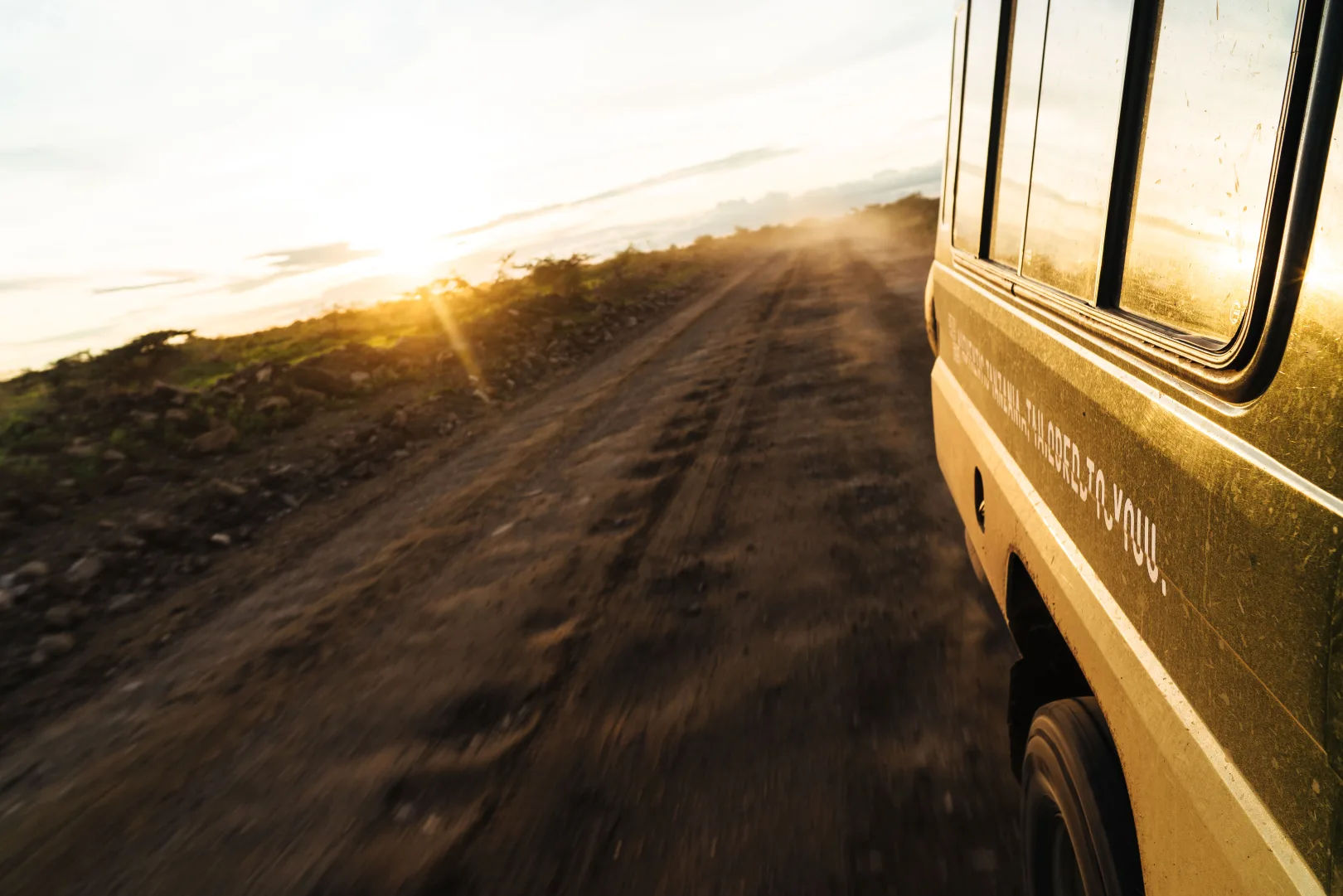
A private conservancy at dawn — the same Serengeti ecosystem, but under a different set of land-management incentives
When a family office or high-net-worth individual allocates $50,000 to $150,000 for a Tanzanian safari, the transaction is typically categorised as a luxury travel expense. That framing is understandable. It is also incomplete.
The private conservancy model — where a lodge or camp holds a long-term lease on a specific landscape outside the national park system — means that a portion of every safari fee paid flows directly into the economic incentive that keeps that land in wildlife use rather than agriculture, subdivision, or extraction. The conservancy is not a tourism product that happens to support conservation. It is a conservation vehicle that funds itself through tourism.
For UHNW travellers who want that contribution to be structured deliberately — with full tax efficiency, directed impact, and legacy planning — the conservancy safari is one of the more compelling instruments available in philanthropic travel.
Why Tanzania Private Concessions Are Unlike Anything Else in Africa
Tanzania's private conservancies are not uniform. Each operates under its own management philosophy, and the differences matter when you are trying to direct impact deliberately.
top-tier operators operates concession land in the Serengeti and Grumeti ecosystem under a model that prioritises absolute guest exclusivity and large-landscape conservation. Their low-density model — twelve suites maximum at most properties — means guest fees fund a significant land area per visitor. Their impact reports cover anti-poaching, rhino monitoring, and community scholarship programmes.
Naboisho Conservancy is a community-owned model — the land is owned by Maasai shareholders who receive lease income and employment. The conservancy fee funds the community directly as well as conservation operations. For donors whose priority includes community economic development alongside wildlife protection, Naboisho represents a different calculus than the typical private conservancy approach.
The Lamai Triangle and Bologonja corridor in the far north represent the most remote, least-visited conservancy terrain in Tanzania. The land is managed under strict guest caps, and the rhino populations in this area have been a significant conservation success story over the past decade. The Grumeti Fund, which manages surrounding concession land, publishes detailed annual impact data that makes this one of the more auditable conservation investments available.
The contrast with the national park model is structural. Tanzania's national parks are managed by TANAPA, a government authority that must balance conservation mandates with visitor access at scale. The parks are extraordinary — but the revenue model depends on volume. Private conservancies resolve the tension differently: fewer guests, higher fees per guest, and the economic interest of the operator entirely aligned with keeping the land intact.

Small camps on large concessions — the economic model depends on keeping guest numbers low and land intact
The Tax Architecture of a Conservation Safari
The most effective UHNW travellers treat the safari and the conservation contribution as two separate financial instruments — both of which can carry tax efficiency when structured correctly.
U.S. Donors: 501(c)(3) Land Trust Mechanics
Gifts to qualified U.S. 501(c)(3) organisations are deductible up to 60% of adjusted gross income for cash contributions, with a five-year carryforward for excess. Several organisations operating in Tanzania — including the Africa Wildlife Foundation and Conservation International — have such status. More specifically, some land trusts hold conservation easements on Tanzanian land and accept directed gifts from U.S. donors for specific parcels.
The structure that works: pay the full conservancy camp fee for the experience (this is travel, not deductible). Then, separately, make a directed contribution to the conservancy's parent organisation or a qualifying intermediary — in an amount you choose, to a programme you specify. That separation is critical: conflating the two makes the donation portion harder to defend audit-wise.
UK Donors: Gift Aid and ConservationCharities
UK taxpayers can claim Gift Aid on donations to registered charities, adding 25% to the value of the gift at no additional cost to the donor. Several UK-registered charities fund Tanzanian conservation work and can receive designated donations for specific projects. For donors subject to the UK domicile remittance basis rules, this requires careful structuring — speak to a UK-based wealth adviser with international philanthropy experience.
High-Income-Year Optimisation
For UHNW individuals with highly variable income — investment managers, executives with large equity grants, business owners — a substantial conservation donation in a high-income year amplifies the deduction's value significantly. Pairing a $100,000 conservancy contribution with a year in which your taxable income spikes means the deduction saves at your marginal rate. Working with a wealth adviser to time the contribution relative to your income calendar can substantially increase the effective impact of the same donation amount.
What Actually Moves the Needle
Not all conservation contributions are equal. The difference between meaningful and performative comes down to two questions: is the money going to a specific, verifiable programme, and is that programme's outcome actually dependent on external funding?
Rhino rewilding in the Serengeti ecosystem is one of the clearest examples of a programme that has produced measurable, verifiable results from targeted investment. The Grumeti Fund's rhino monitoring programme — funded substantially by conservancy guest fees and directed donations — has grown the black rhino population in the Grumeti Reserve from near-zero to a stable, breeding population over twenty years. Annual population data is published. The programme is auditable.
Anti-poaching tech is an area where UHNW contributions have produced outsized results relative to the investment. Drone surveillance programmes — which require significant capital but relatively modest operating costs — have transformed patrol coverage in large, remote concession areas. K9 units trained for specific wildlife crime detection add a complementary layer. Both are purchasable: a donor can fund a named drone unit or K9 team and receive regular operational reports.
Community health and education matching is the most context-dependent. The evidence base for conservation outcomes from community development spending is mixed — it depends heavily on governance quality and local implementation. Directing funds to specific, named scholarships or clinic equipment rather than general community programming is more auditable.
The practical step for any UHNW traveller: before booking, ask the conservancy operator for their most recent annual impact report. If they cannot produce one, that is information. If they can — and the numbers track year-on-year — you have a basis for a directed contribution that you can actually follow.
How to Book This with Bobby Safaris
We work directly with the management of the key private conservancy properties in Tanzania — private conservancy operator, the Lamai Triangle operators, the Grumeti region properties, and Naboisho. These relationships are built on consistent bookings, not commercial arrangements or commissions.
For UHNW clients who want to structure the conservation component deliberately, we manage the logistics of the safari itself and coordinate with the conservancy management on the directed contribution. This is not an add-on service — it is how we work with clients at this level. Don is directly involved in custom planning for conservancysafaris of this type.
There is no additional fee for this planning component. The conservancy contribution is yours to direct; we simply ensure it reaches the right programme in the right structure.
Related Reading
Frequently Asked Questions
Can a Tanzania conservancy safari be structured as a tax-deductible conservation donation?
Yes — for U.S. donors, gifts to qualified 501(c)(3) land trusts working in Tanzania are generally tax-deductible. The Africa Wildlife Foundation, Conservation International, and specific land-trust vehicles aligned with Tanzanian conservancies have such status. A safari booked through Bobby Safaris can be paired with a separate, structured conservation contribution — your travel cost and your donation are separate transactions, both potentially deductible when properly structured with a wealth advisor. For a side-by-side comparison of how conservancy access maps onto the luxury and ultra-luxury tiers, see our <a href="/ultra-luxury-safari-vs-luxury-safari/" class="text-gold hover:text-copper underline underline-offset-2 transition-colors">ultra-luxury vs luxury safari</a> guide. Conservancy tax-deductibility and conservation funding mechanics differ on the Kenya side, and a Tanzania vs Kenya safari comparison is incomplete without weighing the donor-vehicle landscape — see our <a href="/tanzania-vs-kenya-safari/" class="text-gold hover:text-copper underline underline-offset-2 transition-colors">Tanzania vs Kenya safari comparison</a>.
What is the difference between a conservancy lease fee and a direct conservation donation?
A conservancy lease fee is what you pay to stay at a conservancy camp — it covers your accommodation, guiding, and park access, and a portion flows to land costs and conservation programmes. A direct conservation donation goes entirely to the programme: anti-poaching, habitat restoration, or community benefit agreements. The most effective UHNW travellers separate the two — pay the full camp fee for the experience, then make an additional, directed donation to the specific programme they most care about, in the amount they choose rather than what is built into the package. For the full picture of how that structure sequences into a private Tanzania itinerary, see our <a href="/tanzania-safari-tours/" class="text-gold hover:text-copper underline underline-offset-2 transition-colors">Tanzania safari tour overview</a>.
How do I verify that my conservancy contribution is making a measurable difference?
Ask each conservancy for their annual impact report — number of species monitored, rhino population trends, ranger patrol coverage in square kilometres, community health beneficiaries. The Grumeti Fund publishes detailed annual reports. Naboisho Conservancy publishes game count data. For anti-poaching specifically, drone patrol coverage and K9 unit deployment numbers are verifiable indicators. If a conservancy cannot produce basic impact metrics on request, that is itself informative.
Are Tanzania conservancies a better conservation vehicle than donating to a large international NGO?
Not necessarily better — different. Large organisations like the Wildlife Conservation Society or WWF have institutional capacity, scientific programmes, and policy influence that no single conservancy can match. But they also have significant organisational overhead. A private Tanzanian conservancy with a small guest base and a direct lease relationship gives you geographic specificity: you know exactly which landscape your money is protecting. For UHNW donors who want to see their contribution on a map — literally — a conservancy land-trust relationship is more tangible. The most sophisticated philanthropists use both. The full set of conservation-led camps and the access they provide is mapped out in our <a href="/bobby-safaris-exclusive-experiences/" class="text-gold hover:text-copper underline underline-offset-2 transition-colors">Bobby Safaris exclusive experiences</a>.