
There are two versions of the Tanzania safari-with-teens story. In the first, the teenager spends the week in a state of sophisticated suffering — woken at five-thirty every morning, packed into a vehicle with strangers, watching wildlife from behind a smudged window while a guide delivers monologues about wildebeest migration patterns that no teenager has ever voluntarily listened to. They remember the early mornings and the food being different and that there were elephants.Family Safari Tanzania is worth exploring alongside this destination.
In the second version, a private guide who genuinely engages with teenagers takes the same family on the same safari. Night drives replace some of the early morning sessions. The teenager is invited to use the radio to call in a leopard sighting. The guide asks questions about what the teenager noticed rather than delivering lectures. The same wildlife is seen. The experience is completely different.
This article is about the itinerary design that makes the second version possible.
“The moment a teenager calls in their own leopard sighting is the moment the safari becomes theirs.”
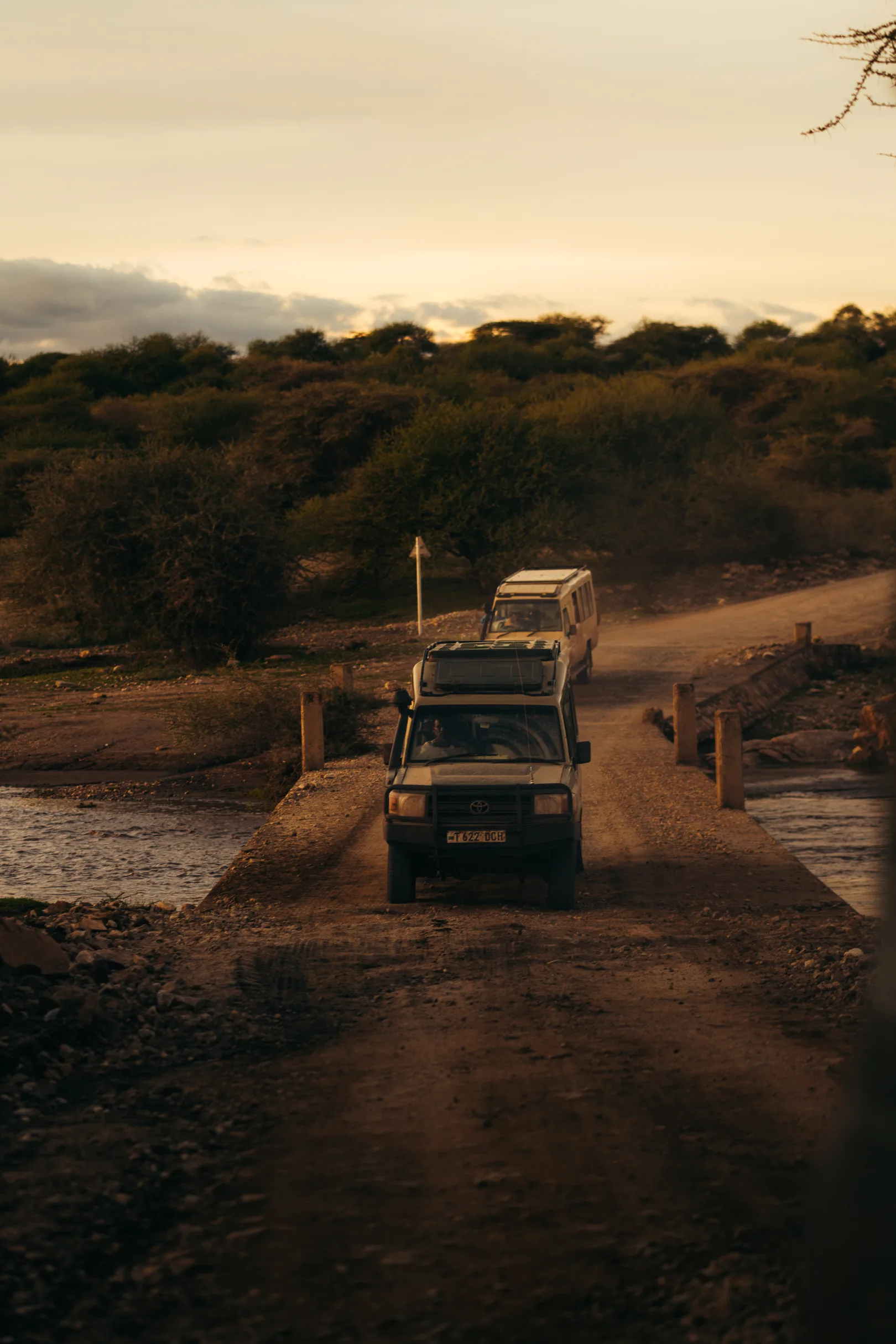
A private safari vehicle means teenagers can engage at their own pace — not the pace of strangers
Why Most Standard Itineraries Fail Teenagers
The standard Tanzania safari itinerary is designed by adults, for adults, in a format that has been refined over decades of what the market expects. It typically involves pre-dawn wake-up calls, a morning game drive of three to four hours, breakfast at camp, a midday rest period, an afternoon game drive, and dinner. The pattern repeats for the duration of the trip.
This format works well for adults who have specifically chosen a wildlife-focused holiday and who have the patience for the pace. It fails most teenagers because it treats them as smaller adults rather than a distinct demographic with different engagement patterns.
The failures cluster around three problems. First, early starts are punishing for teenagers who are not morning people — and teenagers are disproportionately not morning people in a way that adults sometimes forget. Second, passive observation is not engaging for anyone, but teenagers have shorter tolerance for it than adults who have actively chosen the experience. Third, wildlife narration that talks at people rather than with them — the standard guide behaviour on small-group shared vehicles — rapidly loses a teenage audience.
None of these problems are inherent to safari. They are itinerary design problems, and they have solutions.
The Ultra-Luxury Private Itinerary Advantage
A private ultra-luxury safari — one with a dedicated vehicle, a private guide, and full scheduling flexibility — solves the teenage engagement problem structurally rather than cosmetically.
The key difference is that the private guide can read the energy in the vehicle and adapt. If the teenager slept badly and is not receptive at six in the morning, the game drive adjusts — shorter morning drive, return to camp for a proper breakfast and a rest, then a longer afternoon and evening drive when the teenager is genuinely alert. The guide can also ask questions rather than deliver lectures: what did you notice about the way that elephant herd was moving? Did you see the interaction between the two male giraffes? The guide turns the teenager from a passive observer into an active participant in the experience.
Private conservancy access also unlocks activities that are not available on national park land. Night game drives with spotlights — finding lions or hyenas after dark — are genuinely exciting in a way that a midday game drive simply is not. Walking safaris with armed trackers engage teenagers physically in a way that sitting in a vehicle does not. These are not add-on activities. In a teen-engagement itinerary, they are the backbone of the experience.
The Multi-Generational Planning Problem
Families with teenagers are frequently multi-generational — grandparents joining alongside the teenage children — and this creates a genuine tension in itinerary planning. The grandparents want comfort and early dinners. The teenagers want night drives and sleeping in. The parents want both.
Ultra-luxury private conservancy safaris handle this tension better than any other format. The reason is that private camps with fewer than twenty tents can segment the experience without fragmenting the family. The teenager and parents do a night drive together. The grandparents join for the midday rest and a private conservancy walk in the cooler morning hours. The private guide manages the schedule rather than the schedule managing the family.
The specific recommendation for multi-generational families with teens is a single private itinerary rather than two separate programmes. Splitting a family across different vehicles in a conservancy environment reduces the quality of the shared experience and creates logistical friction that no-one needs on holiday. The better approach is one vehicle, one guide, one flexible schedule — with teen engagement designed in from the start.

Walking safaris with armed trackers engage teenagers physically in a way that passive game drives cannot
What to Tell Your Teenager Before You Go
The frame you set before departure matters more than you might expect. If a teenager understands that a Tanzania safari is genuinely different from a beach resort — that the wildlife is not a performance staged for tourists, that sightings require patience and stillness, that there will be early starts and long periods of apparent nothing followed by extraordinary moments — they can engage with that reality on its own terms.
The worst thing you can do is under-prepare a teenager for what a safari actually involves and then manage their disappointment in the field. The best thing is to be honest about the pace, the early mornings, and the fact that a safari is not theme-park wildlife — it is unpredictable, unhurried, and deeply rewarding if you give it the right attention.
Also worth mentioning: the photography. Modern teenagers are often deeply engaged by wildlife photography in a way that previous generations were not. Giving a teenager a decent camera or letting them use a long lens to photograph wildlife gives them an active task during sightings that is entirely different from passive watching. The best teenage safari clients we have worked with arrived with a camera and left as genuine wildlife photography enthusiasts.
Frequently Asked Questions
Is a Tanzania safari appropriate for teenagers?
Yes — with the right planning. The appropriate question is not whether teens can handle a safari, but whether the specific itinerary is designed for their engagement rather than built around adult preferences. The difference is pacing, activity variety, and how the experience is framed. An ultra-luxury private conservancy safari — with walking safaris, night drives, flexible timing, and a private guide who can read a teenage mood — is well-suited to families with teens. A shared small-group national park safari with rigid early wake-up calls and no activity variety is not.
What is the minimum age for a Tanzania safari with teens?
Most Tanzania safari operators set a minimum age of 8 to 12 years for game drives, with walking safaris typically restricted to 12 or older. These are not safety-driven restrictions so much as experience-driven ones: younger children struggle with the early starts, the stillness required at sightings, and the length of game drive days. Teenagers, by contrast, are capable of the full range of activities — including night drives, walking safaris with armed trackers, and full-day game drives — when the itinerary is designed with them in mind.
How do you keep teenagers engaged during game drives?
The single most effective strategy is a private guide who is genuinely good with teenagers — someone who can shift from factual wildlife narration to competitive bird identification to storytelling about predator behaviour depending on the energy in the vehicle. The second most effective strategy is activity variety: a Tanzania safari itinerary for teens should include at least one night drive, at least one walking safari, and ideally a visit to a conservancy where off-road driving can follow wildlife rather than staying on predetermined roads. Boredom on safari is almost always an itinerary design failure, not a teenager failure.
Should teenagers have their own itinerary or share the adult itinerary?
For ultra-luxury family safaris, we recommend building one itinerary with teen engagement built in rather than a separate parallel programme. The reason is logistics — splitting families across different vehicles and schedules in a conservancy environment is operationally complex and reduces the quality of the shared experience. The better approach is a single private itinerary with flexibility: game drives paced for teens, activities that require their participation rather than passive observation, and private guide conversations that treat them as intelligent participants rather than observers.
If you are planning a Tanzania safari with teenagers and want to discuss the right itinerary approach for your family — including whether ultra-luxury private conservancy is the right fit, or what pacing and activity mix works best for your teenagers — tell us your family composition, your dates, and what you are hoping your teenagers take away from the experience. We will give you a direct assessment of what is possible and what it will cost.