

There are conversations that cannot happen in a boardroom. Not because the participants lack the vocabulary or the will, but because the room itself carries too much history. The desk between them is the problem. So is the phone that interrupts, the colleague who knocks, the formality that accrues to any space where the family enterprise is already doing business. The bush does not have these constraints. Neither does the shared experience of watching a leopard drag prey into a tambouta tree while the light drops over the Serengeti.
This is the core insight behind a specific category of bespoke Tanzania safari: the multi-generational journey designed not as a holiday, but as a structured transfer event. The patriarch who has spent three decades building something wants his adult children and their adult children to understand what it is they are inheriting — not in the abstract, not through a series of documents, but through a shared encounter with something genuinely worth preserving. Tanzania, at the right tier, provides exactly that encounter.
“The question is not whether the trip was worth the investment. The question is whether the investment produced the conversation that justified it.”
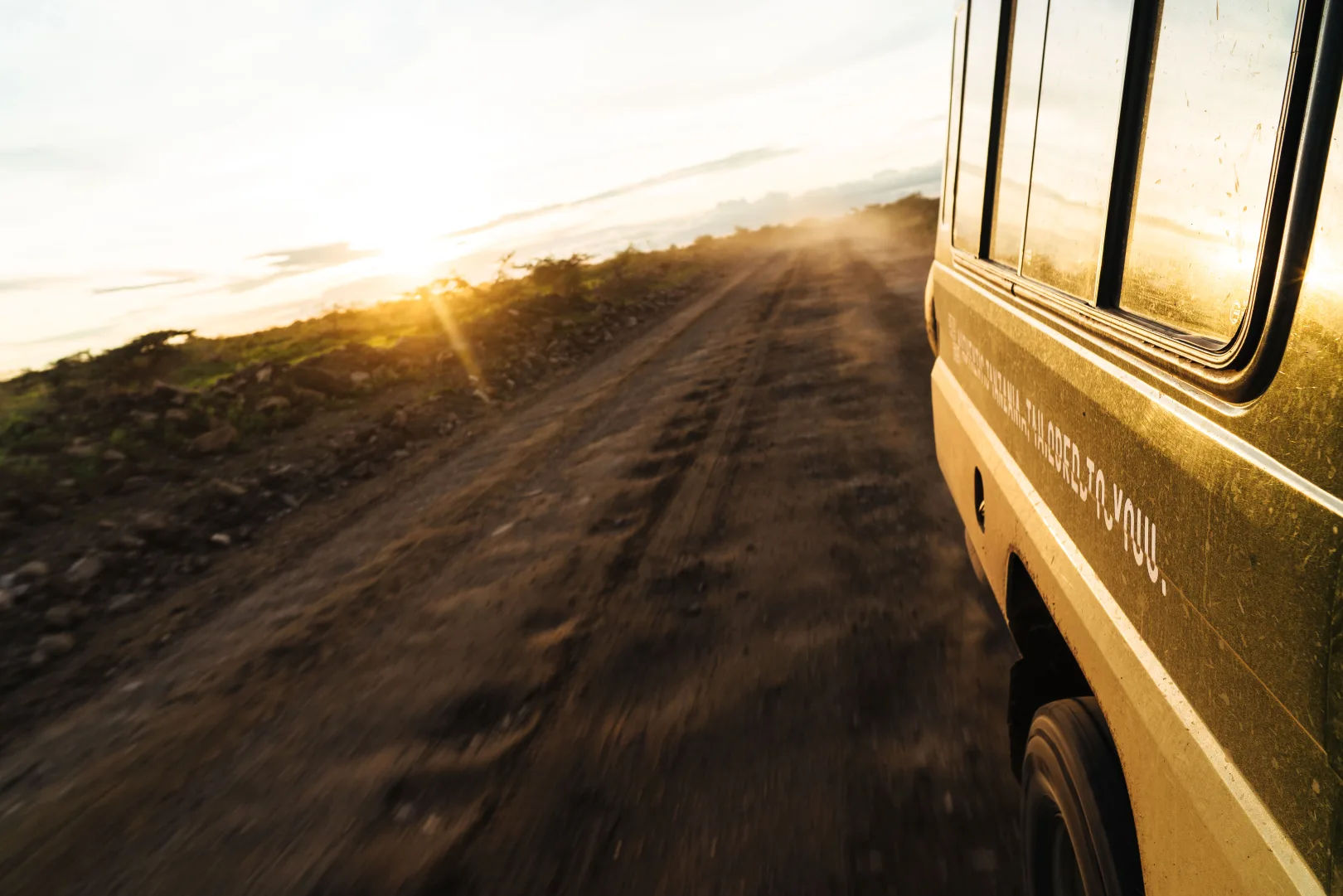
No agenda infrastructure. No existing hierarchy to perform within. The Serengeti does not know who the principal is, which can be exactly what the conversation needs.
Why the Bush Outperforms the Boardroom
Succession conversations fail most commonly not because of what is said, but because of the context in which the saying happens. A formal meeting room signals that the agenda has already been written, that the principal has decided, that the children are expected to receive rather than to participate. The dynamic predetermines the outcome.
The Tanzanian landscape operates on entirely different signalling. Wildlife does not defer to seniority. The same lioness that a patriarch has tracked for thirty years will behave exactly as he does in front of his adult children — which is to say, independently. That levelling effect is not incidental. It is the mechanism by which the bush produces conversations that would be structurally impossible in a conference room. When the heir can see that the patriarch is capable of sitting quietly in a vehicle for three hours without a result — when they can both watch the same thing fail to appear and observe how each of them handles the disappointment — they have learned something about each other that no document reveals.
Bobby Safaris has structured this dynamic deliberately, over years of working with family offices and their principals. The guides understand the brief. They know when to create space and when to allow silence. They are not therapists or facilitators — they are field professionals who understand that their primary function, in these contexts, is to hold the right conditions.
Pre-Trip Structuring: What the Heir Needs to Understand
The pre-trip phase is where generational transfer safaris succeed or fail. A standard luxury safari is designed around comfort and wildlife expectations. A generational transfer safari is designed around a specific question the principal has about the heir — and the itinerary is the apparatus for surfacing the answer, or beginning the conversation that leads toward it.
The pre-trip brief, which Bobby Safaris develops with the principal and their family office advisors, identifies the specific heir questions the trip is intended to address. Does the principal want to understand whether the heir has the temperamental profile for the stewardship responsibilities ahead? Does the heir need to encounter, in a context outside the family enterprise, what their parents have been building? Is there a specific dynamic between siblings or cousins that requires a shared experience of sufficient intensity to shift it?
The answers define the design. A trip for an heir who will inherit operational stewardship has a different brief from a trip for an heir who will inherit a passive but significant financial interest. The former needs proximity to decision-making and operational complexity. The latter needs to understand why decisions are made at all — the conservation logic, the community obligations, the long-horizon thinking that the enterprise requires.
The Day-by-Day Arc: Sequencing Toward the Succession Conversation
The itinerary arc matters because generational conversations require preparation. A patriarch cannot introduce a succession topic on the first night in camp and expect it to land correctly. The environment must first do its work — building the shared reference points, establishing the emotional register, creating the sense of having encountered the same thing at the same time.
Bobby Safaris sequences these journeys in three movements. The first movement is arrival and settling: three to four nights in a landscape of sufficient scale that the hierarchy the family carries into it becomes briefly irrelevant. The Serengeti at the right density of game — not tourist-dense, but wildlife-dense — performs this function reliably. The second movement is the shared operational experience: a visit to a wildlife management area where the family can see, at close range, the mechanics of how a concession works, how community benefit sharing operates, how anti-poaching functions as an actual logistics problem rather than a press release. This is the content that heirs consistently identify as the most clarifying part of the trip — seeing the enterprise from a non-family perspective. The third movement is the structured final days: a private concession where the vehicle is yours for the duration, the camp holds only your family, and the guide has been briefed to hold space.
Planning a Generational Transfer Safari
Bobby Safaris works with UHNWI families and their advisors to design Tanzania itineraries as structured generational transfer events. The first step is a private consultation — no obligation, no quote without a full brief — to understand the family composition, the specific questions the trip is intended to address, and the intended heirs.
Lead time of nine to eighteen months is recommended for a properly structured journey. Last-minute departures can be accommodated at the premium tier, subject to camp availability and the compressed time available for pre-trip briefing.
Conservation as Legacy Metaphor
One of the most reliable mechanisms in a generational transfer safari is what happens when the heir encounters conservation economics for the first time. Not as a concept, but as an operational reality — a land tenure arrangement, a community benefit sharing model, an anti-poaching unit with actual logistics and actual costs — encountered in the field, on the ground, in the context of animals that exist because a specific financial and legal structure has been maintained to protect them.
When a 32-year-old heir who has grown up with financial statements walks the boundary of a wildlife management area and understands, in concrete terms, how a conservation easement generates ongoing revenue for a community of 50,000 people — and what it would mean if that revenue disappeared — the lesson lands differently than any paragraph in an estate planning document. Bobby Safaris briefs these encounters as deliberate components of the itinerary, not incidental moments, because the difference between a guided conversation in the field and a table in a conference room is the entire pedagogical point.

Private concession: no other vehicles, no schedule built around other guests, no obligation to perform for anyone except the family itself
The Final Night: Structuring the Now-We-Talk Session
The most operationally specific element of a generational transfer safari is the final night structure. This is not an accident, nor is it improv. The session is designed in advance by the principal, with Bobby Safaris providing the logistical conditions: exclusive-use concession, private guide, the family unit isolated from any external reference points, and a specific evening in the itinerary — typically the penultimate or final night — that the principal has designated as the now-we-talk moment.
The environment does the preparatory work. By the time the final night arrives, the family has shared a sequence of experiences that create natural conversational ground. The patriarch and the heir have both watched the same lioness make the same decision for reasons neither of them can fully explain. They have both been in the same vehicle in the same rain. They have both encountered something that resisted their control. These shared reference points are what makes the final-night conversation different from what it would be at home. It is not just what is said. It is what the conversation can legitimately be about, given what both parties have just witnessed together.
“The bush provides what the conference room cannot: a shared encounter with something genuinely outside anyone's control, by people who need to understand each other better.”
Post-Trip Follow-Through: Documentation for Estate Planning
The trip produces material that no estate planning document can replicate. Bobby Safaris generates three categories of post-trip documentation for families undertaking a generational transfer journey. The first is the guide's account: a first-person narrative from the lead field guide covering the family's time in the field, including observations about which members engaged most deeply with which moments, and which conversations appeared to have the most weight. This document has genuine archival value — it is the field guide's professional record of what actually happened, as distinct from what the family will remember having happened.
The second is a photographic record curated for governance relevance: not the compilation of best wildlife shots, but the selection of images that capture the specific moments the principal designated as meaningful — the conservation area boundary walk, the concession dinner, the final-night sundowner. The third is the post-trip session framework: a structured sixty-day follow-up document, co-developed with the family office, that uses the trip's specific content as reference points for the succession conversation that continues after the family has returned.
The sixty-day session is the most consistently underused component. Without it, the relational returns from the experience dissipate within weeks. With it, the trip functions as the opening chapter of a succession process rather than as a standalone event. Bobby Safaris schedules the follow-up consultation before the family departs, not after — because a session scheduled after return is a session that frequently does not happen.
Bobby Safaris works directly with UHNWI families and their advisory teams to design Tanzania itineraries as structured generational transfer events. The process begins with a private consultation — no obligation, no quote without a full brief. If you are an advisor coordinating a multi-generational succession engagement or a principal exploring the option for the first time, contact the Bobby Safaris advisory team to discuss the specific composition and objectives of your family.