

The most consequential conversations families need to have are the ones they keep postponing. Affluent families defer succession planning not from indifference but from the structural impossibility of finding environments in which honest conversation feels safe. Boardrooms enforce hierarchy. Dining rooms enforce habit. Conference calls enforce performance. None of them produces the kind of clarity that families actually need — and the evidence is in the research: fewer than half of family offices have a formal, documented succession plan, even when the principal acknowledges the risk of inaction.
A shared extreme experience collapses the deferral cycle. There is no boardroom, no agenda, no familiar infrastructure to hide behind. The animals do not recognise the family governance structure. The landscape does not care about the trust documents. What remains is the family itself, in a context that makes evasion considerably harder than it usually is. An ultra luxury Tanzania safari family succession planning engagement is not a metaphor for a governance intervention. It is one.
“The Serengeti does not allow postponement. The animals do not care about the family governance structure. What remains is the family itself, in a context that makes evasion considerably harder.”
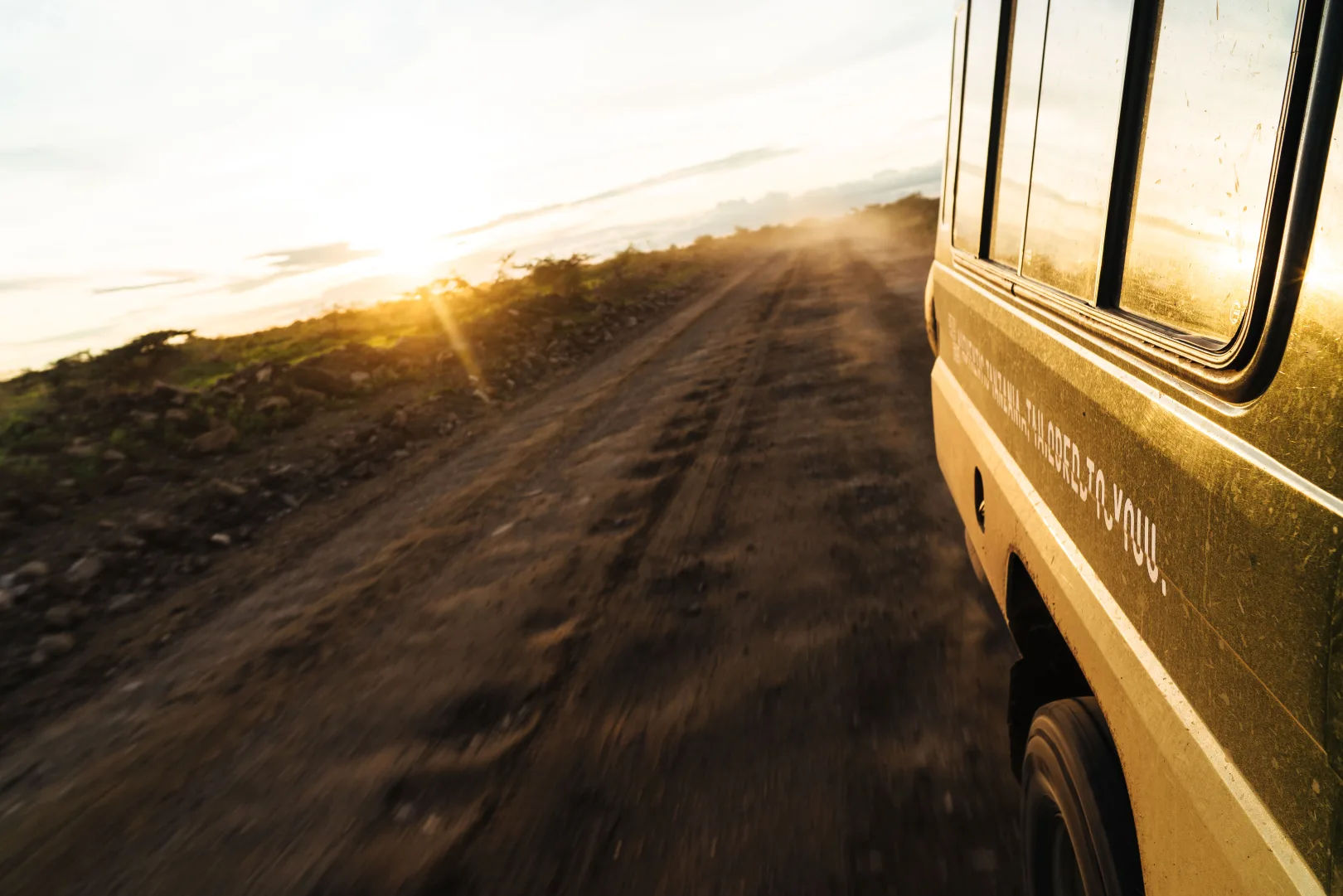
The Serengeti: no cell signal by design, no conference tables, no schedule built around board meetings
Why the Serengeti Outperforms Conventional Retreat Venues for Family Governance
Most family governance retreats happen in spaces that carry the furniture of the existing problem. The table is still the table. The roles are still the roles. The Serengeti does not work that way. Mobile signal is genuinely absent in much of the deep conservancy — not inconvenient, but structurally absent, which is a different condition entirely. Executives who cannot claim they need to check in because, genuinely, they cannot, are executives who are present in a way that years of intention could not produce.
The wildlife is genuinely unpredictable. A leopard working a drainage line at dawn commands complete attention in a way that no slide deck can. A river crossing that takes three hours to unfold is physiologically engaging in a way that no workshop exercise replicates. The pace is set by the animals and the weather, not by a family calendar built around school terms and board meetings. That enforced slowdown — long camp lunches, unscripted hours between drives — is precisely what families never create for themselves.
Privacy at scale is the third condition. The Serengeti and Ngorongoro conservancies offer a degree of seclusion that is genuinely difficult to replicate. A family can operate in complete privacy across thousands of square miles of private concession territory without another vehicle in sight. There is no audience for family tension. There is no performance required. For principals who have spent decades managing impressions, the Serengeti is one of the few environments that cannot be performed in.
What the Serengeti provides is not merely seclusion. It provides a specific kind of equality of condition. The 70-year-old patriarch and the 22-year-old who just finished university arrive on equal footing, confronted by the same animals, the same heat, the same absence of signal. That is what changes the equation — and that is what makes a Tanzania ultra luxury safari family succession planning engagement categorically different from a conventional family holiday.
Structuring the Safari So Every Generation Is Engaged Without Compromise
A family succession safari must hold three distinct cohorts simultaneously: senior generation members who may have specific mobility or dietary requirements; adult children in their thirties and forties who are typically the primary heirs and decision-makers; and younger adults or teenagers who are being introduced to the succession conversation for the first time. The mistake most operators make is treating this as a scheduling problem — different activities at different times. The right approach is structural.
Vehicles need to be configured so senior members are physically comfortable during long drives, while younger adults are given enough autonomy to feel the experience as theirs rather than an obligation. Bobby Safaris structures each exclusive-use itinerary as three parallel experiences under one logistics umbrella: shared dinners and communal moments, separate daytime programmes tailored to cohort. Some families separate vehicles by cohort for portions of the itinerary; others keep everyone together and let the guide read and manage the dynamic. The camps chosen must offer both shared communal space and genuine private space — families that are tense together for eight days without retreat options will not have a productive conversation.
Young adult children — those already in or approaching the family business — respond to transparency: open conversations with the Bobby Safaris field team about how an itinerary is actually priced, planned, and delivered, demystifying the operational side of what the family enterprise actually does. Senior members respond to depth and pace: a private Sundowner on the crater rim, a Masai cultural exchange arranged through Bobby Safaris direct relationships, time that does not feel like it is being managed for them. Bobby Safaris has run these trips for multi-generational family groups across twelve years. The structure matters more than the cost. For a companion perspective on what UHNWI parents are actually trying to achieve across generations, see our analysis of the legacy safari as an investment in relational continuity. For the planning framework used by family office advisors coordinating these trips, see our guide to multi-generational safari logistics.

The game drive vehicle: three rows, shared attention, no agenda — the real meeting room of a succession-oriented safari
What an Exclusive-Use Family Safari Actually Involves
Exclusive use means the family books an entire camp — typically 4 to 8 tents — along with a private vehicle fleet and a dedicated guide team. This is not a standard booking in which the family joins other guests. The operational components are: a private aircraft from Arusha directly into the Serengeti or Ngorongoro private airstrip, eliminating commercial airport transfers and preserving the sense of entering a separate world; a full camp buyout at a property such as the private conservancy camps, Lamai Serengeti, or a wholly private concession camp; a private chef; and a minimum three-vehicle setup to allow the cohort separation described above.
For a group of 8 to 12 guests across two or three generations on a 10-night exclusive-use itinerary, the investment begins at approximately USD 45,000 per person at the upper tier, scaling with property selection and group size. What that investment purchases is not luxury accommodation in the conventional sense. It purchases the operational infrastructure for a private family governance environment that cannot be replicated in any hotel or conference centre. The logistics are not separate from the succession outcome; they are the precondition for it.
Bobby Safaris handles every logistics detail from the first consultation onward. Lead time is typically 9 to 18 months for peak-season departures. Families who plan twelve months out have time to brief participants appropriately, align calendars, arrange medical clearances for older family members, and — critically — have the preliminary conversations about what they want the trip to achieve before everyone is in the same vehicle.
“The guide’s silence is not absence. It is architecture. The result is that families consistently report the most substantive discussions of the week happened in the vehicle, between game sightings, with no facilitator in sight.”
The Game Drive as Deliberate Governance Space
There is a consistent pattern reported by family office advisors who have accompanied clients on these trips: the safari vehicle is where families actually talk. The conditions are specific. The group is physically enclosed — three rows, facing outward, sharing the same sightline. There is nowhere to look except the landscape and each other. There is nowhere to go when a conversation becomes uncomfortable. A three-hour drive to a crossing point is, in governance terms, an enforced window of sustained, shared attention that no family meeting agenda has ever successfully created.
The wildlife is the shared point of focus, which means no one is watching anyone else for social cues in the way that happens when a conversation is explicitly had. A lioness walking past the Land Cruiser at thirty metres is a natural conversation starter that requires no facilitation. Family members who would not initiate a difficult conversation over a formal dinner will talk openly while watching it. The guide is present but silent, navigating, managing the experience — not inserting themselves into the family’s dynamic.
Bobby Safaris briefs its guides specifically on this dimension of the work. The guide’s role is not to facilitate — it is to manage the conditions. They navigate, position the vehicle well, read the wildlife encounter, and create the experience of being genuinely present. When a conversation arises — a lioness with cubs and what that triggers in a parent’s thinking about legacy, the wildebeest migration and what it implies about long-cycle planning — the guide allows it. When silence is the right answer, they provide it. The guide’s silence is architecture, not absence.
The result is that families consistently report that the most substantive discussions of the week happened in the vehicle, between game sightings, with no facilitator in sight. An ultra luxury Tanzania safari family succession planning engagement succeeds as a governance tool to the precise degree that the guide understands this dynamic and does not interrupt it.
Turning the Experience Into Lasting Governance Structure
The safari creates the conditions; what follows determines whether they last. Bobby Safaris offers a structured post-trip family governance consultation — facilitated by our planning team in collaboration with the family’s existing advisors — to translate the safari’s relational breakthroughs into documented succession framework, family council structure, or philanthropic mandate. This is not a sales step. It is a continuation of the experience design. The consultation is private, obligation-free, and scoped to the family’s specific governance context.
The families who treat a safari as a genuine legacy instrument typically do three things that distinguish it from a standard trip. They engage a documentary photographer for the duration — someone who captures the family’s internal dynamics, the unguarded moments, the specific way this family moves through the experience. They keep a shared family journal — a physical notebook passed between members each day, with entries that capture what they observed, what they discussed, what surprised them. And they request the guide’s own account of the trip — a first-person narrative from the person who observed the family most closely in the most unusual circumstances they will share all year. These three documents together create a record that has genuine archival value for the family over subsequent decades.
Start the Conversation Before the Quote
Designing a family succession safari is not a standard itinerary enquiry. It requires a conversation before a quote — to understand the family composition, the governance questions at stake, the constraints on timing and mobility, and what the principal is actually trying to accomplish. Bobby Safaris offers a private, no-obligation consultation with a senior advisor to discuss the family’s specific composition, dynamics, and objectives. The outcome of that conversation is a detailed design brief, not a price list.
If the outcome of the call is that a Tanzania safari is not the right next step for this family, that is an honest answer worth having. Bobby Safaris has declined engagements when the fit was wrong. We would rather have that conversation upfront than design something that does not serve the family’s actual needs.
Bobby Safaris is a four-generation Arusha family company that has been designing ultra luxury Tanzania safaris since 1978. The Kassim family still operates every detail personally — their own fleet, their own senior guides, their own direct relationships with the exclusive camps and private conservancies their clients visit. If you would like to discuss whether a family succession safari is the right instrument for your family’s specific situation, contact the team directly.