

There is a category of spending that UHNWI families treat differently from ordinary consumption. It is not holiday travel. It is not hospitality. It is not even hospitality-as-experience, which has become a well-worn genre. It is something closer to capital allocation — a decision made in the same conversation as art acquisition, direct real estate, and philanthropy, because it is expected to generate a return that compounds over time rather than depreciating the moment it is consumed.
Within that category, a specific instrument has gained traction among family office advisors and wealth psychologists over the past decade: the structured multi-generational expedition. Not a family vacation. Not a celebration trip. A deliberately designed shared experience in an environment that cannot be replicated, replicated at will, or outsourced to someone else's management — an environment that requires the family to be present with each other in conditions that strip away the ordinary supports of daily life.
A Tanzania safari, for families with the means to structure it properly, occupies exactly that position. This is not an argument for treating a safari as an investment in the financial sense. It is an argument for taking seriously what a safari actually does to a family — and designing it accordingly.
“The families who return from a Tanzania safari with a shared account of what happened — not a collection of individual photos, but a shared narrative — have something that did not exist before they left. That is what is being purchased.”
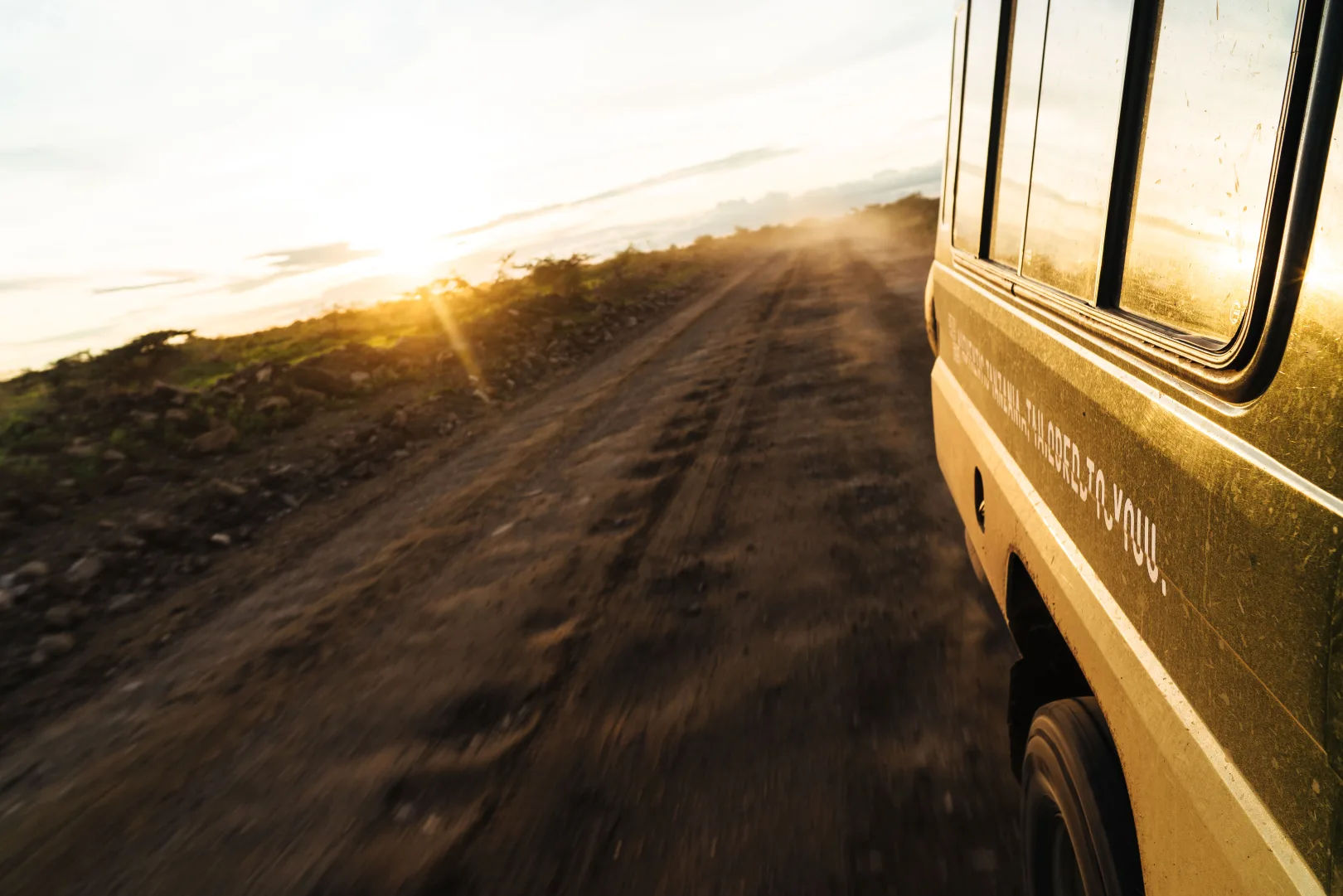
The Serengeti: a landscape with no mobile signal, no itinerary flexibility, and no way to opt out of being together
The Psychology of Shared Hardship in Family Wealth
The academic literature on family cohesion and intergenerational wealth transfer is extensive, and a consistent finding runs through it: shared challenging experiences — particularly those involving genuine environmental adversity — produce measurable shifts in family communication patterns and relational hierarchy that more comfortable shared experiences do not. This is not sentiment. It is a finding replicated across family therapy research, organisational psychology, and the emerging field of adventure-based family therapy.
The mechanism is fairly well understood. In ordinary life, affluent families — particularly those with significant generational wealth — develop communication patterns that are efficient but superficial. Obligations are managed. Schedules are coordinated. The machinery of a complex life runs, but the individuals within it have limited genuine contact. The holiday that reproduces those patterns — a resort where every need is anticipated, where the environment bends to the family's preferences — reinforces rather than disrupts this dynamic.
A Tanzania safari operates differently. The environment is genuinely indifferent to the family's preferences. The wildlife does not adjust its behaviour for guest comfort. The early morning departure at five-thirty is not a service amenity — it is a consequence of the fact that the best wildlife viewing happens then. The family eats together because there is no other option. They are tired at the same time, discussing the same sightings, and sufficiently outside their ordinary context that the habitual roles — the managing partner, the distracted teenager, the parent who always defers — become harder to sustain.
What wealth psychologists call “shared hardship” is not about suffering. It is about the experience of navigating something genuine together, without the ability to delegate the difficulty to someone else. In family office literature, this mechanism is well documented as one of the most reliable ways to transfer what practitioners call “family capital” — not financial capital, but the stock of shared trust, mutual understanding, and relational resilience that allows a family to function as a unit rather than a collection of individuals who happen to share an address and a surname.

Campfire conversations in the bush — evenings that produce the most substantive discussions many families have all year
The Tanzania Safari as a Specific Category of Asset
Not all safaris are equal as legacy instruments. A four-night safari at a well-run camp is an excellent holiday. It is not necessarily a legacy event. The distinction matters, because families who conflate the two often arrive with expectations that a standard itinerary cannot meet — and leave without the outcome they were actually after.
What separates a legacy-scale safari from a luxury safari is three things: duration, exclusivity, and the neutral facilitation of the operator. On duration: a six-night safari is an experience. A twelve-night safari, with consistent proximity across that duration, is a different category entirely. The research on family communication patterns suggests that meaningful shifts in how family members speak to each other require sustained exposure — long enough that the performative layer wears down and something more genuine begins to emerge. Six nights can begin this process. Twelve nights reliably completes it.
On exclusivity: a family sharing a camp with other guests, however discreetly managed, is still in a hospitality context. The presence of other people — even other people of similar background — creates an audience. The family is being managed, and they are aware of being managed. A camp buyout for a single family removes this entirely. The family is not guests at a property. They are the only occupants of a temporary home in the bush. The guide belongs to them. The vehicle is theirs. The conversations at dinner are genuinely private.
On the role of the operator: the most underappreciated element of a legacy-scale safari is the function of the operator as a neutral third space. In ordinary family dynamics, logistical planning — who arranges what, who decides where to eat, who manages the calendar — carries enormous relational weight and often reactivates existing hierarchies and tensions. When an operator handles all logistics, the family is freed from the planning function entirely. For the duration of the trip, they are not a family managing a complex travel operation. They are simply a family.
How to Structure a Safari as a Succession Event
The families who use Tanzania safaris as deliberate succession instruments tend to approach the structuring with the same rigour they apply to any significant financial or legal decision. The planning is not delegated. The principal — the family member whose initiative the trip represents — is personally involved in the key design decisions, because the decisions are not about travel logistics. They are about what kind of experience is being created and for what purpose.
Duration is the first structural decision. Ten nights minimum; twelve to fourteen nights for families spanning three or more generations with significant age spread. The reason for the longer duration is not comfort — longer safaris are genuinely more demanding than shorter ones. The reason is that the psychological processes that make a safari a legacy event require time to develop. A family that arrives with unresolved tension and a six-night itinerary will spend the first two nights processing that tension before anything else becomes possible. A twelve-night itinerary allows for the tension to surface, be metabolised, and be replaced by something else.
The second decision is camp selection. For a single family buyout, the camp must be large enough to accommodate the group comfortably — typically eight to fourteen guests across three generations — but small enough that the family feels genuine immersion in the bush rather than the managed luxury of a large property. The camps that work best for this purpose are the exclusive-use mobile camps in private conservancies: not the national park lodges, where vehicle density at sightings can be significant, but the conservancies bordering the Serengeti, where the absence of other vehicles is itself part of the experience.
The third decision is documentation. The families who treat a safari as a genuine legacy instrument typically engage a documentary photographer for the full duration — not a professional producing images for marketing use, but someone whose brief is to capture the internal texture of the family: the conversations at dinner, the unscripted moments between generations, the particular way specific individuals light up in specific wildlife encounters. Alongside this, a shared physical journal — passed between family members each day — creates a parallel textual record of the family's observations and reflections. And the guide's own account of the trip, written after the family has departed, is one of the most enduring documents a family can possess: a trained observer's account of how this family behaved when they were together in a place that mattered to them.

Private bush dinners: the evenings are when most of the substantive conversations happen — and when the family is most genuinely together
The Bobby Safaris Approach to Legacy-Scale Family Safaris
Bobby Safaris has designed and facilitated legacy-scale family trips for families across a range of structures: three generations of a founding family of a European industrial group; a family office principal and four adult children who had not spent more than three consecutive days together in a decade; a patriarch who used a Tanzania safari as the occasion to have a set of conversations with his adult children that he had been unable to initiate in any other context. These trips are not standard itineraries with a longer duration. They are custom-designed engagements that begin with a different kind of conversation.
The planning process for a legacy-scale family safari with Bobby Safaris begins with a conversation — not about routes or camps, but about what the family is trying to achieve. Who is coming? What is the age range? What are the relational dynamics the trip is meant to navigate? What has the family done together before, and how did those experiences work or not work? What would a successful trip feel like six months after returning? These questions are not rhetorical. They are the inputs that determine everything that follows.
From there, the itinerary is built around the specific family. A twelve-night trip for a family spanning ages eight to eighty requires a different structure than one for a group of adults. The pacing, the activity mix, the guide selection, the camp sequence — each element is chosen to serve the particular family and their particular objectives. Planning typically begins six to twelve months before the intended travel date, and the principal is involved in the key design decisions throughout.
On the ground, the operational delivery is handled by a dedicated family coordinator — a single point of contact from the first briefing call through the final departure — and by guides who are specifically experienced in working with multi-generational groups. The coordinator handles the logistics so the family does not have to. The guide manages the pace and the wildlife experience. Together, they create the conditions in which a family can be together in a way that is genuinely different from how they are together at home.
The safari as asset is not a metaphor. It is a structural choice — one that UHNWI families and their advisors are increasingly making deliberately, with the same rigour they bring to any significant allocation. The question is not whether a Tanzania safari is worth doing. For families with the means to do it properly, it is. The question is whether it is being designed for what it is actually capable of achieving.
If you are evaluating this category — or if you are an advisor working with a client who is — the next step is a direct conversation about what a legacy-scale family safari would look like for your specific family. There is no standard itinerary for this. There is only the right answer for this family, at this moment.


