

Every safari guide tells you to go June through October. The crowd says the same thing. The result: peak pricing, peak crowds at migration hotspots, peak frustration. But the traveller who arrives in October or November — after the long dry season ends and before the summer peak builds — finds a different Tanzania. One that feels like it belongs to them.
October and November — the short rains season — offer better wildlife sightings, lower costs, and a level of exclusivity that the peak months simply cannot match. Bobby Safaris has sent more guests in November than any other month. That is not an accident.
The Short Rains Advantage
The short rains are not monsoon season. They are afternoon thundershowers — typically 30 to 60 minutes — that clear by evening. The landscape transforms: grass turns green, flowers bloom, birdlife explodes. And the wildlife, far from disappearing, simply spreads across a richer, more dramatic terrain.
What the Short Rains Actually Mean
Tanzania's "short rains" — November and December — are misnamed in the most useful way possible. The term suggests something brief and intermittent, which is precisely accurate. Unlike the sustained downpours of a monsoon, the short rains typically arrive as afternoon thundershowers: intense while they last, but clearing within an hour and leaving the evening cool and clear.
October sits at the tail end of the dry season, sharing the accessibility and wildlife concentration of peak season while beginning to show the first signs of the green-season transformation. For many experienced safari-goers, October is the single best month in the Tanzania calendar: dry roads, short grass, abundant wildlife, and thinning crowds as the peak season subsides.
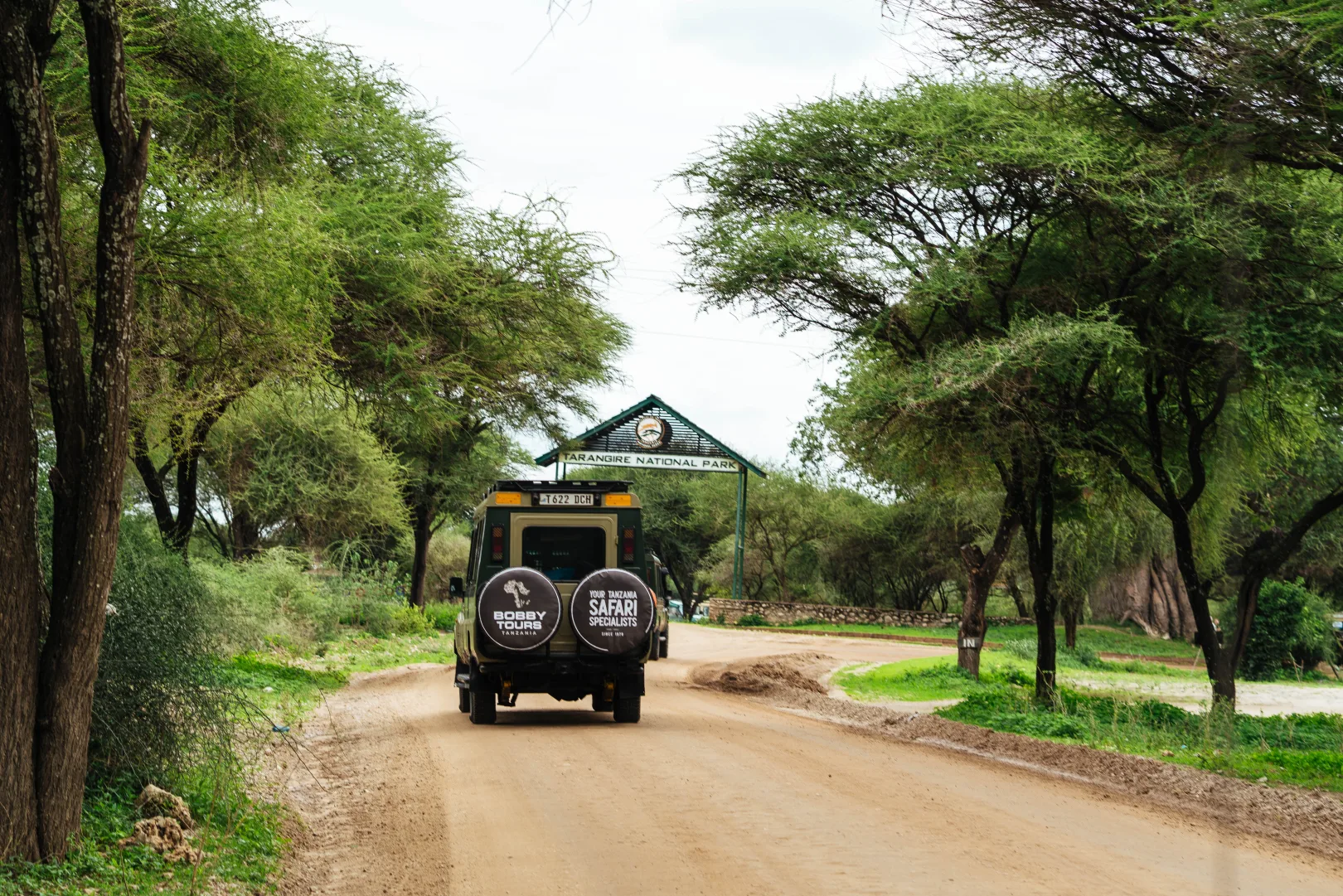
The practical consequences for your safari are significant. Morning game drives — the most productive hours for wildlife observation — are typically completely dry. The afternoon rain, when it comes, usually holds off until you are back at camp or in a covered viewing area. Roads in the northern circuit — Tarangire, Ngorongoro, the Serengeti — remain passable throughout both months for properly equipped vehicles. Luxury camps are designed for all seasons and operate normally.

Wildlife Density in October and November
The essential truth that most safari marketing ignores: Tanzania's wildlife does not disappear outside of peak season. Lions, elephants, leopards, giraffes, hippos, and the full roster of East Africa's extraordinary fauna are present year-round. What changes is where they are and what they are doing.
In October, the long dry season reaches its peak in the northern parks. Water sources shrink, grass is short and yellow, and wildlife concentrates along the remaining rivers and wetlands. This is excellent for sightings — animals are predictable and visible. By November, the first rains have begun to fall. The landscape begins its transformation: fresh green shoots appear on the yellow grass, flowers begin to bloom, and the sheer visual drama of Tanzania increases noticeably.
Elephants in Tarangire are at their most concentrated in October, drawn to the permanent water sources in the park as the Tarangire River and its tributaries recede. It is not unusual to see herds of 200 or more individuals near the swamps and river channels.
Predator action — lions, leopards, and cheetahs — peaks during this period. Prey animals are moving in response to shifting grazing patterns, which creates excellent hunting opportunities. The predator density in the northern Serengeti in October and November is as high as any time of year.
Bird migration brings European migrants to Tanzania from October through April. The flamingo colonies on Lake Natron are at their most active in November and December, with thousands of birds gathered for the breeding season. The variety of birdlife in the parks during these months exceeds what you will see in the dry season.
Photography reaches its most dramatic conditions. Storm-light — dramatic cloud formations backlit by breaking sun — produces images that are simply impossible during the clear, flat skies of August. The green backgrounds, atmospheric haze, and interplay of light and shadow define the visual vocabulary of the most compelling wildlife photography.
Wildlife at a Glance: October vs. November
October
- Short grass, excellent visibility
- Wildebeest in northern Serengeti
- Peak elephant concentration in Tarangire
- Near-zero rainfall — fully dry
- Thinning peak-season crowds
November
- Short rains begin — green landscape
- Wildebeest calving starts late month
- Dramatic cloud and storm photography
- Afternoon showers, dry mornings
- Lowest visitor numbers of the season
The Shoulder Season Value Equation
The pricing gap between peak and shoulder season in Tanzania is not marginal. It is structural — driven by simple supply and demand across the entire ecosystem of luxury tourism.
Lodge pricingis 20 to 35 percent lower in October and November compared to June through August. At the most exclusive properties — the ones that sell out 12 months in advance for peak season — the discount can be even more significant. Some of Tanzania's finest camps offer their best available pricing precisely during these months, when occupancy is lowest and service ratios are highest.
Availability is the most honest measure of value. Properties that are permanently full from December through March have genuine availability in November. The helicopter transfer that requires six months of lead time in peak season can often be arranged within two to three weeks. The private conservancy experience that would take a year to book in June is accessible when you decide.
Private aircraft — a non-negotiable for Bobby Safaris clients — are significantly easier to schedule. Peak season creates competition for landing slots at the bush airstrips that serve the most remote camps. November falls between the main migration season and the end-of-year holidays, when that competition eases substantially.
Crowd comparison is the most visceral illustration. At a major wildlife sighting in August, it is not unusual to find 12 to 15 vehicles in a small area. The same sighting in November might involve two or three. Your guide can spend 40 minutes following a leopard through thicket without another vehicle in sight. The wildlife experience is not comparable — it is categorically different.
An Honest Trade-off
October and November are not universally superior to peak season. Some concessions are real. Some roads in remote Western Tanzania — Katavi and Mahale in particular — become harder to navigate in November as the long rains fully establish. The green vegetation, while beautiful, is thicker than the short grass of August, making animals slightly harder to spot in some areas. If you are planning to focus specifically on the dramatic river crossings of the Great Migration, July through September remains your window. But if your priority is an exceptional overall safari experience with few crowds, more availability, and better pricing — October and November are when you want to be there.
Who Should Come in October and November
This is not a question with one answer. The short-rains season suits several distinct traveller profiles — and does not suit others equally well.
Photographers will find October and November the most rewarding months of the Tanzania calendar. The storm-light and green landscapes produce images that stand apart from the golden-savanna photography that dominates social media. The calving season — beginning in late November in the Lobo and Bologonja areas — brings concentrated predator action and the kind of raw, vulnerable wildlife behaviour that defines compelling wildlife photography. Empty parks mean clean compositions without other vehicles.
Couples seeking privacy — anniversary trips, honeymoons, milestone celebrations — will find the exclusivity of the short-rains season transformative. The crowded sighting at a popular lodge is replaced by a private sundowner with nobody else in sight. The service level at camps with lower occupancy improves noticeably, as staff-to-guest ratios increase and individual attention becomes more feasible.
Repeat safari-goers who have already experienced the iconic dry season circuit often find October and November a revelation. This is a different Tanzania — different light, different landscapes, different moods. The parks have a different character when the grass is green and the afternoon skies build dramatic cloud formations. It is not a lesser experience; it is a different one.
First-timers who want peak-season wildlife without peak-season compromises will find October a near-ideal window. The accessibility and wildlife concentration of the dry season largely remain. The crowds have thinned. The pricing is better. The honest caveat: by November, afternoon rain is a regular feature, and you should plan accordingly. Pack well, expect a different rhythm to the day, and you will not be disappointed.
Frequently Asked Questions
Plan Your October or November Safari
Bobby Safaris starts planning November trips in February — the earlier your inquiry, the better the lodge availability and private aircraft scheduling. Speak with our team to design a short-rains safari that reveals Tanzania at its most exclusive.