
The word “luxury” has been stretched to breaking point in travel marketing. It describes a room with a rainfall shower and a buffet breakfast. It describes an airline seat that reclines slightly further than the one behind it. It describes a hotel lobby that smells of cedarwood and plays ambient electronic music. None of this is wrong. None of it is what Bobby Safaris means when the word appears in the same sentence as Tanzania.Ultra-Luxury Tanzania Safari Philanthropy is worth exploring alongside this destination.
Ultra-luxury in the context of a Tanzania safari means something specific: land access that is not available to anyone else, a guide who travels with you from the moment you land to the moment you depart, and an absence of other people in the places where you are watching wildlife. The accommodation is exceptional. That is a baseline, not the point.
“Luxury is not what you are paying for. Luxury is what you do not have to share.”

A private conservancy offers exclusive access that no national park can match
The Four Non-Negotiables
Bobby Safaris works to four criteria that define whether a safari qualifies as ultra-luxury. Every itinerary we build must satisfy all four. They are not aspirational targets — they are operational requirements that determine which camps we use, which guides we partner with, and how we route each trip.
Private conservancy access. The land defines the experience. National parks — even the Serengeti, even the Ngorongoro Crater — are accessible to anyone with an entry fee. On a private conservancy leased by a camp, the number of vehicles is regulated, the activities permitted are broader, and the wilderness is simply more intact. When we say conservancy access, we mean it operationally: your camp is the only one with rights to that territory.
A dedicated private guide. This is not a rotating camp guide who changes every few days. This is someone who travels with your party for the duration of the safari — meets you at the airstrip, stays with your group, learns your pace, your interests, the wildlife behaviours that capture your attention. A private guide knows the specific territories of individual leopards, which lion prides are most predictable at which season, and how to read the signs of an imminent hunt. That knowledge accumulates over days, and it does not transfer to a new guide on day four.
Fewer than twenty tents. This is a regulatory condition on the conservancies we use, and it is also a philosophical one. A camp of twenty tents is a small hotel. A camp of eight is a private estate in the wilderness. The staff-to-guest ratio at our partner camps runs at approximately three to one. No-one is waiting for a game drive. No-one is sharing a vehicle. The pace is set entirely by your group.
A personal chef. Dietary requirements, personal preferences, and the specific occasion — anniversary, birthday, a quiet evening after a long flight — are all handled privately. Bush dinners are staged in locations chosen by your guide and chef together, with table settings and candlelight and a menu built around the day is experience, not the camp is standard offering.
Why the National Park Safari Is a Different Product
Tanzania is home to some of the finest national parks in Africa. The Serengeti is extraordinary. The Ngorongoro Crater is one of the most intact ecosystems on earth. Tarangire in the dry season holds elephant concentrations found nowhere else. None of this is in question.
The distinction is not quality — it is the nature of the experience. During peak season, the major Tanzania national parks receive hundreds of vehicles per day. At a famous leopard tree or near a cheetah mother with cubs, a dozen vehicles can be parked side by side. This is the mass-market safari product, and it is entirely legitimate. It is also categorically different from what ultra-luxury delivers.
On a private conservancy adjacent to the national park ecosystem, the wildlife is identical. The same wildebeest migration passes through. The same lion prides hold territory. The same leopard routes intersect the same river crossings. But the regulatory framework that governs private land permits off-road driving, night drives with spotlights, and walking safaries with armed trackers. These are not fringe activities — they are the activities that produce the wildlife encounters that travellers remember for decades.
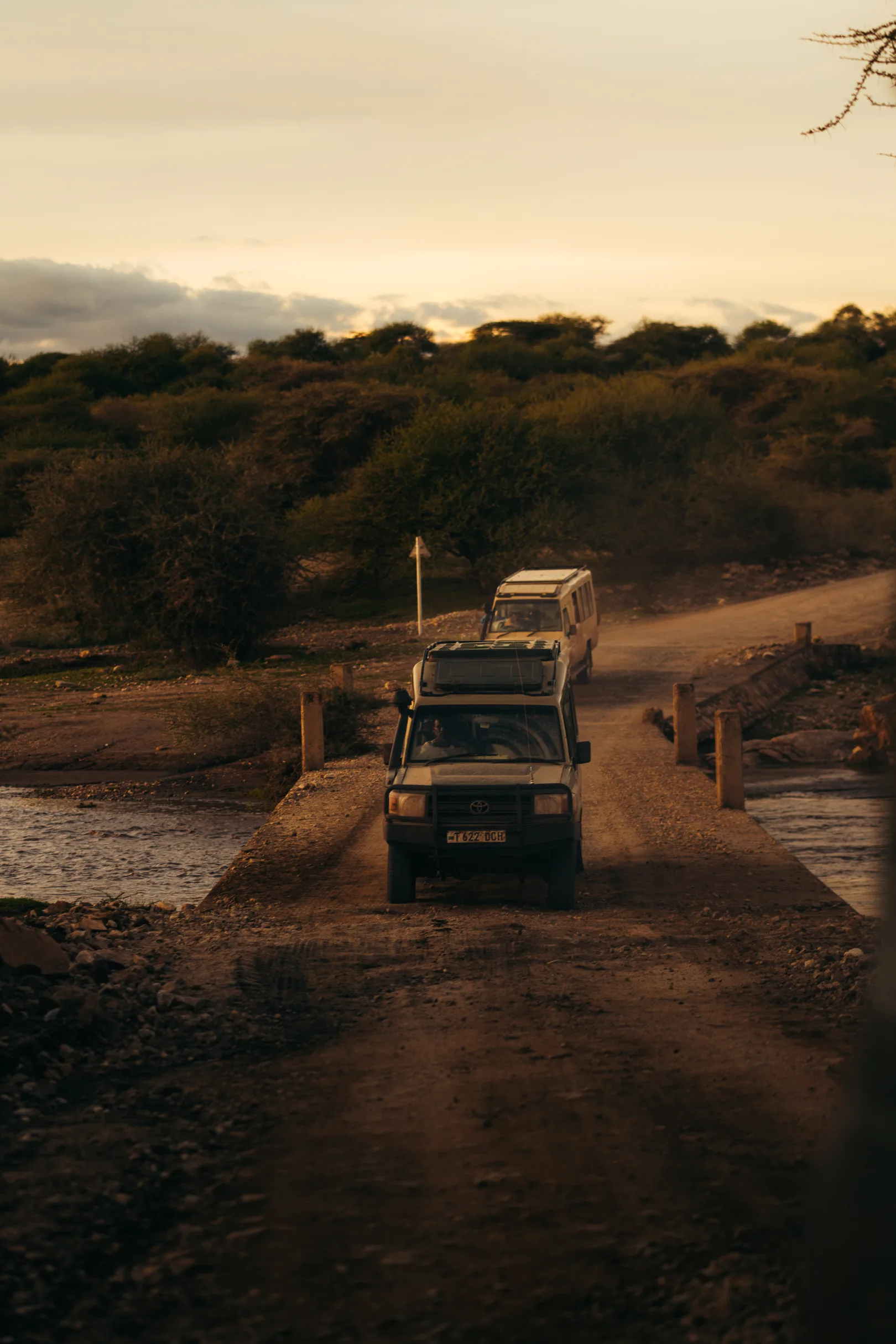
Ultra-luxury tented camps operate at the threshold of wilderness — present enough to be comfortable, transparent enough to remain part of it
The Cost Is Not Arbitrary
When clients ask why an ultra-luxury Tanzania safari starts at $5,000 per person per day, the answer is structural, not margin. The components that make up the cost — conservancy lease fees paid to Maasai landowners, the staffing ratios required for a private guide and dedicated chef, the economics of a camp with fewer than twenty tents — are genuinely expensive to operate.
A conservancy lease for prime Serengeti ecosystem land runs into hundreds of thousands of dollars per year for a camp. A private guide who is excellent — who has ten or more years in the field, who holds advanced wildlife knowledge certifications, who can manage logistics across multiple camp locations — commands professional compensation. These are not luxury markups. They are the actual costs of the actual operation.
The price also reflects scarcity. The best private conservancy camps in Tanzania have eight to twelve tents. They can be full twelve months ahead for peak season. There is a finite number of genuinely private wilderness experiences available at any given time. The market for them is growing faster than supply.
How to Evaluate Whether Ultra-Luxury Is Right for You
An ultra-luxury Tanzania safari is not the right answer for every traveller. Before discussing options, we are direct about whether the investment makes sense for your situation.
The strongest case for ultra-luxury is a once-in-a-decade trip — a significant anniversary, a multi-generational family gathering, a trip that represents years of planning and saving. In that context, the per-day cost is the cost of getting the experience right. The worst outcome for a trip of that significance is to arrive and find forty other vehicles at every sighting.
Ultra-luxury is also the right answer for travellers who are deeply engaged with wildlife. If you are someone who reads wildlife behaviour literature, who wants to understand predator-prey dynamics in real time, who will spend three hours watching a leopard with cubs and find every minute compelling — a private guide with that depth of knowledge transforms the experience in ways that a camp guide rotating through forty guests per week simply cannot.
A standard luxury safari — excellent accommodation, knowledgeable camp guides, shared game drives — is the right answer for travellers who want a high-quality wildlife experience without the premium, and who are comfortable with the social nature of a shared vehicle. There is nothing wrong with that choice. It is the right choice for many travellers, and we say so directly when it is.
Frequently Asked Questions
What is the difference between a luxury safari and an ultra-luxury safari in Tanzania?
A luxury safari typically means high-quality accommodation within or adjacent to national parks, good service, and comfortable game drives. An ultra-luxury safari — the Bobby Safaris standard — adds four non-negotiable elements: exclusive private conservancy access, a dedicated private guide for your entire trip, fewer than twenty tents at your camp, and completely private game drives with no other vehicles at sightings. For a side-by-side comparison of where each tier separates, see our <a href="/ultra-luxury-safari-vs-luxury-safari/" class="text-gold hover:text-copper underline underline-offset-2 transition-colors">ultra-luxury vs luxury safari</a> guide. The four elements also help frame how a Tanzania vs Kenya safari comparison lands at the ultra-luxury tier — see our <a href="/tanzania-vs-kenya-safari/" class="text-gold hover:text-copper underline underline-offset-2 transition-colors">Tanzania vs Kenya safari comparison</a> for the side-by-side.
Does a luxury Tanzania safari have to cost $5,000 per person per day?
The starting point for a genuine ultra-luxury Tanzania safari — one that meets the criteria of private conservancy access, private guide, private vehicle, and sub-twenty-tent camps — begins at approximately $5,000 per person per day. This reflects the actual cost of operating at that standard: conservancy lease fees, the economics of low-density camps, and the staffing ratios required for a private guide and chef. For the full cost structure and the difference between per-person and per-group pricing, see our <a href="/tanzania-safari-tours/" class="text-gold hover:text-copper underline underline-offset-2 transition-colors">private Tanzania safari itinerary planning</a> guide.
What activities does an ultra-luxury safari include that standard luxury does not?
Night game drives, walking safaris with armed trackers, and off-road driving to follow wildlife are permitted on private conservancies and prohibited in national parks. These are not optional add-ons at the ultra-luxury level — they are the core activities that define the experience. A standard luxury safari within the national parks does not offer these.
How far in advance should I plan an ultra-luxury Tanzania safari?
The best conservancy camps — those with fewer than twenty tents and access to prime wildlife territory — book twelve to eighteen months ahead for peak season (June through October). Last-minute availability in ultra-luxury is rare during migration season. Bobby Safaris begins planning cycles with clients eighteen months out and can often secure space twelve months ahead with flexibility on exact dates. For the full map of how those conservancies, guides, and private vehicles come together, see our <a href="/bobby-safaris-exclusive-experiences/" class="text-gold hover:text-copper underline underline-offset-2 transition-colors">Bobby Safaris exclusive experiences</a>.
If you are evaluating whether an ultra-luxury Tanzania safari is the right fit for your trip — or if you are not sure which tier of safari is appropriate for your group — tell us what you are trying to do. We will give you a direct answer about what is available, what it costs, and whether it is worth it for your specific circumstances.
This is not a sales conversation. We will tell you honestly whether ultra-luxury is the right level for your trip, or whether a well-executed standard luxury safari is a better use of your budget.