
The phrase luxury safari lodges Tanzania sounds straightforward until you begin planning a real trip. Some of the most refined safari properties in Tanzania are permanent lodges with stone, glass, and sweeping public rooms. Others are tented camps: canvas, timber, private decks, lantern light, and wildlife close enough to hear at night.
The mistake is treating lodge versus tented camp as a simple comfort ranking. At the ultra-luxury tier, both can be exceptional. The difference is operational. A lodge gives permanence, infrastructure, and architectural polish. A tented camp gives intimacy, flexibility, and the feeling that the wilderness has not been pushed away to make space for the room.
Bobby Safaris starts with the trip purpose first: migration timing, privacy, mobility, sleep comfort, family composition, aviation routing, and how much wilderness immediacy the traveller actually wants. Only then does the accommodation format become obvious.

The right accommodation choice begins with the wildlife objective, not the room category.
The Real Difference: Permanence vs Immediacy
A permanent safari lodge is built to stay. That usually means stronger infrastructure: larger kitchens, wider public spaces, fixed spa rooms, more predictable power systems, and pathways that are easier to navigate in the dark. For guests who value a clear separation between wilderness and residence, a lodge can be the right answer.
A tented camp is designed to sit more lightly on the land. At the top tier, this does not mean compromise. The bed is real. The bathroom is private. The service is polished. But canvas changes the experience. You hear the night. You notice temperature and wind. You wake with the light rather than behind heavy walls. For many travellers, that is the entire reason to come to East Africa.
The best Tanzania itineraries often combine both: a lodge where the geography rewards permanence, then a tented camp where the wildlife movement rewards intimacy and flexible positioning.
Quick comparison
Physical comfort
Luxury lodge
More permanent infrastructure, often easier for guests who want larger public areas, fixed paths, and predictable amenities.
Tented camp
Highly comfortable at the top tier, but designed around intimacy and wilderness rather than hotel-like scale.
Privacy
Luxury lodge
Can be private if the property is small or booked exclusive-use, but many lodges carry more rooms and more movement.
Tented camp
Often stronger for privacy because many camps run with eight to sixteen tents and lower vehicle density.
Wildlife access
Luxury lodge
Excellent when the site sits on a proven corridor, crater rim, river system, or private concession.
Tented camp
Excellent when the camp is placed seasonally near migration movement or inside private conservancy land.
Atmosphere
Luxury lodge
Architectural, polished, and stable; appropriate when the property itself is part of the occasion.
Tented camp
Immediate, sensory, and classic East African; appropriate when the wilderness is the point.
When a Luxury Safari Lodge Is the Better Choice
Choose a lodge when the trip needs architectural certainty. Multi-generational families with very different sleep patterns, guests who want easier movement between rooms and dining areas, and travellers who prefer more physical separation from the bush often do better in a lodge.
Lodges are also strong when the property is in a place where permanence matters: a crater rim, a highland view, a river bend, or a private concession with fixed access rights. In those cases, the lodge is not simply accommodation. It is the viewing platform, the logistical hub, and the place where the slower parts of the day still feel deliberate.
For first-time luxury travellers who are unsure how they will sleep with wildlife sounds nearby, a lodge can be a calm introduction. It keeps the safari extraordinary without asking every guest to adjust to canvas immediately.
When a Tented Camp Is the Better Choice
Choose a tented camp when the purpose of the trip is immersion. The best tented camps make the room feel like part of the ecosystem rather than an escape from it. You still have comfort, privacy, dining, and staff attention. What changes is proximity.
Tented camps can be especially strong for Great Migration positioning, private conservancy access, walking safaris, and repeat travellers who no longer want the safari to feel like a sequence of drives from a fixed hotel base. A strong camp is not a smaller lodge. It is a different product.
If you are already drawn to mobile tented camp safaris, the lodge-versus-camp decision may already be leaning toward canvas. The question becomes how mobile, how remote, and how much wilderness immediacy your party wants.
“At the ultra-luxury tier, the room is not the decision. The land access is the decision.”
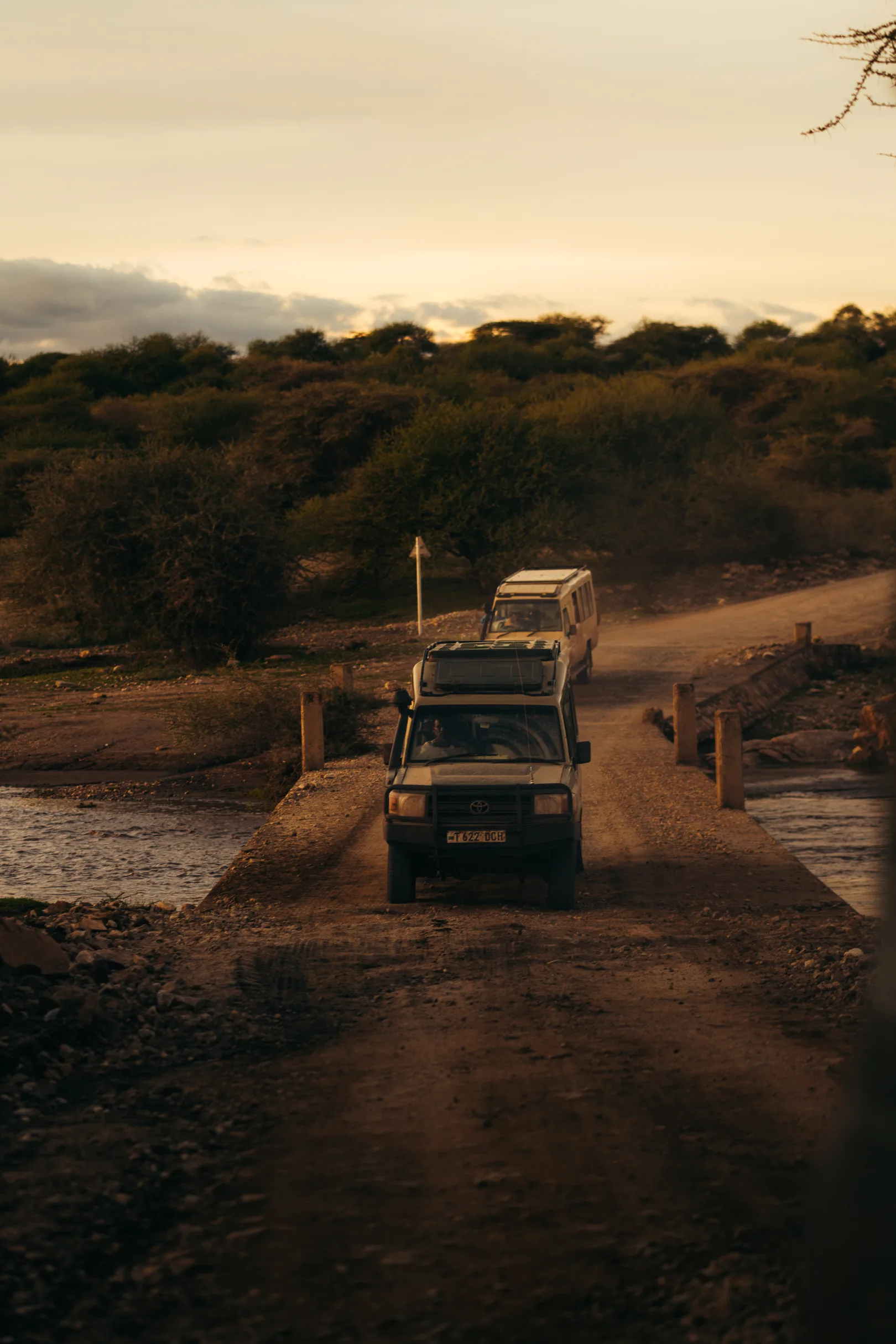
Lodges often make sense where a fixed viewpoint is part of the experience; camps often make sense where movement and intimacy matter more.
The Planning Sequence We Use
We do not begin by asking, “Do you want a lodge or a tent?” Most travellers answer that question based on a mental image that may not match the reality of ultra-luxury Tanzania safari properties.
The better sequence is: first define the wildlife objective; then define the privacy requirement; then decide whether the group needs hard infrastructure; then route the aircraft and vehicles; then choose the property format. That is how you avoid paying for a beautiful room in the wrong place.
If your priority is no other vehicles, begin with the ultra-luxury safari standard and conservancy access. If your priority is price transparency, read our Tanzania safari pricing guide. If your priority is a curated route across multiple regions, start with the Bobby Safaris journey collection and then refine the lodge-versus-camp mix with Don.
How the Decision Changes by Traveller Type
Couples usually ask for romance, but romance can mean two different things. For some couples, it means a lodge suite with a long view, a controlled dinner setting, and a private bathroom that feels closer to a residence than a camp. For others, it means canvas walls, lanterns, a private deck, and the feeling that nobody else is within reach. The correct answer depends on how much wilderness the couple wants to feel after dark.
Families need a more practical filter. If the group includes grandparents, younger children, or anyone who prefers predictable walking surfaces, a lodge or highly permanent camp may be the safer base. If the family is older, physically confident, and focused on wildlife, a small tented camp can make the trip feel less like a hotel holiday and more like a shared expedition.
Photographers and repeat safari travellers often lean toward tented camps because the format tends to place them closer to light, movement, and fewer vehicles. That said, a fixed lodge with the right concession rights can outperform a camp in the wrong location. The property category never overrides the land.
For executive retreats or family-office travel, the deciding factor is often discretion. Exclusive-use lodges provide privacy through control of a whole property. Small tented camps provide privacy through low density and remoteness. Bobby Safaris builds both formats into itineraries when the brief requires private aircraft routing, controlled guest movement, and a clear separation from public safari circuits.
What Not to Overvalue
Do not overvalue the word “lodge.” It can mean an exceptional architectural property in a private wilderness area, or it can mean a large public-facing hotel near a busy access road. Do not undervalue the word “tent.” In Tanzania, canvas is often the language of the highest-end safari, not a sign of basic accommodation.
Also be careful with room photography. A polished bathroom image tells you very little about vehicle density, guide quality, park access, or how long it takes to reach the sightings you came for. The most important questions are operational: Where is the property? Who else has access to the same land? Can your guide drive off-road? Are night drives permitted? How many vehicles can be present at one sighting?
Once those questions are answered, the lodge-versus-camp distinction becomes useful. Before then, it is just a design preference.
Image Suggestions and Alt Text
For this article, the strongest imagery is not a generic bedroom shot. Use landscape and access cues: private vehicles, open grassland, highland viewpoints, and camp-country context. Those visuals explain the decision better than a staged linen close-up.
Hero image
https://bobbytours.cloud/library/images/SERENGETI/_MSS0052.webp
Alt text: Private Tanzania safari vehicle in open Serengeti grassland near ultra-luxury safari camp country
Mid-article image
https://bobbytours.cloud/library/images/NGORONGORO/_MSS0067.webp
Alt text: Ngorongoro highland wilderness used to compare permanent luxury lodges with tented safari camps
Frequently Asked Questions
Are luxury tented camps in Tanzania real tents?
They are tented in structure, not in comfort level. At the ultra-luxury tier, a tented camp usually means canvas walls, a proper bed, en-suite bathroom, hot shower, private deck, and a full camp team. The value is wilderness proximity, not rough camping. The tented-vs-lodge calculus is comparable on the Kenya side, where the camp inventory and conservancy density differ — see our <a href="/tanzania-vs-kenya-safari/" class="text-gold hover:text-copper underline underline-offset-2 transition-colors">Tanzania vs Kenya safari comparison</a> for the side-by-side.
Are safari lodges more comfortable than tented camps?
Not automatically. Lodges usually offer more permanent infrastructure, which can help with air-conditioning, larger bathrooms, and easier movement around the property. Tented camps can be equally comfortable, but they prioritise intimacy, sound, light, and immediate contact with the landscape. For the full picture of how lodges and tented camps are sequenced across a private Tanzania itinerary, see our <a href="/tanzania-safari-tours/" class="text-gold hover:text-copper underline underline-offset-2 transition-colors">Tanzania safari itinerary planning</a> guide.
Which is better for first-time luxury safari travellers?
First-time travellers who want maximum predictability often start with a permanent lodge or a hybrid itinerary. Travellers who want the classic East African feel and are comfortable with wilderness sounds at night often prefer tented camps from the start. Bobby Safaris usually matches the accommodation format to the traveller's comfort threshold, not to a generic ranking.
Which accommodation type gives better wildlife access?
The answer depends more on location and land rights than on whether the property is a lodge or a camp. A small tented camp in a private conservancy can offer night drives, walking, and lower vehicle density. A lodge on a strong migration corridor can be exceptional if its position is right. The itinerary should begin with wildlife objective, then choose the property format. For the full comparison of how each accommodation style is paired with vehicle, guide, and conservancy access, see our <a href="/bobby-safaris-exclusive-experiences/" class="text-gold hover:text-copper underline underline-offset-2 transition-colors">Bobby Safaris exclusive experiences</a>.
Choose the Property Around the Trip, Not the Other Way Around
If you are comparing luxury safari lodges in Tanzania with tented camps, the useful next step is a short planning conversation. Tell us who is travelling, when you want to travel, how remote you want to feel, and what level of physical comfort is non-negotiable. We will tell you directly whether the itinerary should lean lodge, tented camp, or a combination of both.