
The research on executive vacations is consistent and uncomfortable. Studies on senior leader cortisol profiles show that 60% of executives return from conventional breaks — beach holidays, mountain resorts, spa retreats — with the same physiological markers they left with. The vacation happened. The relaxation was genuine. And within 72 hours of being back, the cortisol was back.
The reason is structural, not motivational. The brain processes a beach resort by matching it against existing models. You have been to beaches. You have stayed in hotels. The sensory experience, however pleasant, is fundamentally familiar — and familiarity means the brain files it in the same cognitive category as the work it left behind. The prediction is completed before the experience begins.
A Tanzanian safari is structurally different. Not because it is more exotic, or more luxurious, or more dramatic — though it is all three. It is different because it cannot be predicted. The landscape resists modelling. The pace of wildlife movement has no correspondence to any board agenda. The sensory environment — the sounds of the bush at dawn, the scale of the Crater rim, the specific quality of light through acacia canopy — arrives without a pre-built cognitive framework to receive it. That gap between experience and prediction is not a limitation of the trip. It is the mechanism.
"Nobody books a second safari for the wildlife."

The Serengeti at dawn — an environment the brain cannot model in advance
What Board Members and Chairs Actually Say
The feedback from UHNWI clients who have completed a properly structured executive safari is consistent in ways that are worth examining carefully, because the word that recurs most frequently — clarity — is not what they went looking for.
One client, a chairman of a FTSE 100 board, described returning from a twelve-day Tanzania itinerary knowing something he had not known before a specific strategic decision he had been avoiding. The decision had been sitting in his queue for eleven months. He had the data. He had the advisors. He had the board pack. What he did not have, he said, was the quality of thinking that the decision required — and that quality had returned in Tanzania without being sought. He described it as the bush having stripped away the decision-making apparatus and forced a return to first principles. The wildlife contributed nothing to this. The landscape and the pace contributed everything.
A second client, a UHNWI family office principal, described coming back from a ten-day itinerary with a restructuring of the family governance document she had been trying to get her siblings to agree on for three years. The document had been technically complete. What had been missing was the quality of conversation required to agree on it — and that conversation had happened in the shared experience of the safari before it happened in any formal session.
A third case, more difficult to articulate: a managing partner of a private equity firm who described arriving back with what he called operational clarity — the ability to see his portfolio companies with appropriate distance for the first time in eighteen months. The distance had not been available in the operational context. Tanzania had provided it by structural means, not psychological ones.
The common thread across all three cases is the same: nobody books a second safari for the wildlife. They return because something happened to their thinking that they have not found happening anywhere else.
Private concession access — the geographical isolation that makes Tanzania viable for high-profile executives
The Operational Security Dimension
The conventional luxury destinations available to high-profile executives — Caribbean resorts, Mediterranean yachts, Indian Ocean islands — carry a specific risk profile that their marketing deliberately does not surface. These venues are known quantities, and known quantities are associated with specific people doing specific things. The operational security implications of being seen, tracked, and modelled by competitors, media, or other interested parties at a an Indian Ocean luxury resort are not hypothetical. They are documented. They shape the behaviour of executives who understand them — and that shaping constrains the quality of the break itself.
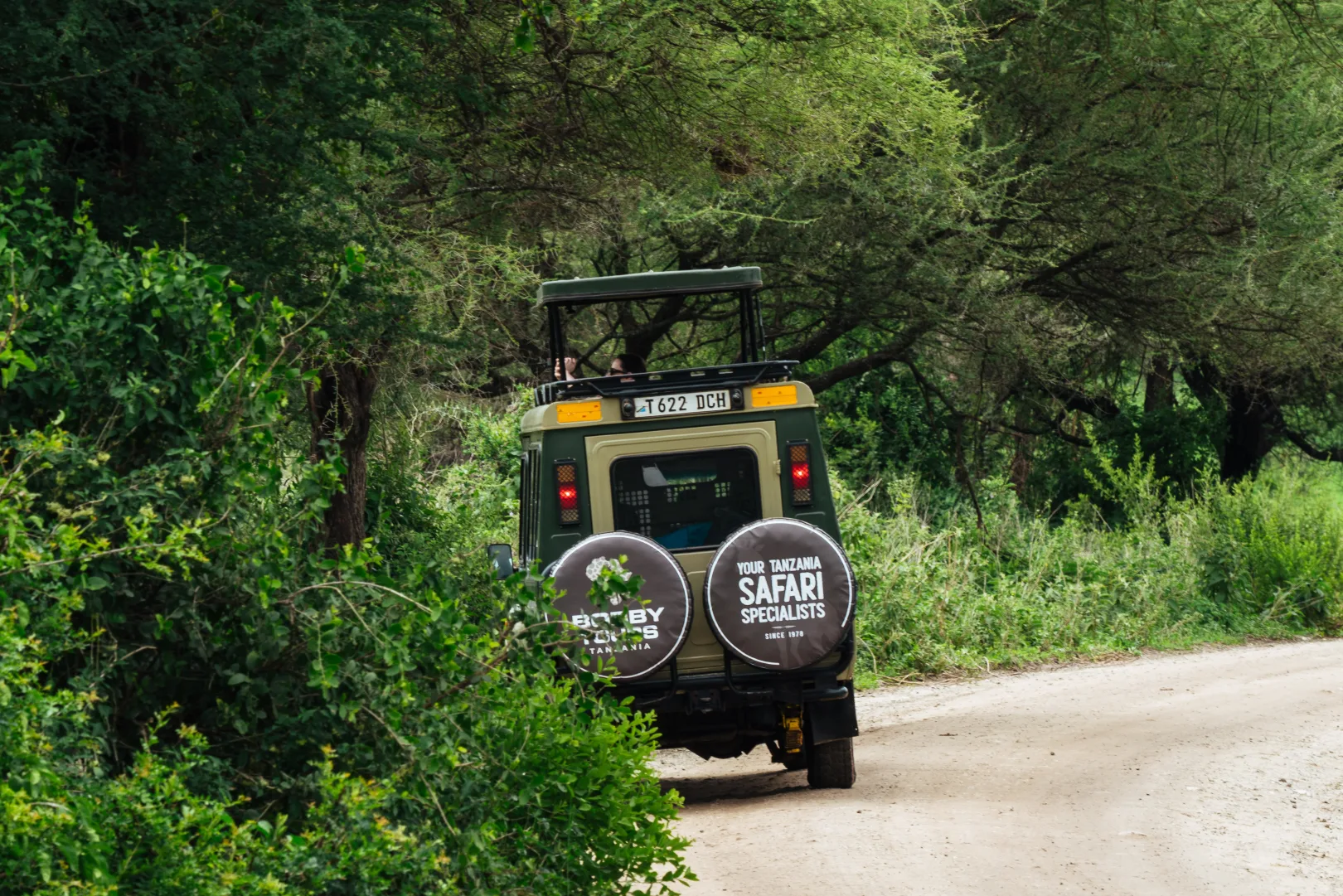
Tanzania private concessions offer a materially different security profile. The geographical isolation of a concession — accessible only by chartered flight, with documented guest lists, vetted ground staff, and no third-party access rights — eliminates the surveillance risk profile that constrains conventional luxury travel. Bobby Safaris operates with vehicle tracking on all safari movements, documented evacuation protocols, and vetted operational staff. This is the infrastructure of a genuine security architecture, not a luxury amenity.
For executives whose decisions carry market sensitivity — PE portfolio management, board-level governance, acquisition activity — the question is not whether operational security matters. It is whether the chosen venue has actually solved the problem or simply moved it somewhere less obvious. Tanzania private concessions solve it structurally.
Structuring the Trip for Maximum Reset
The minimum effective duration is ten days. Anything shorter is tourism — the reset mechanism requires three to four days to begin producing its cognitive effects, and a four-day safari is spending most of that transition window getting established and packing down. Ten days allows the mechanism to run fully.
The recommended circuit: the Crater, the Serengeti, and a third ecosystem. Each ecosystem produces a slightly different cognitive input. The Crater is overwhelming in its density — three to four hundred bird species, the big game at close quarters, the geological spectacle of the caldera itself. The Serengeti delivers the scale that places human concerns in accurate proportion. The third ecosystem — Ruaha, the Southern circuit, Western Tanzania — introduces a third environmental signature that continues the process of displacing the habitual mental model.
No Wi-Fi is not a selling point. It is a requirement. The reset mechanism depends on the enforced absence of the cognitive environment that produced the burnout in the first place. If connectivity is available, the brain will use it — and the pre-modelling of the vacation experience will complete itself around the device rather than around the landscape.
Moving camps matters more than most clients expect. Settling into a single lodge, however exceptional, creates a second predictability layer — the same room, the same view, the same evening routine. The movement between camps regenerates the novelty effect that drives the reset. Each new environment demands fresh cognitive engagement. The flight between camps, the arrival at a different landscape, the different quality of light and wildlife — all of it is part of the therapeutic architecture of the trip.
The dry season — June through October — is optimal for reasons that go beyond wildlife optics. The lower stress load on the operation itself at this time of year means the experience runs more smoothly, which means fewer decision points for the guest, which means more cognitive space for the reset mechanism to operate. The wildlife density in the dry season is also at its peak, which means the sensory input is at its most powerful.
Frequently Asked Questions
Why does a safari reset executive burnout more effectively than a conventional vacation?
The research on executive vacations is consistent: most senior leaders return from conventional breaks with the same cortisol profiles they left with. The reason is structural prediction — the brain models a beach resort, a mountain hotel, or a city break in advance, and that pre-modeling assimilates the experience into existing mental frameworks within 48 hours. The experience never becomes genuinely unfamiliar. A Tanzanian safari is categorically different because it cannot be predicted. The landscape, the wildlife, the pace of the day — none of it maps to existing mental models. That genuine unpredictability is the mechanism, not the scenery.
Is operational security a genuine consideration for high-profile executives?
It is, and it is one that is often underestimated until it becomes a constraint. High-profile executives — board members, UHNWI individuals, public company leadership — face operational security considerations that make conventional luxury destinations problematic. Media exposure, competitor intelligence gathering, and social tracking create risk profiles that standard resorts cannot mitigate. Tanzania private concessions offer geographical and informational isolation that an Indian Ocean luxury resort, for instance, cannot match. Bobby Safaris operates with vehicle tracking, vetted ground staff, no third-party access to concessions, and documented evacuation protocols. This is a genuine business risk management consideration, not a luxury selling point.
How long does an executive safari need to be to produce genuine reset?
Four days is tourism. Ten days is the minimum for genuine cognitive reset. The first three to four days are the body's transition out of operational mode — the cortisol profile takes that long to begin shifting, and the mental apparatus of constant decision-making takes equally long to stand down. A properly structured executive safari runs a minimum of ten days, combining the Crater, the Serengeti, and a third ecosystem — the Southern circuit or Western Tanzania — to deliver three genuinely distinct environmental inputs. Each ecosystem forces a slightly different recalibration, and the cumulative effect is more complete than a single-location stay.
What is the value of moving camps versus settling into one lodge?
The value is cognitive novelty. Staying in one lodge, however luxurious, creates a second predictability layer — the same room, the same view, the same evening routine. Moving camps regenerates the novelty effect that drives the reset mechanism. Each new environment requires fresh cognitive engagement, which is exactly the opposite of the habitual pattern burnout creates. The movement itself — the flight between camps, the arrival at a new location, the different terrain and wildlife — is part of the therapeutic architecture of the trip, not a logistical inconvenience.
If you are exploring whether an executive safari is the right instrument for what your board expects you to come back having resolved, start a conversation. Tell us what you are coming back from and what you need to come back with. We will tell you honestly whether Tanzania is the right fit — and if it is, what the structure of the trip would need to be to deliver it.