
An eight-person investment committee arrives at a private conservancy camp in the northern Serengeti on a Sunday evening. Three of the next five days carry structured working sessions; two are pure reset. The whole thing is on private aircraft, in a camp where no other guests are booked, with no external visibility of who is there or what they are deciding. By Friday morning, when the aircraft lifts them off the grass strip, the principal has a two-page decisions-and-open-questions memo in hand, drafted by the chief of staff, and the rest of the board has had five days of the kind of sustained, undistracted attention that the most consequential decisions in any organisation actually require.
This is the operational blueprint for that offsite — what it costs, how the camp is selected, what the agenda looks like day by day, how the privacy and comms layer is structured, and what the output artefact is. It is written for the chief of staff or family-office principal who has been asked to design the trip and needs the working detail, not the brochure.
“A board retreat in Tanzania is not a safari with a meeting appended to it. It is a working offsite that uses the conservancy setting as a forcing function for clarity.”
Why Tanzania Beats the Conventional Default for the Right Principal
The conventional offsite default — Marbella, Cap Ferrat, Mykonos, Aspen — carries optics risk for the principal the venue is meant to serve. The principal is visible. Paparazzi, social media, restaurant sightings, the hotel concierge who knows everyone. For a UHNW principal whose decisions affect market-moving capital, the optics of being at the conventional default venue can themselves become a story.
A private conservancy camp in Tanzania is the inverse of that problem. There are no other guests. There are no external observers. There is no signal that signals anything — no photographer at the gate, no social-media echo from a fellow guest, no newspaper column to manage. The trip does not appear in the public record because there is no public record of it. For the principal whose strategic decisions require genuine discretion, the privacy layer is not a luxury preference. It is part of the working brief.
The second property matters as much as the first. A five-day Tanzania offsite is unquestionablyoff-grid. The principal can credibly defer all inbound contact. The principal's office can credibly say the camp has no connectivity. The reset effect of five days in a landscape that is structurally incongruous with the principal's working life — game drives at first light, walking safaris in the cool of the morning, evenings around a fire with no calendar — produces a documented cognitive-rest benefit (Attention Restoration Theory, Kaplan 1995 and the subsequent research) that five days at a hotel simply does not. Five days of cognitive reset before a major decision is materially different from five days of urban stimuli, even very comfortable urban stimuli.
Tanzania is not the right answer for every board. If the board's decision is time-sensitive to a specific event window — a regulatory deadline, a market event, a closing that has to happen during the offsite — the venue has to be a city. If every member of the board requires continuous market access, a trading desk or a public-market portfolio under real-time review, the offsite produces worse decisions than the office would. The honest case for Tanzania is that it works exceptionally well for the kind of decisions boards should be making — strategic direction, capital allocation frameworks, succession, governance review — and not at all for the kind of decisions boards too often end up making under operational pressure. The chief of staff designing the offsite should know which category the board's current decision falls into before committing to the venue.
Private meeting space at an exclusive-use conservancy camp — designed for the working sessions that a board retreat actually requires
The Camp Selection Matrix for Boards
The camp is the operational answer to the working brief, and three structural details separate a camp that can host a board retreat from a camp that can host a leisure trip.
Working Infrastructure
A private dining tent that converts to board-style seating for eight. A screened outdoor space — a verandah, a private deck, a firepit enclosure — for breakout sessions. A tented war room with whiteboards and stable power. The best camps in this category have all three working spaces built into the camp architecture, not improvised at the principal’s request.
Connectivity on the Principal’s Terms
Some private conservancies have full Starlink or 4G/5G at the camp, suitable for principals who need partial connectivity for an emergency channel back to the office. Other camps offer a hard cutoff — no signal at the camp, by design, for principals who want enforced disconnection. The right answer depends on the principal’s working style and the governance purpose of the offsite. We verify the connectivity profile before booking and confirm it in writing with the camp.
Capacity and Privacy
Six to twelve guests is the working range. Below six and the offsite feels constrained for a working group; above twelve and the camp infrastructure begins to compromise — the working tent gets crowded, the dining service slows, and the privacy layer becomes harder to maintain. The best camps for board retreats take a single booking at a time and confirm exclusive use in writing.
The indicative cost for an exclusive-use camp at the top of the market is $2,500 to $4,500 per person per night, all-in. The figure depends on season (peak July through October runs higher), circuit (the Serengeti and the Ngorongoro Conservation Area carry a premium over Tarangire and the southern parks), and group size. The planning figure we work to during the design phase is $3,200 per person per night as the all-in planning assumption; we adjust up or down once the specific camp, the aviation routing, and the working infrastructure are confirmed.
The cost premium over a high-end European offsite venue is real but smaller than the headline suggests. The Tanzania figure is genuinely all-in — exclusive use of the camp, all meals and beverages, a private guide and vehicle for the group, all wildlife activities, the logistical coordination of the itinerary. A European venue quote typically excludes the working infrastructure, the private dining, the private transportation, and the entertainment budget that a leisure component would otherwise carry. Once those are added back in, the comparison narrows considerably, and the governance outcomes the Tanzania offsite produces are structurally different.
The Five-Day Agenda That Works
The agenda below is the structure we run most often for six-to-eight-person investment committees and family boards. It is built around a single principle: working blocks always precede the day's reset activity, never follow it. A tired brain makes the worst decisions, and a working session after a five-hour game drive in the sun is structurally weaker than a working session at 09:00 with a fresh head.
- Day 1:Arrival. Private aircraft into the closest airstrip. Light transfer to camp. No working session on Day 1 — informal dinner, orientation to the camp, an early night. The absence of an opening working session is deliberate. Travelling the day before, arriving in the landscape first, and letting the group's frame reset before any formal session begins makes the working sessions that follow measurably better.
- Day 2:Pre-breakfast game drive at first light. Return to camp. Four-hour working block 09:00–13:00 — the board's primary decision on the agenda, facilitated by the chief of staff or an external governance advisor. Long lunch. Afternoon walking safari or private conservancy excursion. Structured dinner with no working content — the relational infrastructure that makes the working sessions productive is built at dinner.
- Day 3: Working morning — three-hour block focused on the second-order decisions flowing from Day 2. Afternoon off. Optional pre-scheduled one-on-one slots for the principal (thirty minutes each, with board members the principal wants to speak to privately). Evening informal dinner.
- Day 4: Working morning — three-hour block, decisions and commitments from Days 2 and 3 are formalised. Afternoon off; a private conservancy activity or a cultural visit to a nearby site. Final-dinner synthesis session — sixty minutes, no slides, no formal structure, just the principal closing the offsite in their own words.
- Day 5: Morning game drive. Departure. The output artefact — the decisions-and-open-questions memo drafted by the chief of staff — is circulated on the aircraft to every board member.
The output artefact matters as much as the working sessions themselves. A two-page memo, drafted by the chief of staff on Day 4, structured as Decisions Made and Open Questions Requiring Further Work. No slides. No narrative summary. The memo is what the principal reads on the flight home and circulates to any board member who was unable to attend. It is the durable output of the offsite and the document that justifies the cost.
Privacy, Comms, and the Optics Layer
Three layers work together to keep a board retreat off the public record.
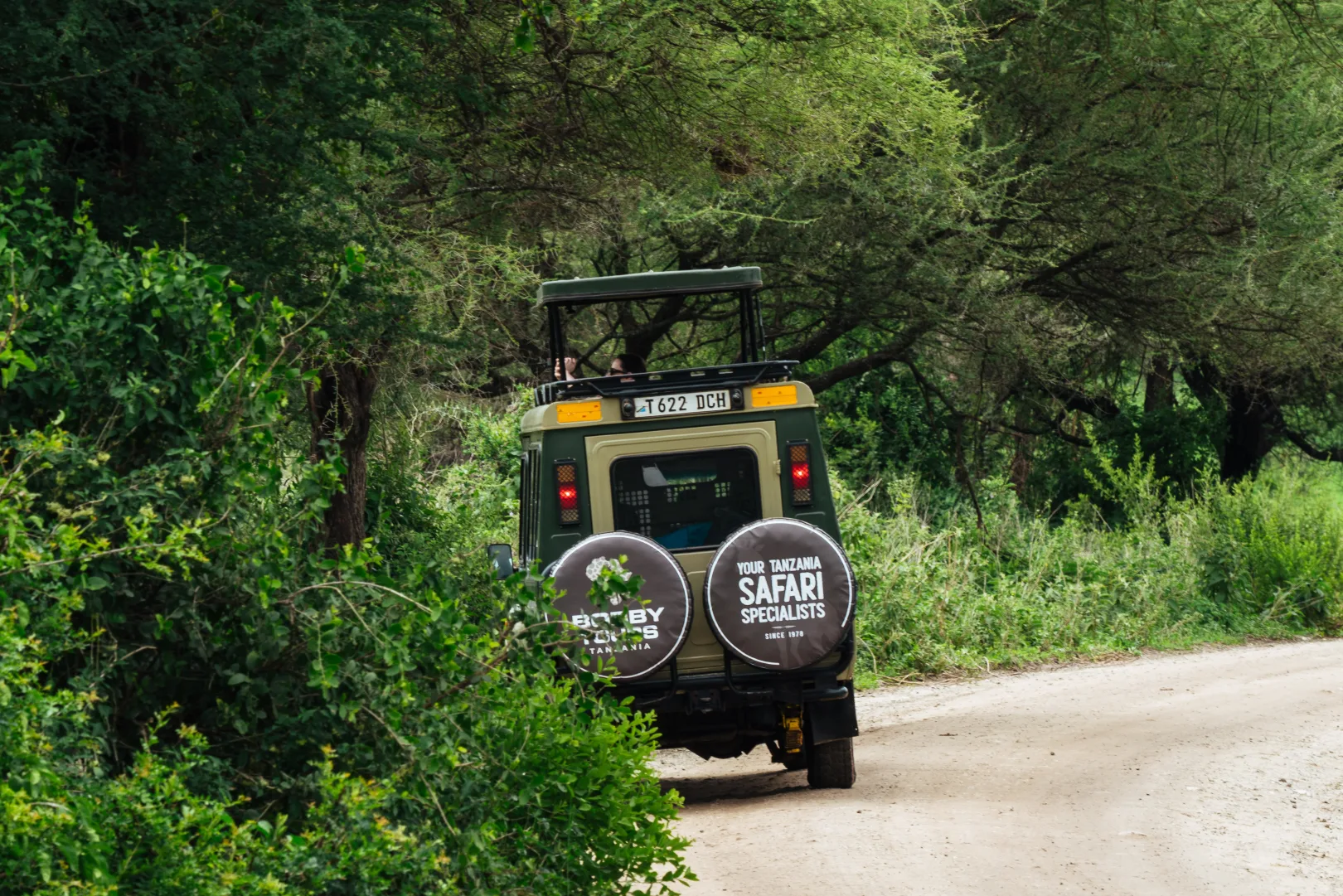
Private aviation.Every flight segment is chartered on a light aircraft under the principal's name with no commercial-aviation visibility of who is travelling, with whom, or to where. The principal's office books the international flights separately; the internal routing — between Arusha and the camp, between circuits if the offsite moves — is handled by Bobby Safaris and confirmed in writing to the principal's chief of staff.
Camp-level protocols. Bobby Safaris signs a project-specific NDA covering the guest list, the dates, and any working materials the principal or the chief of staff shares with us during the design phase. The camp is briefed on the offsite nature of the visit and operates a no-photography policy for the duration. Staff are instructed not to discuss the booking with third parties. Exclusive-use arrangements are confirmed in writing before the offsite begins.
Communications.The principal's office retains an emergency contact channel for the duration — a single named point of contact reachable via satellite phone, with escalation protocols agreed in advance. Working sessions use client devices with end-to-end encrypted messaging (Signal, Session, or the principal's preferred platform). There is no client-facing photography, no social media, and no public itinerary record. The trip simply does not appear in any record outside the principal's own files.
The honest answer to “can you keep this off the public record?” is yes, and the layers above are how. The cost of those layers is built into the offsite's all-in figure. The principal's chief of staff reviews and signs off on each layer during the design phase, before commitment.

First light at a private conservancy camp — the working brief, the reset, and the privacy layer in a single location
How This Connects to a Working Itinerary
The conceptual case for Tanzania as a corporate offsite venue is laid out in our guide to Tanzania as a governance retreat destination and the executive-tier framing in the UHNW corporate safari guide. The operational case for the exclusive-use camp — why a private concession changes the safari structurally — is in the case for a private concession. The aviation layer that makes the board retreat work is in the private aviation Tanzania product guide, and the discretion layer that protects the principal is in the privacy and security protocol for high-profile travellers. The broader planning context — what a Tanzania luxury safari actually involves end to end — is in the ultra-luxury safari planning playbook.
The next step is a working conversation with the Bobby Safaris offsite design team. Tell us the governance purpose of the retreat, the size of the board, the timing, and the privacy constraints. We will tell you honestly whether Tanzania is the right venue for your specific situation, what the indicative cost will be, and what the agenda should look like. The same Arusha office that has been designing corporate and family offsite safaris since 1978 is the one that designs yours.
Frequently Asked Questions
Can a real board meeting actually be held on a Tanzania safari?
Yes — and the conditions are better than most city venues for the kind of decision a board actually meets to make. A private conservancy camp at the top of the market has a working dining tent that converts to board seating, a screened outdoor space for breakout sessions, and a tented private room with whiteboards and stable power. Connectivity ranges from full Starlink at some camps to deliberate disconnection at others. The board meeting itself is structured as a four-hour working block each morning, with the afternoon freed for game drives, walking safaris, or one-on-one slots the principal has pre-scheduled. The output artefact — a two-page decisions-and-open-questions memo drafted by the chief of staff — is produced on Day 4 and circulated on Day 5. We have run this structure for investment committees, family boards, and LP advisory committees; the format holds up across all three.
What does a five-day corporate board retreat in Tanzania cost per person?
At the top end of the market — exclusive-use camp, private guide and vehicle, private aircraft between the parks, full staffing — the all-in figure runs from $2,500 to $4,500 per person per night, depending on season and circuit. A five-night offsite for an eight-person board therefore lands in the $100,000–$180,000 range before international flights. This is comparable to the highest-end executive conference venues in Europe or North America once you account for the all-inclusive nature of the Tanzania experience, the fact that the wildlife replaces what would otherwise be entertainment and dining budgets, and the materially better governance outcomes a well-designed offsite produces. The number we work to when planning is $3,200 per person per night as the all-in planning assumption; we adjust up or down depending on the specific camp, the time of year, and the aviation routing the principal needs.
How do you keep a corporate board retreat off the public record?
Three layers work together. First, private aircraft routing — every flight segment is chartered on a light aircraft under the principal's name with no commercial-aviation visibility of who is travelling or in what group. Second, camp-level NDA protocols — Bobby Safaris signs a project-specific NDA covering the guest list, dates, and any working materials; the camp is briefed on the offsite nature of the visit and operates on a no-photography policy for the duration. Third, communications — the principal's office retains an emergency contact channel, working sessions use client devices with end-to-end encrypted messaging, and there is no client-facing photography, no social media, and no public itinerary record. The trip simply does not appear anywhere outside the principal's own files, which is the correct outcome for a board-grade offsite.
What size board or investor group is this format designed for?
The format works for six to eight people as the design sweet spot — large enough to constitute a real decision-making body, small enough to fit comfortably at an exclusive-use camp with private working space. Groups of four can use the same format with adjustments (smaller dining tent, single working room). Groups of ten to twelve are workable but begin to strain the camp infrastructure and dilute the relational density the format depends on. Beyond twelve, the structure breaks — the working sessions become presentation-style rather than board-style, and the privacy layer becomes harder to maintain. The honest answer is that this is a six-to-eight-person product. If your principal's group is larger than that, we will tell you during the first conversation and suggest a different format rather than forcing this one to fit.
When is Tanzania the wrong venue for a board retreat?
Tanzania is the wrong venue when the board's decision is time-sensitive to a specific event window the offsite cannot accommodate — a regulatory deadline, a market event, a closing that has to happen during the offsite. It is also the wrong venue when every member of the board requires continuous market access — a trading desk that has to clear during the working sessions, an investment committee reviewing public-market positions in real time. In both cases the offsite produces worse decisions than a city venue would. The honest answer is that Tanzania works for the kind of decisions boards should be making — strategic direction, capital allocation frameworks, succession, governance review — and does not work for the kind of decisions boards too often end up making under operational pressure. We will tell you during the first conversation whether your specific situation is the right fit.