

A guest who regularly travels with a 600mm telephoto lens recently asked whether they should bring a dedicated professional wildlife photographer as part of their next safari party. Not a photography guide — someone specifically employed to photograph the experience.
The question is more operationally complex than it first appears. Adding a professional wildlife photographer to a Tanzania safari changes something fundamental about how the experience is run. Not a negative change — but one that requires deliberate planning at the logistics level, not just the creative level.
This is not an article about photography tips. It is an operational explainer for guests who are serious about returning from Tanzania with images that justify the investment.
The Operational Reality
A dedicated wildlife photographer is, in operational terms, a second guide in the vehicle. Not a guest with a camera — someone whose full attention is on behavioral observation, light conditions, and the precise moment when an image becomes something worth keeping. Their presence reshapes how the guide performs their role.
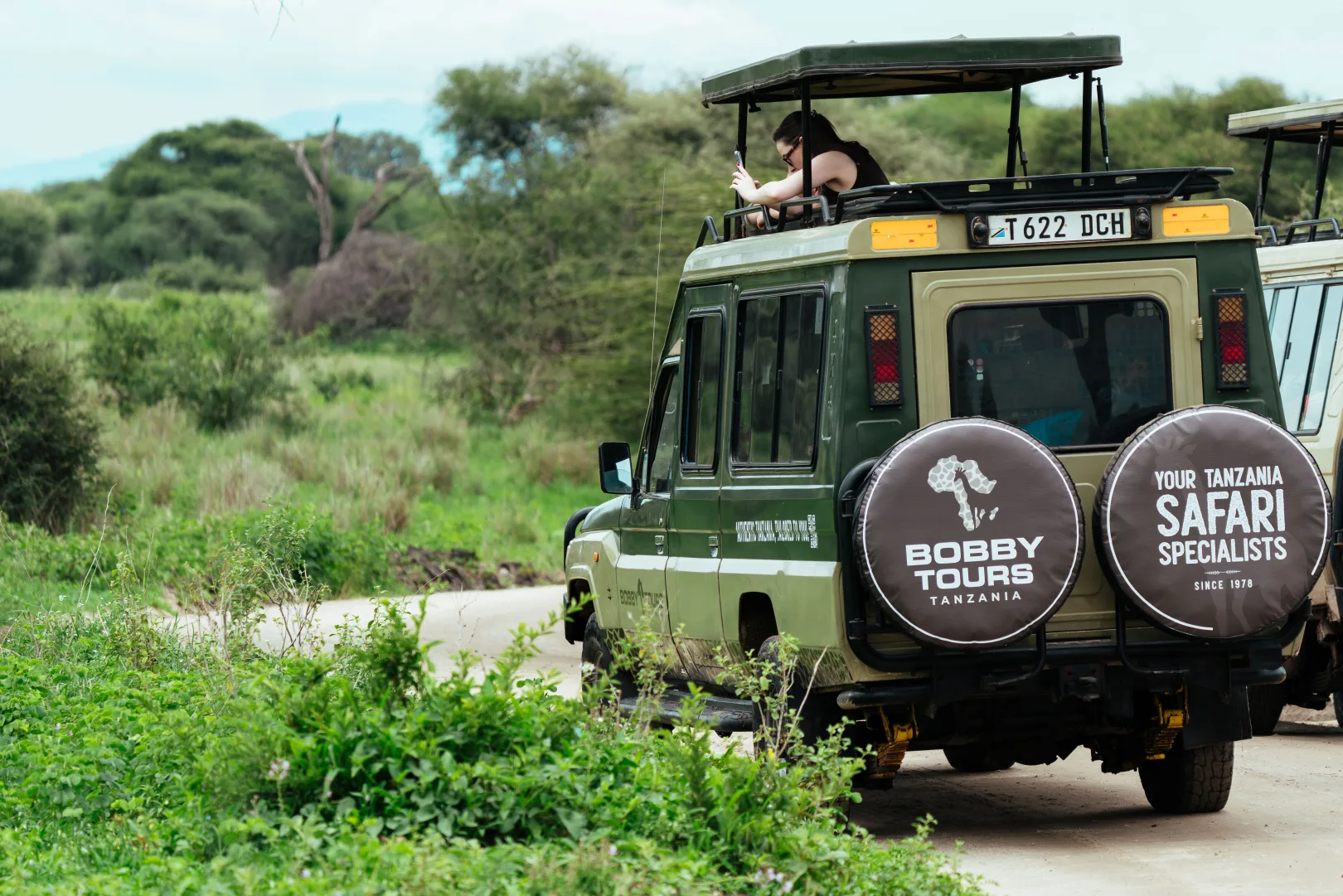
Vehicle setup is the first consideration. A photographer working with a 600mm lens needs stable mounting — a bean bag on the vehicle's window ledge, or a specialized clamp for a tripod. Open-sided vehicles are strongly preferred over hard-top models; the ability to extend a lens above the roofline without obstruction, at any angle, is not a luxury but a technical requirement for serious wildlife work. Lens configurations matter too: a photographer may be running two camera bodies simultaneously, one with a telephoto for wildlife, one with a wider lens for environmental context.
Timing shifts to serve the photographer rather than general game viewing. The optimal wildlife photography windows in Tanzania are the first and last hours of daylight — the golden hour at either end of the day. Midday light, while fine for general game drives, produces flat, contrast-free images of wildlife. A photographer-optimized itinerary means departing camp before civil twilight and remaining in the field through the evening's last light, with midday used for rest, battery management, and image review.
Guide briefing becomes the most critical pre-trip operational step. Before departure, the field guide and photographer need to discuss specific targets: which species, which behaviors, which locations. The guide's knowledge of animal territories — where a leopard has been resting, which lion pride is likely to be active near a particular drainage line at 6:30 in the morning — is the foundation on which the photographer builds their positioning strategy. Without that briefing, the photographer is reactive rather than anticipatory, and reactive wildlife photography produces a fraction of what the opportunity allows.
At Lamai and the Grumeti Reserve, the golden hour window in the morning runs from approximately 6:00 to 7:15 — a narrow frame in which the light drops below the horizon, the sky moves through a spectrum of orange and amber, and the wildlife that has been active since first light is still in good position. A dedicated photographer captures in that window what a guest with a phone cannot: the precise quality of light on a hunting cheetah, the silhouette of a giraffe against a Maasai sunrise, the family dynamics of an elephant herd crossing a drainage line. These are not scenes that repeat.
The Three Models
There are three structural ways a serious photographer appears on a Tanzania safari. Each has different operational implications.
| Model | Photographer Role | Guide Adjustments | Typical Cost |
|---|---|---|---|
| A — Guest is the Photographer | Guest (serious amateur or professional) | Guide tailors positioning and timing to guest's equipment and targets | Included in safari cost |
| B — Guest Brings a Photographer | Friend or hired professional, part of the guest party | Pre-trip briefing, photographer-optimized vehicle, dedicated positioning | Hire fee + logistical coordination |
| C — Bobby Safaris Arranges a Photographer | Professional wildlife photographer, vetted and briefed by our team | Full operational integration — vehicle, timing, briefing, post-production | Contact us to discuss |
Model A is the most common: the guest themselves is the photographer. The guide's role is to understand what the guest's equipment allows and tailor the game drive accordingly — positioning the vehicle so the light is behind or to the side, choosing viewing angles that give the photographer the cleanest possible background, calling out behavioral cues before the moment arrives. This requires communication, but the operational overhead is minimal.
Model B introduces a second professional into the vehicle. The photographer is not a guest in the usual sense — they are a working professional with their own agenda, equipment list, and preferred subjects. The guide needs to brief them on the previous day's sightings, the current understanding of animal movements, and the plan for the morning or evening drive. The photographer, in turn, needs to communicate which subjects are priorities and where their lens kit has gaps that the guide's knowledge might fill.
Model C is the fully integrated option. We source a professional wildlife photographer whose portfolio matches the specific character of the trip, brief them on the itinerary in advance, and integrate them operationally from day one. This includes image rights discussions — what the guest intends to do with the images — which affect the style and volume of what the photographer produces.
Image Rights and Personal vs. Commercial Use
The question of image ownership is one of the first things that requires explicit conversation when a professional photographer is part of the safari party. The default assumption — that the person who presses the shutter owns the image — applies here, but there are nuances that matter.
Personal use covers images shared on private social media accounts, given to family and friends as prints or digital files, or used in personal journals and blogs. This category generates no complications. Images captured during the trip are available to the guest who commissioned the safari for any personal use they choose.
Commercial use — images published in paid advertising, editorial in publications with paid circulation, broadcast, or any form of sale — requires a separate conversation. Wildlife images captured in Tanzania's national parks and reserves may have regulatory considerations depending on the context. These are resolvable at the planning stage; we have worked through them before.
For guests who intend to publish — a travel magazine, a personal book project, a social media presence that carries advertising revenue — we facilitate the conversation between the guest and the photographer before the trip begins, so expectations are clear on both sides.
Wildlife photography ethics are non-negotiable regardless of who is behind the camera. No responsible photographer baits wildlife, requests the guide drive closer than regulations permit, or arranges shots that alter animal behavior. Bobby Safaris will only work with photographers whose practices maintain appropriate distance and respect for the animals being documented. The images that result from ethical, patient work are invariably the strongest.
What a Dedicated Photographer Actually Captures
A professional wildlife photographer operating with proper briefing and positioning produces work that is categorically different from what a guest with a smartphone or even an enthusiast camera can capture in the same circumstances.
Macro and behavioral sequences — the territory a dedicated photographer operates in — include predator-prey sequences with proper shutter speed to freeze action, bird behavior at distances that require a 500mm or 600mm lens, and insect-scale detail of creatures a casual observer walks past. These images require anticipation, positioning, and the willingness to sit in one location for extended periods while the rest of the safari moves on.
Lion matriarchy dynamics — the social structure of a pride, which lionesses hold territory, how cubs are disciplined and protected — play out over hours and days. A dedicated photographer documents these sequences across multiple drives, building a visual record of behavior that a standard game drive cannot provide. The result is not a snapshot of lions in grass; it is a document of how lions live.
Elephant family interactions — the matriarch's role, the discipline of juvenile males, the tactile communication within a herd — are subjects that reward patient observation and the ability to return to the same group over consecutive days. A photographer embedded in the safari programme captures this continuity.
On one morning at Grumeti, a photographer working with a client captured a sequence of a martial eagle taking a young impala — a sequence that subsequently appeared on the front page of a major international publication. That outcome was not accidental. It resulted from a guide who knew the eagle's territory, a photographer who had been briefed on recent behavior, and a vehicle positioned for the right angle at the right moment.
The images you return with reflect the preparation and positioning that went into the trip as much as the wildlife itself.
Arrange a Photography Safari
Contact our team to discuss incorporating a professional wildlife photographer into your Tanzania itinerary.
Enquire About a Photography SafariOr explore our dedicated photography safari product.
Conclusion
What a professional wildlife photographer adds to a Tanzania safari is not a service — it is a different relationship with the experience. The ability to see and capture what you will remember forever is not a guide function. It is a specialized discipline that, when properly integrated into the safari operation, produces a body of work that the guest could not have produced alone and would not have thought to ask for before seeing the results.
If you are planning a Tanzania safari and are considering whether to arrange a professional photographer, the answer is: discuss it with us before you rule it out.
Begin planning your Tanzania safari or explore our full range of experiences.
Frequently Asked Questions
What is the difference between a safari guide and a dedicated wildlife photographer on a Tanzania safari?
A safari guide is focused on tracking animals, ensuring safety, and interpreting the ecosystem. A dedicated photographer operates with an entirely different set of priorities — focal length, background, light angle, behavioral anticipation, and image composition. When a guest brings a professional photographer, the guide's role expands to include photographer positioning and behavioral forecasting. Bobby Safaris can arrange a professional wildlife photographer as part of your experience, briefed specifically on your itinerary and photographic objectives.
What vehicle modifications are needed for serious wildlife photography on a Tanzania safari?
Professional wildlife photography requires a vehicle configured for camera work: open-sided or convertible-top configurations, stable mounting points for long telephoto lenses, space for a bean bag or window mount, and the ability to position the vehicle at precise angles. Our safari vehicles are configured for photographic use with stable mounting surfaces and open roof access.
Who owns the images captured during a Tanzania safari when a professional photographer is hired?
Images captured by a professional photographer hired as part of your safari party are typically owned by the party that hired them. Personal-use images shared on social media or with family are generally unproblematic. Commercial use — advertising, publications for sale, or broadcast — may require additional clearances, which we can facilitate at the planning stage.
How does hiring a professional wildlife photographer affect the daily schedule on a Tanzania safari?
Serious wildlife photography is a dawn-to-dusk discipline. The optimal windows are the first and last hours of daylight, meaning departure before sunrise and extended evening field time. Midday is reserved for rest and image review. The guide-photographer briefing the evening before each drive is critical to ensuring correct positioning for the following day's targets.
What ethical considerations apply to wildlife photography on a guided Tanzania safari?
Ethical wildlife photography on a guided safari means maintaining appropriate distance from animals and not altering their behavior for a shot. No responsible photographer baits animals, flushes birds from cover, or requests driving closer than regulations permit. Bobby Safaris only works with photographers whose practices align with wildlife-first ethics. The strongest wildlife images come from patient, ethical work — not from manipulated conditions.
Continue Reading

Bobby Safaris
Ultra-Luxury Safari Operations
With over four decades of safari operations in Tanzania, Bobby Safaris specializes in ultra-luxury experiences for guests who require flawless execution and exceptional outcomes. Our operational integration of professional wildlife photography services reflects the same standard we apply to every element of the safari: deliberate planning, vetted specialists, and an uncompromising approach to what the guest ultimately receives.