

The 10-day itinerary is the trip Bobby Safaris designs when time is the budget. Four ecosystems instead of three. Two consecutive Serengeti camps instead of one. A walking morning in Tarangire. An afternoon on the Ngorongoro highlands with an optional Olduvai Gorge stop. Six light-aircraft legs and zero full-day road transfers. One senior guide for the duration. The result is not a longer version of a 7-day itinerary; it is a different product entirely — the kind of trip that lets the safari loosen up over time, lets your guide anticipate rather than explain, and lets the second half of the trip carry the rhythm the first half set up. This is the itinerary most of our returning guests wish they had started with, and the one our family runs for friends who have the time and a serious interest in seeing the country properly. Bobby Safaris has been refining this exact trip for decades. It is the one we would design for a member of our own family visiting from abroad with a fortnight to spend. The four-camp rotation is what makes the second half feel different from the first; travellers comparing camp tiers in depth should read our exclusive safari camps beyond the usual guide — it walks through the private-conservancy properties that anchor itineraries at this tier and why they outperform the central lodges on every dimension that matters at the high end.
The shape of the ten nights
The 10-day itinerary follows a deliberately simple skeleton. Day one is an Arusha arrival and private transfer to a coffee-estate lodge. Day two is a fly to Tarangire with an afternoon game drive. Day three is a full day in Tarangire. Day four is a fly to Lake Manyara with an afternoon drive in the ground-water forest. Day five is a drive to the Ngorongoro highlands with an optional Olduvai Gorge stop. Day six is a half-day on the Ngorongoro Crater floor with a picnic lunch. Day seven is a fly to the Serengeti with an afternoon drive. Days eight and nine are full days in the Serengeti, with the camp choice and the routing tuned to the season and the migration. Day ten is a morning drive and a fly back to Kilimanjaro, with the option to extend to Zanzibar. Each day is anchored on a single wildlife objective, each transfer is short, and the pattern is simple because the trip should feel simple — the complexity that matters (guide, camps, routing) has already been worked out before you arrive.
01 — The Longer Window
Why ten nights changes the trip
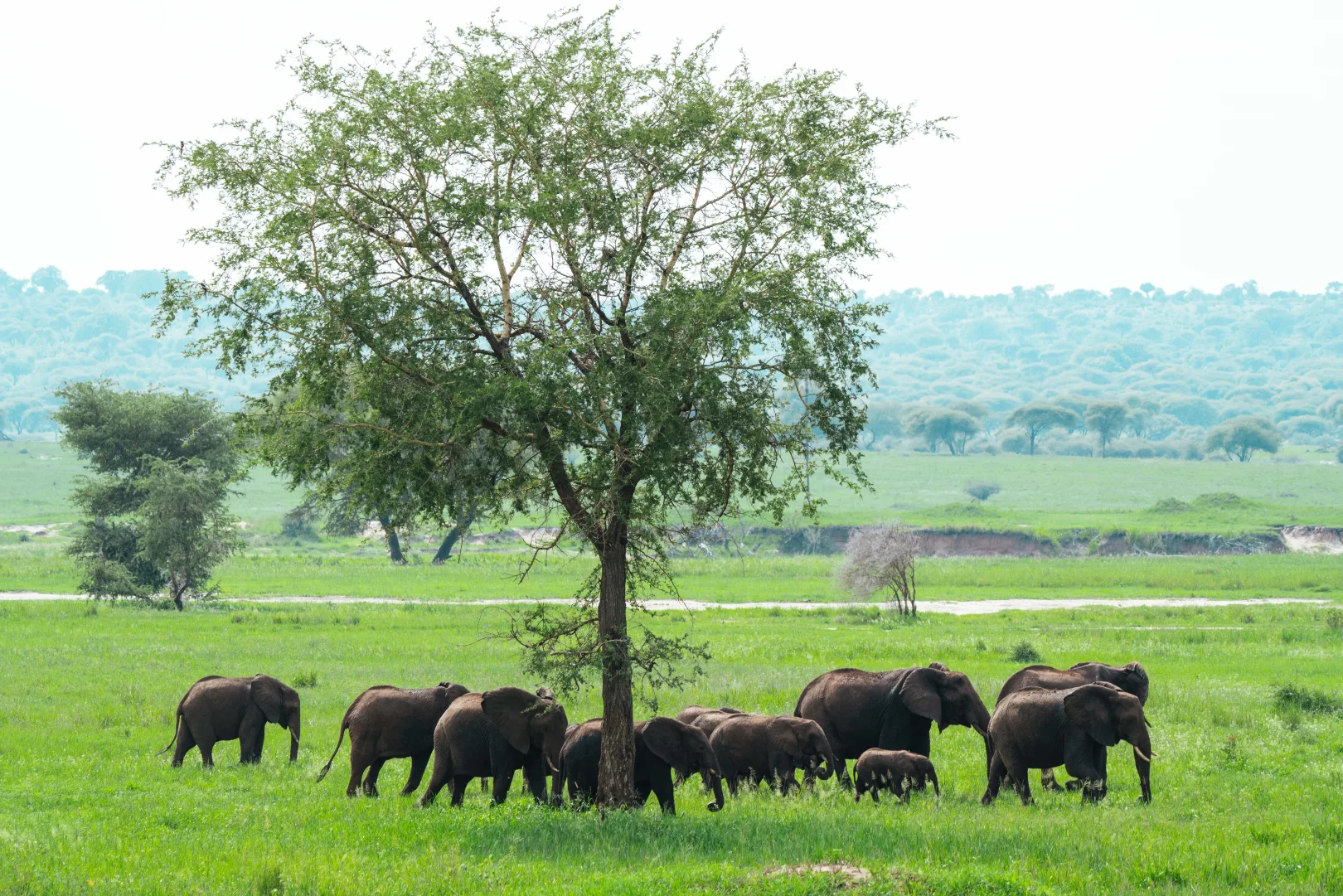
Five nights is a curated deep-cut. Seven nights is a full safari. Ten nights is the version of Tanzania that our family runs when the time exists to do it properly. With ten nights you can carry the pace that the shorter itineraries cannot: a quiet morning in Tarangire's baobab river system followed by a full afternoon drive, a second night at altitude on the Ngorongoro highlands instead of a single night on the crater rim, a first Serengeti day spent in one ecosystem and a second day spent in another, and at least one full day with no transfer pressure at all. The 10-day itinerary does not just add time; it adds the kind of time that converts a trip into something you remember with more granularity. Guests who travel the longer version consistently describe the second week differently from the first — the safari loosens up, the guide stops explaining and starts anticipating, and the rhythm of the days becomes something you feel rather than something you plan. If you have ten nights and want a single itinerary that can carry the full weight of what Tanzania offers, this is the trip our family would design for a member of our own family visiting from abroad.
02 — Private Aircraft
Six bush-flight legs, no wasted days
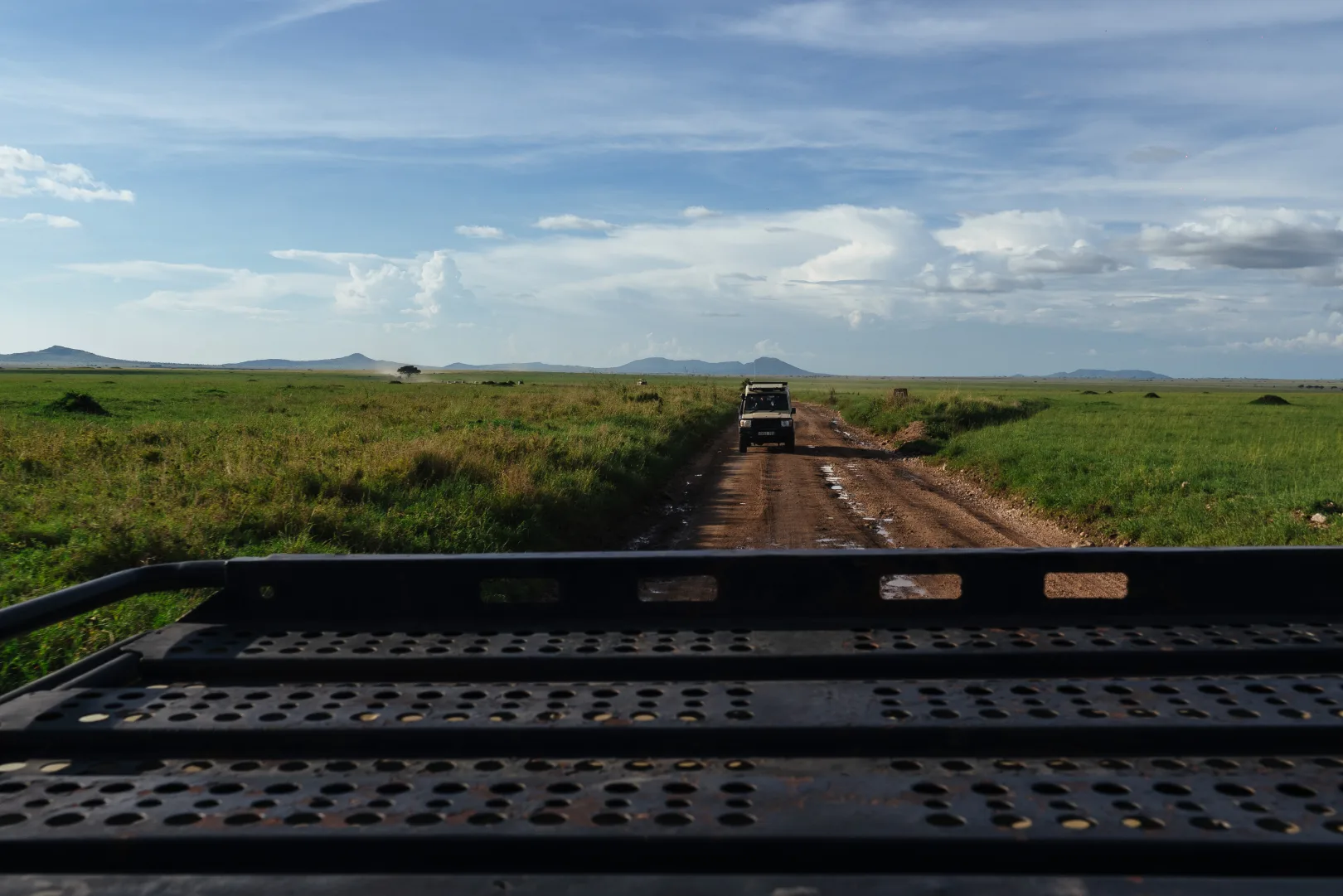
The most important structural decision on a 10-day itinerary is that it stays fly-in throughout. Every road transfer is wasted wildlife time, and the longer the trip, the more that compounds. The 10-day itinerary removes the transfer tax entirely: you fly Kilimanjaro to Tarangire on day two, Tarangire to Manyara on day four, Manyara to the Ngorongoro airstrip on day six, the crater rim to the central Serengeti on day seven, internal Serengeti repositioning on day eight, and the Serengeti back to Kilimanjaro on day ten. Every full day is spent in the field. The longest road transfer of the entire trip is roughly 90 minutes, and most of those are the drive between your camp and the airstrip at either end. The bush flights themselves become part of the experience — the views over the Rift Valley, the moment the crater rim appears on the horizon, the pilot banking over the Grumeti woodlands as you descend. If you would prefer a private charter for any leg, Bobby Safaris can arrange it at additional cost; most guests find the scheduled bush flights are quieter and more flexible than they expected.

03 — Four Ecosystems
Tarangire, Manyara, the Crater, and the Serengeti
The four ecosystems on this itinerary are not interchangeable. Each one carries a different kind of memory, and the 10-day window is what lets you experience all four properly. Tarangire in the dry season holds the highest elephant density in Tanzania, large baobab-studded landscapes, and quiet game-viewing without the vehicle density of the more famous parks. Lake Manyara adds the ground-water forest, the flamingo-fringed shoreline, and the tree-climbing lions when they choose to perform. The Ngorongoro Crater delivers the most reliable big-game viewing in East Africa in a single afternoon: lion, black rhino, hyena, and the full predator cast, all on a closed 260-square-kilometre bowl you can traverse in hours. The Serengeti is the country's signature landscape — wide horizons, big cats on the grasslands, and the great migration depending on the month. Drop any one of these and the trip loses something it cannot recover elsewhere. The 10-day itinerary is the minimum that lets all four ecosystems feel unhurried rather than sampled. Bobby Safaris has been routing guests through exactly this combination for four generations, and the sequence has been refined to the point that each leg sets up the next one.
04 — Concession Stays
The right camps change what the trip can do
The camp is not the decoration on a Tanzania safari. It is the safari. The 10-day itinerary uses four camps — one in Tarangire, one in the Ngorongoro highlands or crater rim, and two in the Serengeti — and each one is chosen for what it unlocks rather than how it photographs. Most of the camps on this itinerary sit on private conservancies with vehicle-density caps the central lodges cannot match, meaning the morning game drive has space to slow down, the guide can leave the road when a sighting warrants it, and walking safaris are available where the concession permits. All four properties have fewer than fifteen tents, all with private decks and the staffing ratios of a serious private operation. The two Serengeti camps are chosen to give you two different ecosystems: one in the central or southern plains depending on the season, one in the northern corridor if the migration is there. The advantage of two camps is not variety for variety's sake — it is the ability to put you in the right ecosystem on the right day without losing half a day to a transfer. Don will talk through the specific properties before anything is confirmed; the right camp is the one that matches the priorities of your specific trip.

05 — Continuity
One senior guide for the duration
The single biggest difference between a refined 10-day itinerary and a fragmented one is guide continuity. Bobby Safaris assigns one senior guide for the duration of your trip — someone who knows Tarangire's elephant dynamics in September, the Manyara tree-climbing lion prides in February, the crater floor's resident black rhino, and the central Serengeti's cheetah territories in July. That continuity is what lets the third day feel informed by the second, what lets your guide adjust the sixth day based on what you most enjoyed, and what turns the second Serengeti day into something the first Serengeti day set up rather than repeated. On longer trips the temptation is to rotate guides between parks for logistical ease, and that rotation is exactly what makes a 10-day itinerary feel like a series of disconnected drives. We do not do that here. The guide carries the safari, and the guide is yours for the duration. Our senior guides have spent between twelve and thirty years in the field. They read animal behaviour at a glance, they know which vehicle position gives the cleanest photographs, and they know when to be quiet. On a 10-day itinerary that expertise compounds, and the trip you remember is the one they helped you build in real time.

How We Decide
A ten-night safari should still feel chosen.
- Fly-in routing is structural on a 10-day trip: every road transfer is wasted wildlife time, and the longer the itinerary, the more that compounds.
- Guide continuity matters more than camp variety on any length of itinerary: the guide carries the safari, and we do not rotate guides between parks.
- Two Serengeti camps in different ecosystems outperform one long stay: a southern camp for the predator density, a northern camp for the migration when it is there.
- Camp choice should protect downtime: one camp per ecosystem, enough nights at each to actually settle in, no one-night stops anywhere on the itinerary.
Speak with Don
Tell Don When You Are Travelling
The 10-day itinerary is the most complete Tanzania safari Bobby Safaris designs, but the right answer depends on the month, the travellers, and what you most want to see. Don personally reviews every 10-day brief before camps are confirmed.
Starting from
$14,800 per person · 10 nights
4.8 out of 5 —154 verified TripAdvisor reviews
Bobby Safaris
TripAdvisor Travelers' Choice
Since 1978
Four generations
Peak-Season Camps Fill 8–12 Months Ahead
For August–October departures the finest northern Serengeti camps are already near capacity. A quick WhatsApp to Don secures the strongest camps before they go.
Response within 24 hours · No obligation · No spam